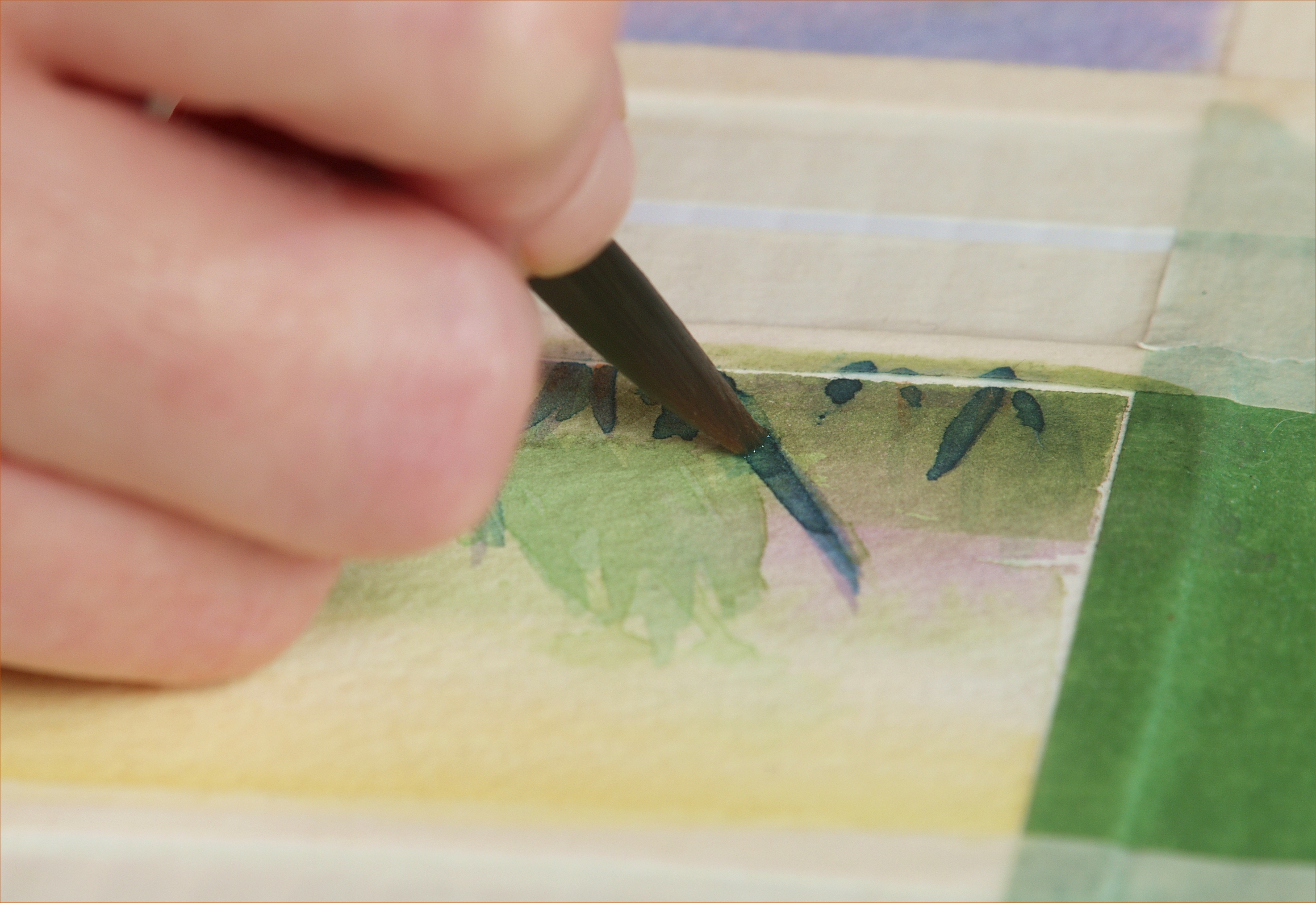
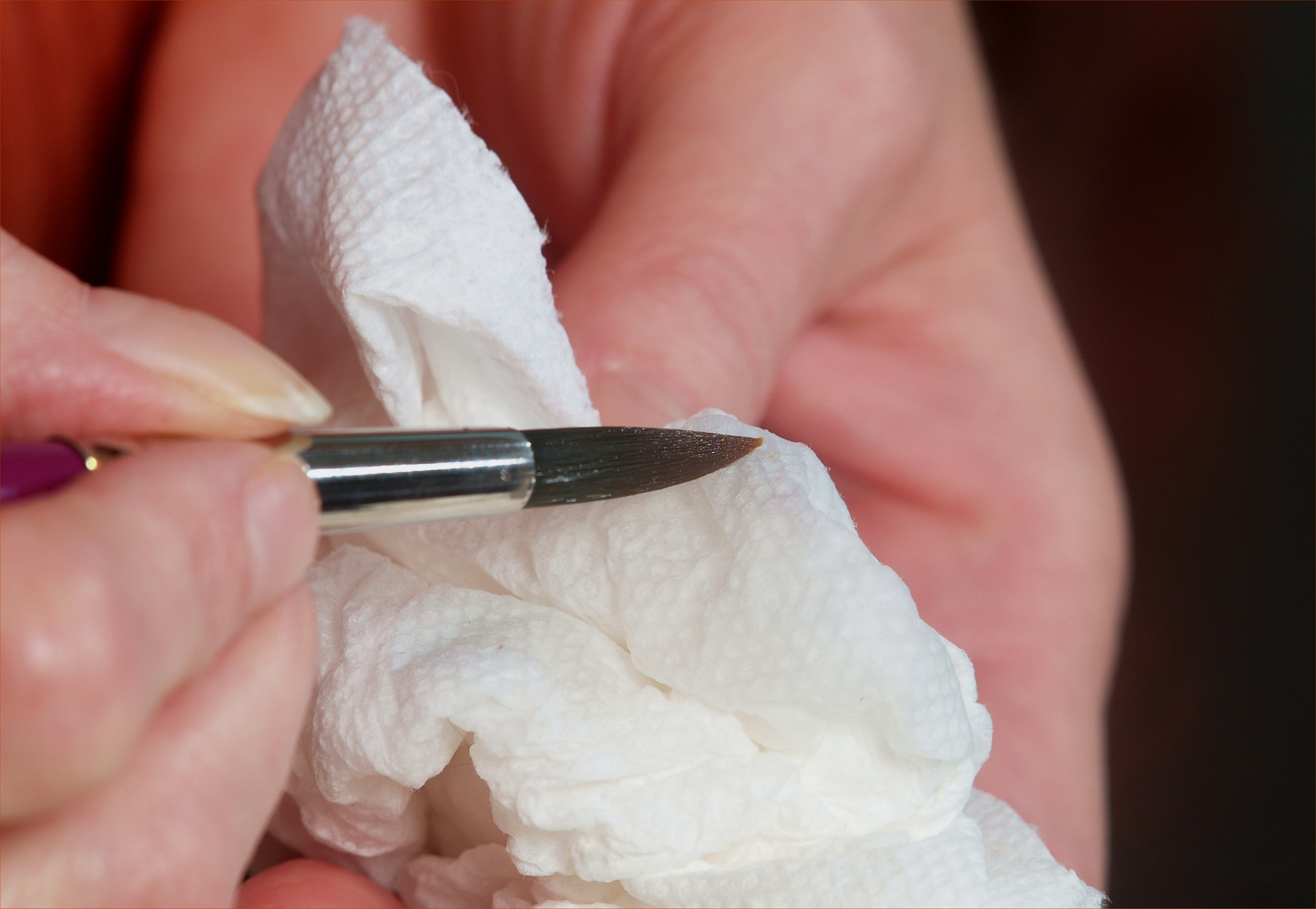
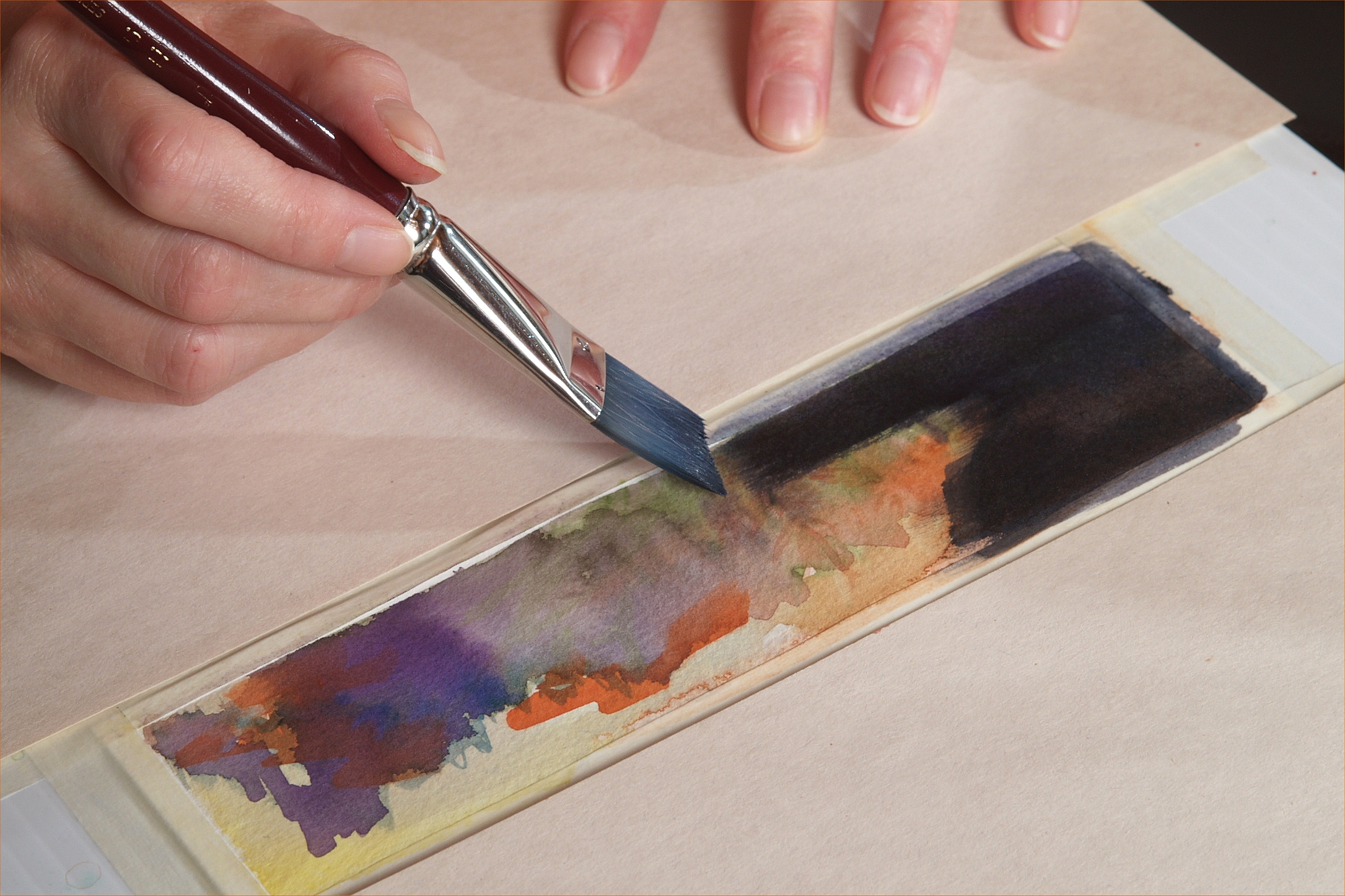
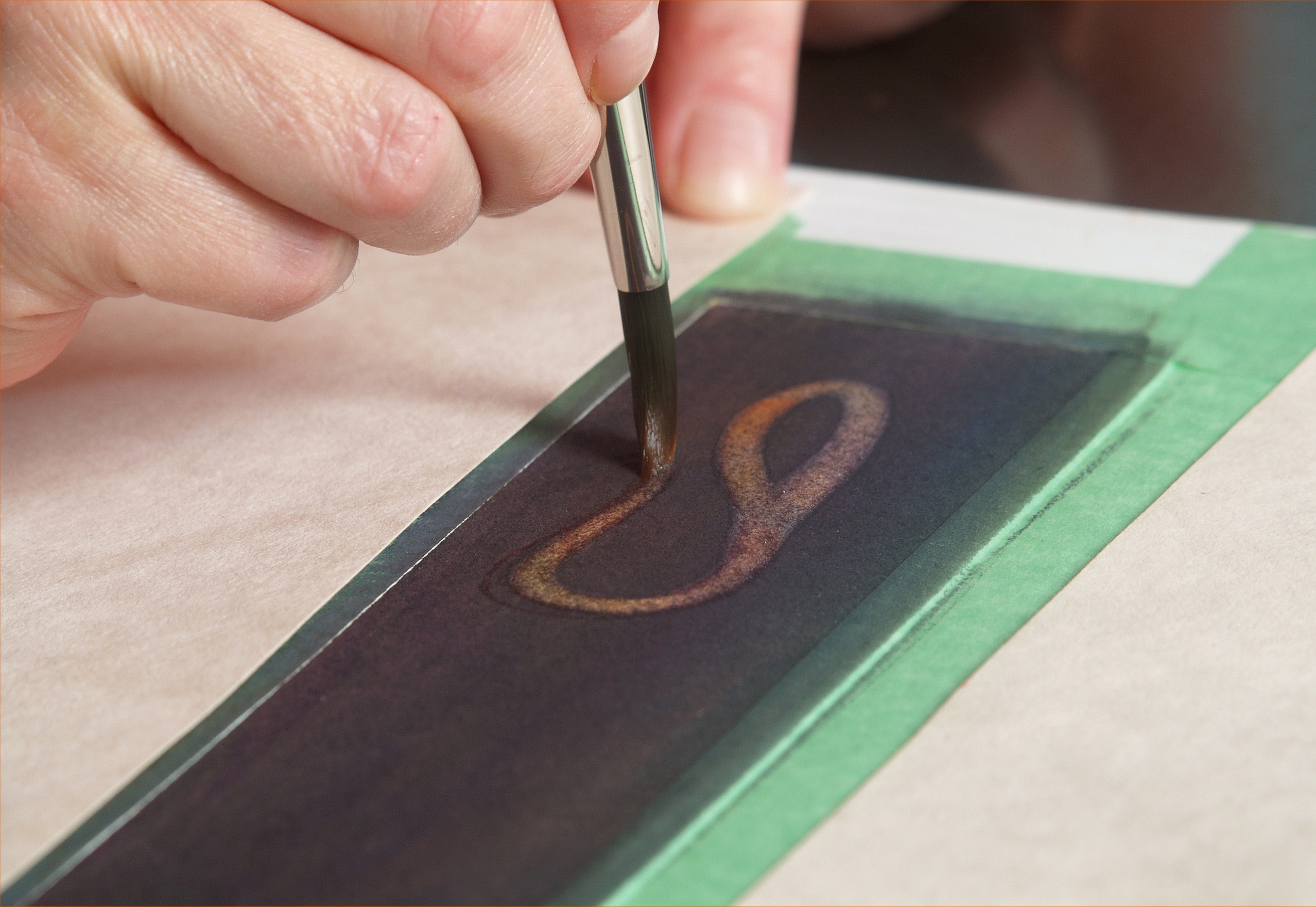
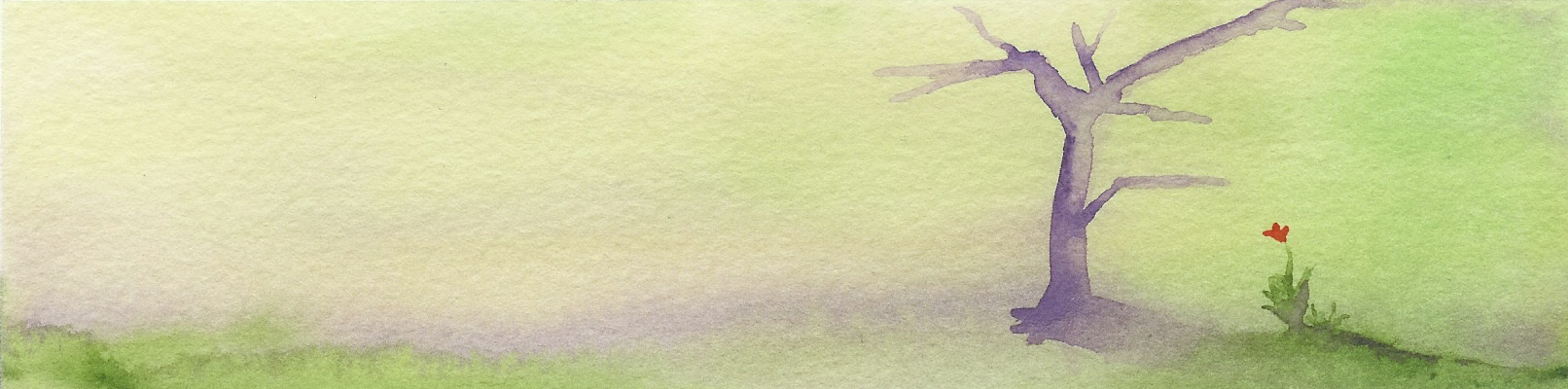
The world breaks everyone and afterward many are strong at the broken places.~Ernest Hemingway

Priming

Often the hands will solve a mystery that the intellect has struggled with in vain.

~Carl G. Jung


Priming Your Imagination

Imagine yourself standing in the middle of an art gallery. You are the only one in attendance, as this is a private viewing. Actually, you are the artist. This is your show. The theme of the collection is Your Personal History.

Surrounding you are impressions of the people, places and things in your experience, right up to but not including the present moment.

How do you feel?

Would you like to stroll through the gallery?

Linger?

Move in?

Or would you prefer to strike a match and bolt from the room?

Before making a final decision, imagine two doors within easy reach. See yourself turning the knob to one door and finding it locked. Now try the other. It opens readily and swings wide, inviting you to enter. You step in, only to find that the room is empty except for a table and chair. The chair, you discover, fits you perfectly. Of course it does. This is your studio.

On the table in front of you is a blank canvas. Reach into the apron around your waist. Pull out a glue stick and the letters T, O, D, A and Y and paste them to the canvas. Affix the canvas to the door. Then, using whatever else you find in your apron, add lines, shapes, color and texture to the room. Do it up any way you like. This is your room. Your TODAY.

Occasionally you wander back to the gallery–to your personal history–for ideas. Or tools. Or simply a sense of groundedness, familiarity, comfort—even if you don’t necessarily like everything in it. Even if it’s in shambles. Even if it makes you weep. You’ve learned that your personal history has the power to do this. In fact, you’re beginning to see that it influences much of how you feel and think and act today. For something that no longer exists, it’s incredibly pervasive!

For better or worse, your history is yours. It’s a part of your journey. And it’s over. Done. Finished.

You can’t change the past. You can’t go back to rearrange it. You can change how you see it, and how it affects you. You must do this, however, in your studio—in the present, when you are ready. So close the door to your history, and peek in only as necessary.

Bit by bit, you can review, reframe and remodel spills and stains into something interesting. Meaningful. Possibly magnificent. Whether or not you consider yourself creative, whether you’re an experienced artist or a terrified beginner, you can do this. You can make your art. You can create recovery.

I dream my painting and then I paint my dream.

~Vincent van Gogh

The meditations in Section I were designed to help change self-defeating thinking into positive, motivational thinking which, in turn, can change how we live. In a very elementary sense we have been using thought to create action.

In Section II we flip things around and move first, think later. Through art-making we explore existing thoughts and feelings and, from them, create something new.

These deceptively simple activities can be therapeutic and enjoyable. Immersed in the process, you become less aware of time and pain. Your intuitive scope broadens. You discover, invent and rebuild. If you are true to your self the results will delight, excite, and perhaps even astound you.

Now, about that locked door; have you guessed where it leads?

On the other side of that door is your future.

You might, if you are inclined, create a sign for the door of your future space—much like the one you made for today. With just the tiniest spark of hope you can even fashion a key and turn the lock. But you cannot step inside. You can’t ever be certain of what is there.

Don’t let that stop you from imagining it.

Dream it. Pray about it. Make plans and believe in your future. It’s yours, as well. You just can’t live there. Yet.

For now, get into the studio and make your marks. Gain new perspectives. Be happy and free by creating your recovery, one moment, one day at a time.

Priming Your Senses With Water & Colour

Self-expression can be therapeutic, regardless of the medium. I choose, for a number of practical and aesthetic reasons, to paint with watercolors.

Water is odorless and simple to use. Relatively inexpensive and easy to obtain, a little goes a long way. And because it has the unique property of existing as a liquid, solid or vapor, it virtually recycles itself.

Cleansing, revitalizing, healing—water is the most versatile and necessary substance on the planet. My father refers to it as “the nectar of the gods”.  In truth, it is the nectar of life.

The essence of a human being is water.

~Masaru Emoto, The True Power of Water

The adult human body is about 70 percent water and needs input of about two quarts per day. Many of us don’t drink nearly that much, so it’s a good thing that most foods are also largely composed of this essential compound. While researching the properties of water in preparation for this section, I learned that the water content of one of my favorite foods, a vine-fresh tomato, is a whopping 95%! I had suspected that my body seems to know what it needs. Now I am convinced.

Our relationship with water is not exclusively physical. In the universal language of dreams, water represents emotion. As a liquid, water flows, unifies, and balances—is always seeking its own level. Do our emotions also seek their own level? Do our minds, on some deeper level, pursue change, balance and harmony—healing—in our behalf? I believe so. Through dreams. Through creativity. Through art. Asleep or awake, our subconscious mind is at work, seeking solutions, reeling in and tossing out hints as to how we might become more fluid, more balanced, more at peace.

Both dream and painting show in their very fabric the work of an

abstract-symbolic intelligence.

~Harry T. Hunt

Generally, I dream and create in color. Although I enjoy pencil sketching and have a few black-and-white dreams in my portfolio, I am shamelessly besotted with color. It’s seductive. Delicious. Get me a napkin. No kidding, I’ve looked at color arrangements and actually felt as though I could eat them. My favorite? I tend to gravitate to yellows, blues and greens but, in general, it’s smorgasbord, please—I want to taste everything.

Colors invite, tempt, woo our senses. Theories suggest that they engage specific emotions, and can influence how we feel. Certain colors soothe, while others excite. Some suggest stability, others—adventure. Some are warm. Some are cool. In my view, all are sensory-delectable.

When creating the paintings in this book, I chose colors at random, without an agenda. I wanted to go with the flow. To explore and express. Watercolor was the perfect medium. It may be for you, as well.

Bon appétit!

Experience, even for a painter, is not exclusively visual.

~Walter Meigs

Visual and visualize are both words that indicate the use of sight. A visual exists outside of the body, and is brought inward through our eyes. Visualizing takes place within, more specifically within the mind’s eye or imagination, and can be employed to create experience and/or reality from our thoughts. It is not necessary to actually “see” images. Visualizations include all the senses, and may simply involve remembering or imagining how something smells, tastes or feels.

The Secret Garden Visualization (below) is modeled after the practice as I learned it at age eleven. Through the years I’ve used it as a means of pleasant diversion from everyday obligations, to offset anxiety, and to bring desired change into my experience. In the role of moderator, I’ve even used it to help children settle into sleep.

The wording and the settings may vary (feel free to improvise), but the process always begins with relaxing the body**. Because this includes closing your eyes, you will only truly benefit from it if you have someone read the script as you recline on a flat chair or surface. You or someone else may read and record it so that it can be played whenever you like. Whoever reads should use a clear, soft voice and pace the directions so that you have ample time to follow along when you actually do the whole body relaxation and visualization. For added effect, soothing music can be played lightly in the background.

When you are ready to begin the relaxation, remove your shoes and loosen any restrictive clothing. If you plan to sit in a chair, be sure that the circulation in your legs flows freely. Place a large book (perhaps a phone book) under your feet, if necessary. If you are using a recording, set the volume just high enough to hear the spoken words. Get into a comfortable position, and begin.

** Depending on your physical health, it may be unadvisable to tighten muscles as described in the relaxation portion of this practice. Please consult with your health care professional before proceeding. Consider trying The Secret Garden Visualization, Version Two, which describes an alternative method of relaxing the body.

The Secret Garden Visualization

Take a deep breath in through the nose. And let it go out through the nose.

Close your eyes and take another deep breath. In the nose. Out the nose. Blow away distracting thoughts.

Curl your toes, tightening the muscles briefly.

Now relax the muscles and release tension.

Tighten all the muscles in your feet. Hold for a few seconds. And release.

Remember to breathe. Breathe easy. Breathe naturally. Do so deeply when it feels right.

Tighten the muscles in your calves. Hold for a few seconds. And release. Let tensions go away from you.

Tighten the muscles in your thighs. Hold for a few seconds. And release.

Let your legs go limp. Remember to breathe.

Tighten the muscles in your buttocks and hips. Hold for a second or two. And release.

Give yourself permission to relax.

Make a fist and tighten all the muscles in your hands. Hold for a few seconds. And release.

Clench your fists again. This time, tighten the muscles of your forearms also. Hold for a few seconds. And release.

Feel the tensions drain away. Breathe.

Tighten the muscles in your upper arms. Hold for a few seconds. And release.

Allow your arms to be limp, like those of a rag doll.

Tighten your tummy muscles. Pull them inward towards your back. Hold for a second or two. And release. Breathe. Let the tension go.

Now, concentrate on the muscles of your lower back. Gently, slowly, tighten for a second or two and release. Allow the tension to seep through the fibers of the chair, cot or floor, far away from your body.

Breathe deeply. In the nose. Out the nose.

Tighten the muscles of your upper back, around your shoulder blades. Hold for a second or two. And release.

Focus on the muscles in your neck and shoulders. Gently tighten for a second. And release. Let it go. Let it go. Let tension go away from you.

Swallow, if you can. Tighten the muscles in your jaw gently for a second or two. And release.

Take a deep breath in through the nose. Feel your chest rise. Breathe out through the nose and tighten the muscles in your chest, around your collarbone and the front of your shoulders. Release, and remember to breathe. Easily. Naturally.

Make a face. Scrunch the muscles in your forehead, around your eyes, nose and mouth. Hold for a few seconds. And release.

Take a breath and concentrate on the parts of your body that may have tension. Tighten. Hold. Release. And relax. Breathe easy. Breathe naturally.

Be still, and at peace.

All worries and cares have floated away. This moment is yours to enjoy.

Bring to your mind a favorite treat. It can be anything you want. Anything.

It might be something you like to eat.

Or perhaps something you enjoy doing.

It can be somewhere you like to go.

Whatever it is, there is an abundance of it in your Secret Garden. And you are on your way there, right now.

You’re in no hurry. You are satisfied, full, relaxed. There is plenty of time and this space is your own. You are the only one who has the key to the door of your Secret Garden.

Do you feel the key in your hand? What shape is it? What colour is it?

Move slowly towards the door.

As you fit the key into the lock, and open the door, what sounds do you hear?

Step into the garden and close the door. Turn the lock. No one may follow unless you invite them to do so. This is your Secret Garden, your personal, intimate space. It is exactly as you wish. You are safe and at peace here.

Take a few moments to admire your garden. What is there? Are there any distinct shapes, colours or textures? Are there any odors?

Feel free to reach out and touch at any time, if you like. These are your things.

Breathe deeply. Do you smell something? What is it? Is it something good to eat? Breathe in the aroma. Enjoy.

As you move about the garden, does the light change from one area to another? Focus on where you prefer to be and go there now. Take whatever you like with you.

What things are in this special place?

Is it well lit? Softly lit? Dark?

What do you do there? Something you’ve done before but would like to do more of? Or  something you’ve only dreamt of trying? In your Secret Garden, all things are possible. You can do anything you like.

Decide what time of year is it in your special place. Is it Summer? Spring? Winter? Fall?

How are you dressed? Heavily? Scantily? Not at all?

Get comfortable. Settle in.

You are safe. You are free.

Enjoy.

When you are ready, prepare to leave the garden.

Touch, smell, taste, hear and observe whatever pleases you as you make your way to the door.

Feel the key in your hand. Insert the key, open the door, and let yourself out. Hear the door quietly shut behind you, and the lock click into place. Everything will be as you wish should you decide to return. You have the only key.

Slowly become aware of your body again. Become aware of your breathing. Wiggle your fingers and toes. Say, silently or out loud, that you are the keeper of your garden and you manage it well. When you are ready, come back to the room, alert and refreshed.

If you are an experienced painter and already have the necessary supplies, you may want to quickly skim the highlights of this part in the preparations just to be sure you have everything you need.

If you are a beginner, review the following carefully and make a list before shopping.

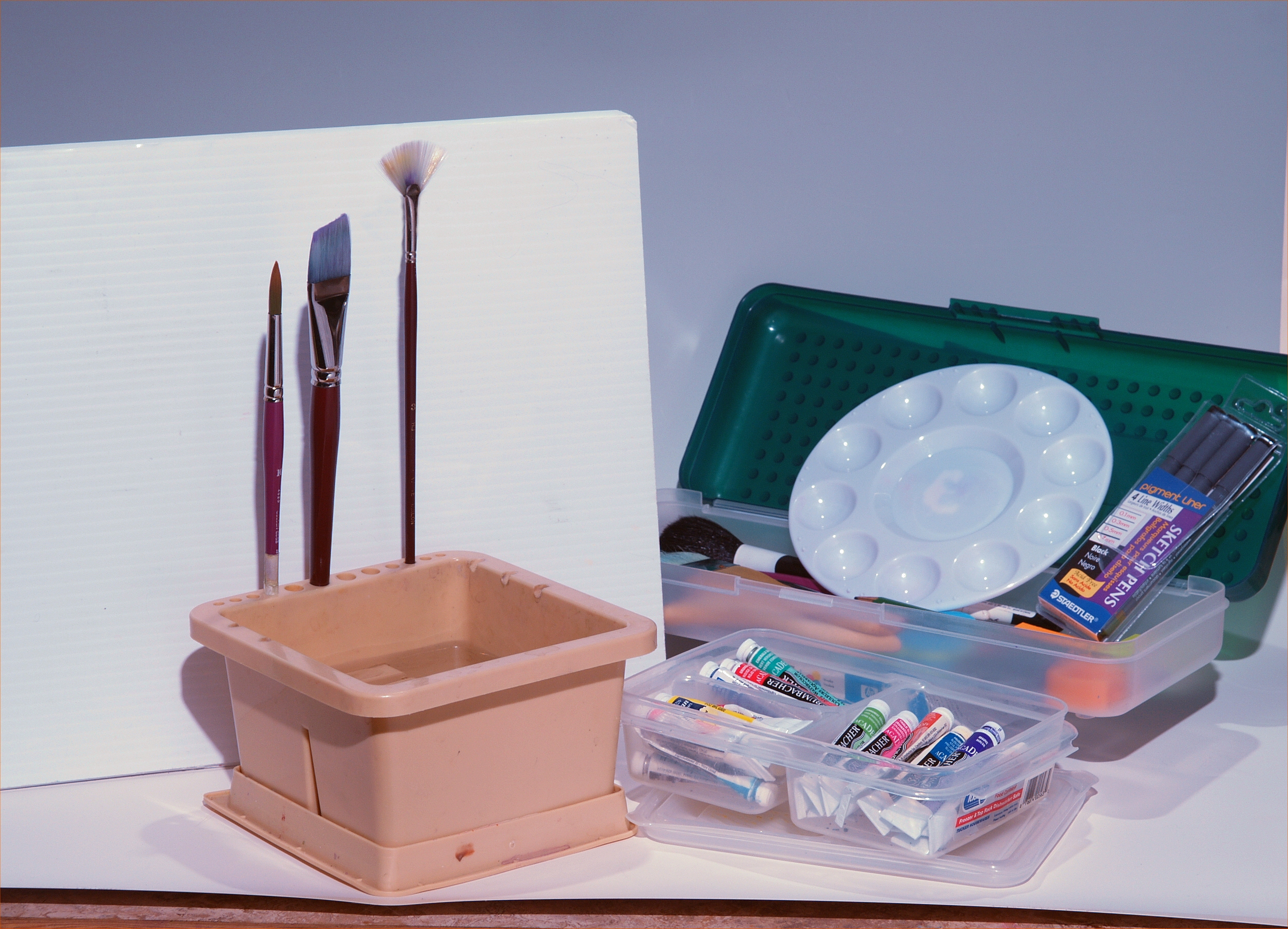
When purchasing supplies choose those of good quality. They will give you a sense of control as you paint, and make the experience much more satisfying than using those of lesser quality. Described below are those that I used to create the paintings in this book. They are relatively inexpensive and generally easy to acquire. Feel free to improvise as necessary. For your convenience, websites that provide online sales of supplies are listed at the back of this book. If you have the advantage of being located near an art and crafts retail outlet, seek the advise of the staff there. They can be helpful in assisting you select comparable brands if those suggested are not available.

Note:I used imperial measurements (i.e. inches, feet, yards) to prepare my own materials and to prepare the instructions for this book because I learned the imperial system well before metric measuring (i.e. millimetres, centimetres, metres) became a standard in my country. If you are most familiar with the metric system simply refer to the figure in parenthesis following each imperial measurement.  

Paints: Grumbacher Academy Artists’ Watercolors comprise most of the tube paints in my personal collection.* They are good quality, cost-effective, and come in a large variety of colours. I also have a few Winsor & Newton tubes, both Artists’ Watercolor and the more economical Cotman.

Watercolor pencils, crayons and ‘pans’ (circular cakes that snap into trays) are fine, but tubes are preferred as they are more versatile and provide lots of opportunity for mucking about.

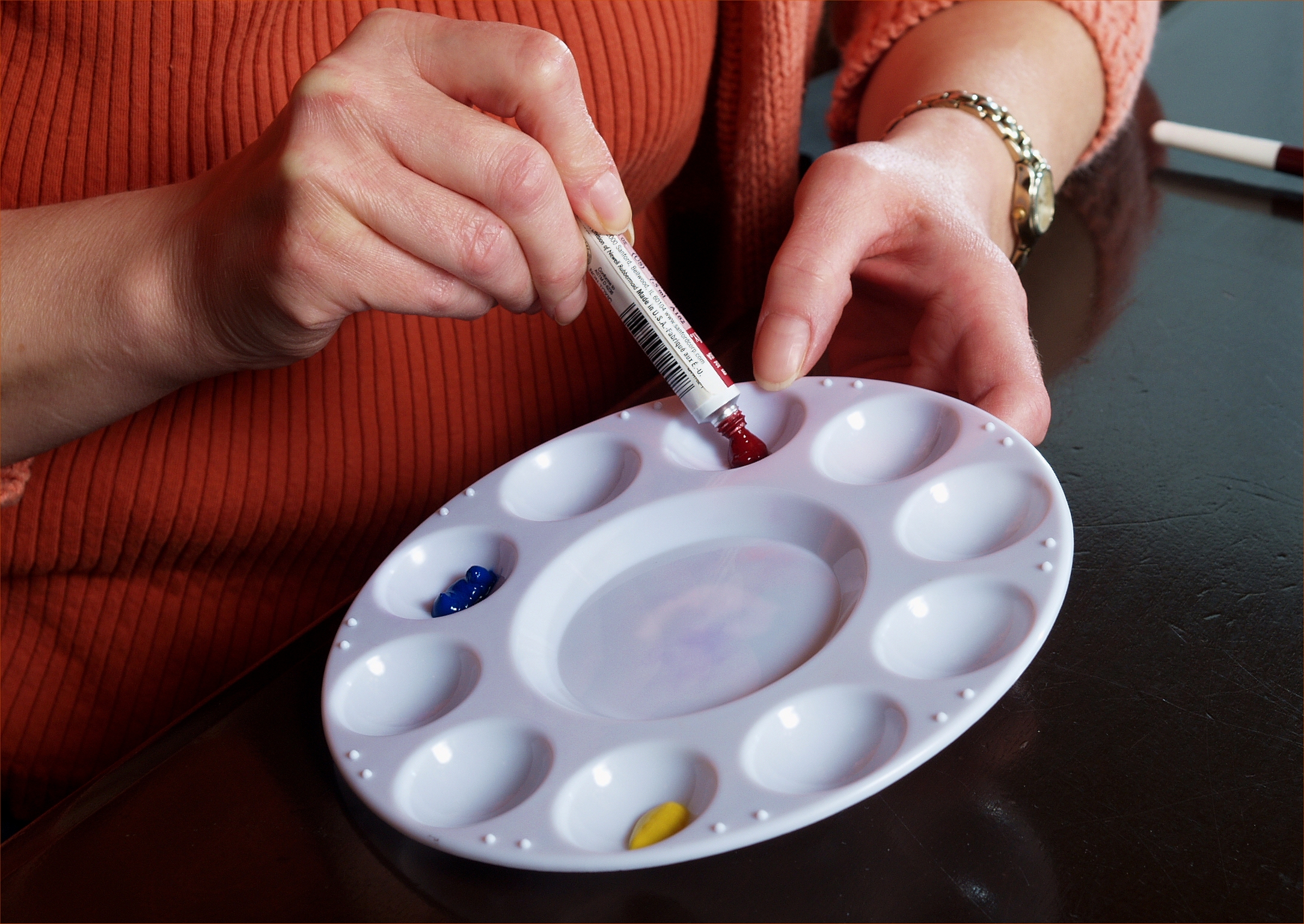
Four colors are all you need to begin, one each of the three primary colors—red, yellow and blue—and a green. Add those that appeal to your unique tastes.

Some that I used fairly extensively were Perylene Maroon, Cobalt Blue (Grumbacher Academy brand), Lemon Yellow (Winsor & Newton Cotman brand) and my ultimate favorite for surprise effects, Sap Green (Grumbacher).

You’ll find as you play with the colors that the three primaries, when mixed two at a time, will create secondary colors: green (yellow and blue), purple (red and blue), and orange (red and yellow). Particular shades will vary according to primaries chosen. Any three colors mixed together will create brown.

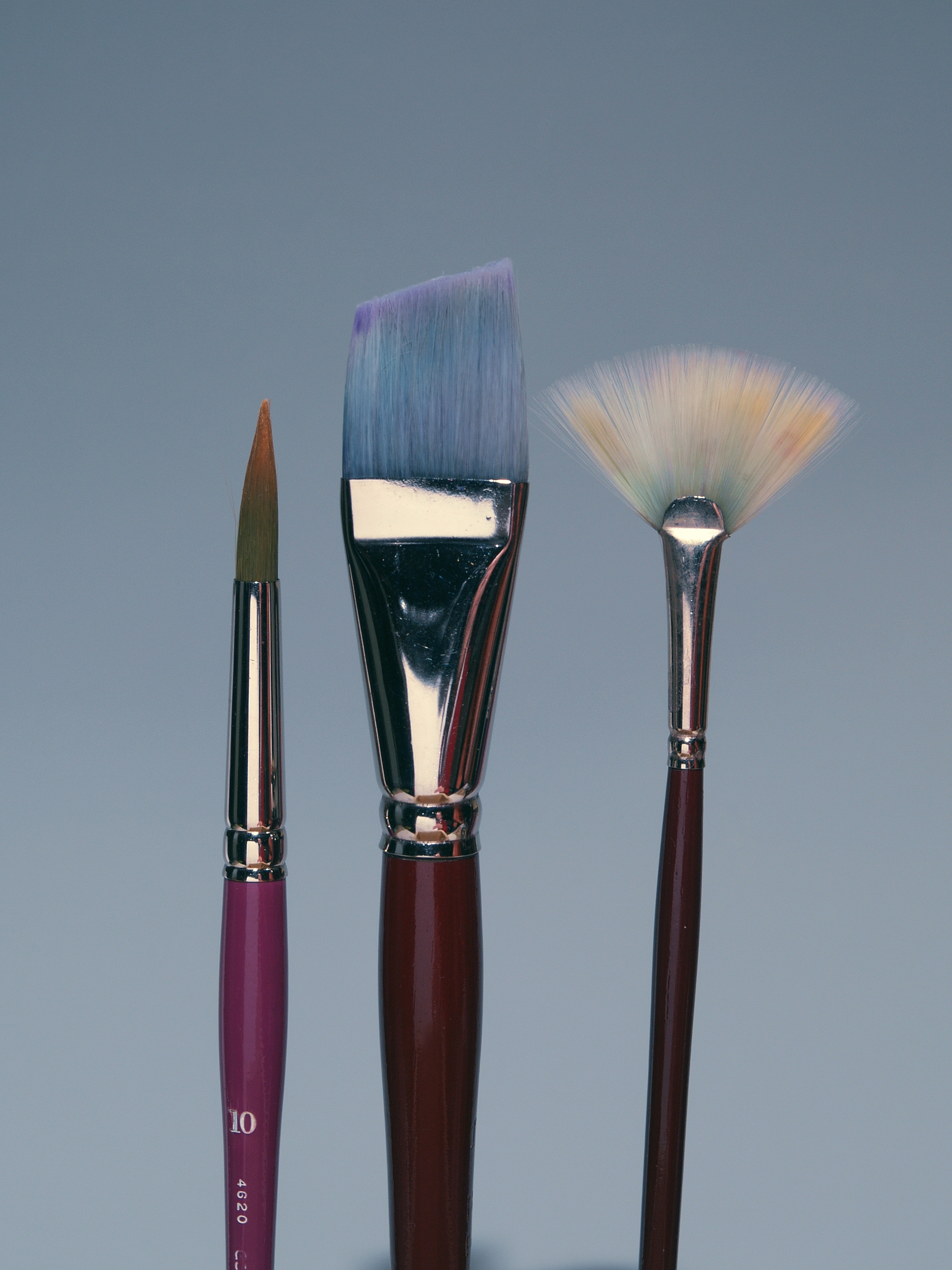
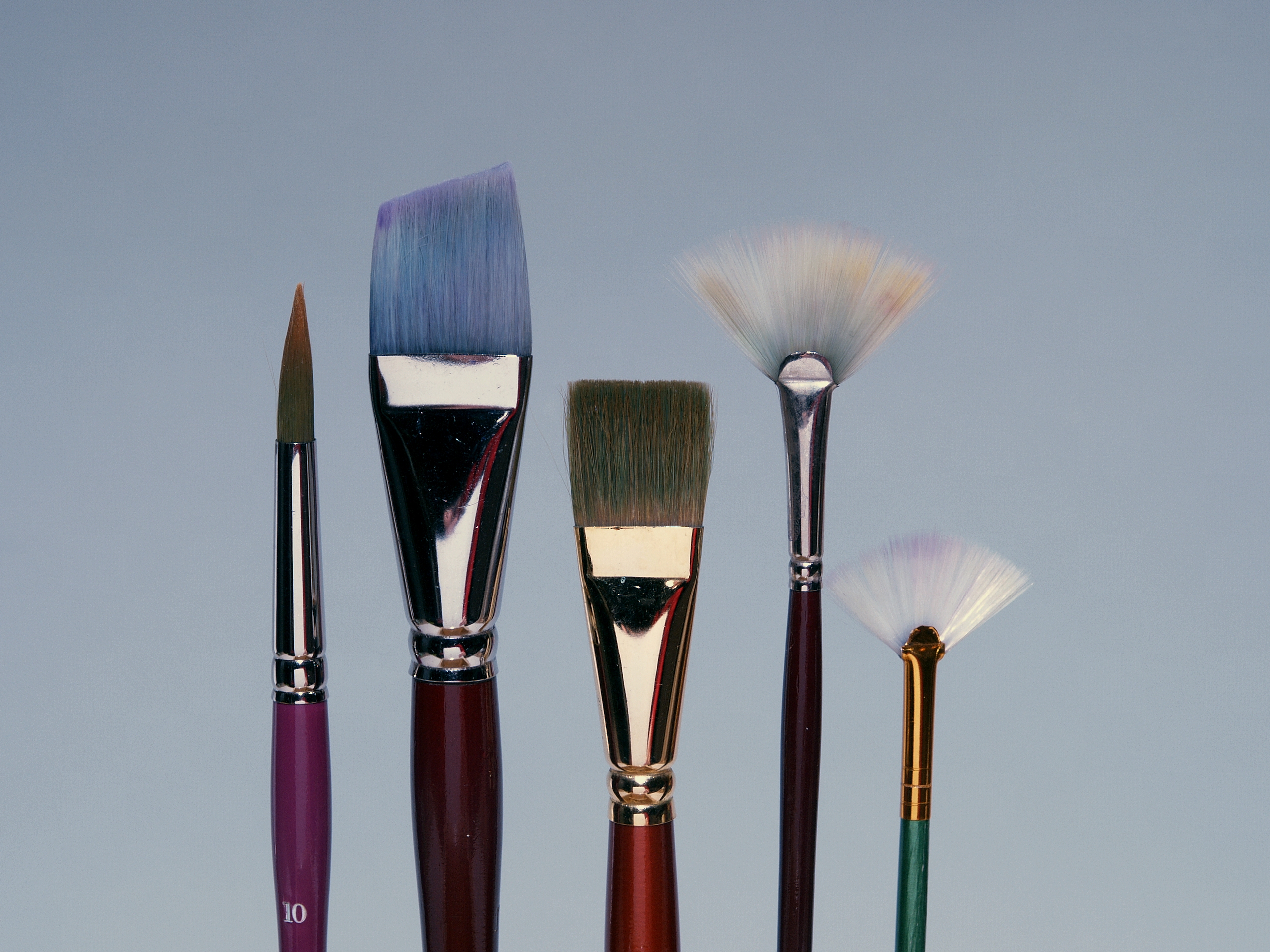
Brushes: The type of brush you choose for most of your painting will make a dramatic difference in how much you enjoy the process. The brush I employ more than any other is a Grumbacher Golden Edge (Series 4620) #10 pointed round. Mine has been in use for a decade-and-a-half and still gives me a nice clean point. My next favorite is an angular shader, a 1” White Taklon (Series 925), which I use for washes. There are watercolor brushes in all sorts of shapes and sizes, but you only need two similar to these to get started. If you would like to add a third for special effects, I suggest a small nylon fan brush, size 3 or smaller.

Left: Brushes that I use most.

Above: Pointed round, angular shader, wash brush, fans. Brushes similar to the ¾” Winsor & Newton Sceptre Gold wash brush, shown in the center of this grouping, are more commonly used for washes than the angular shader, and may be easier to find.

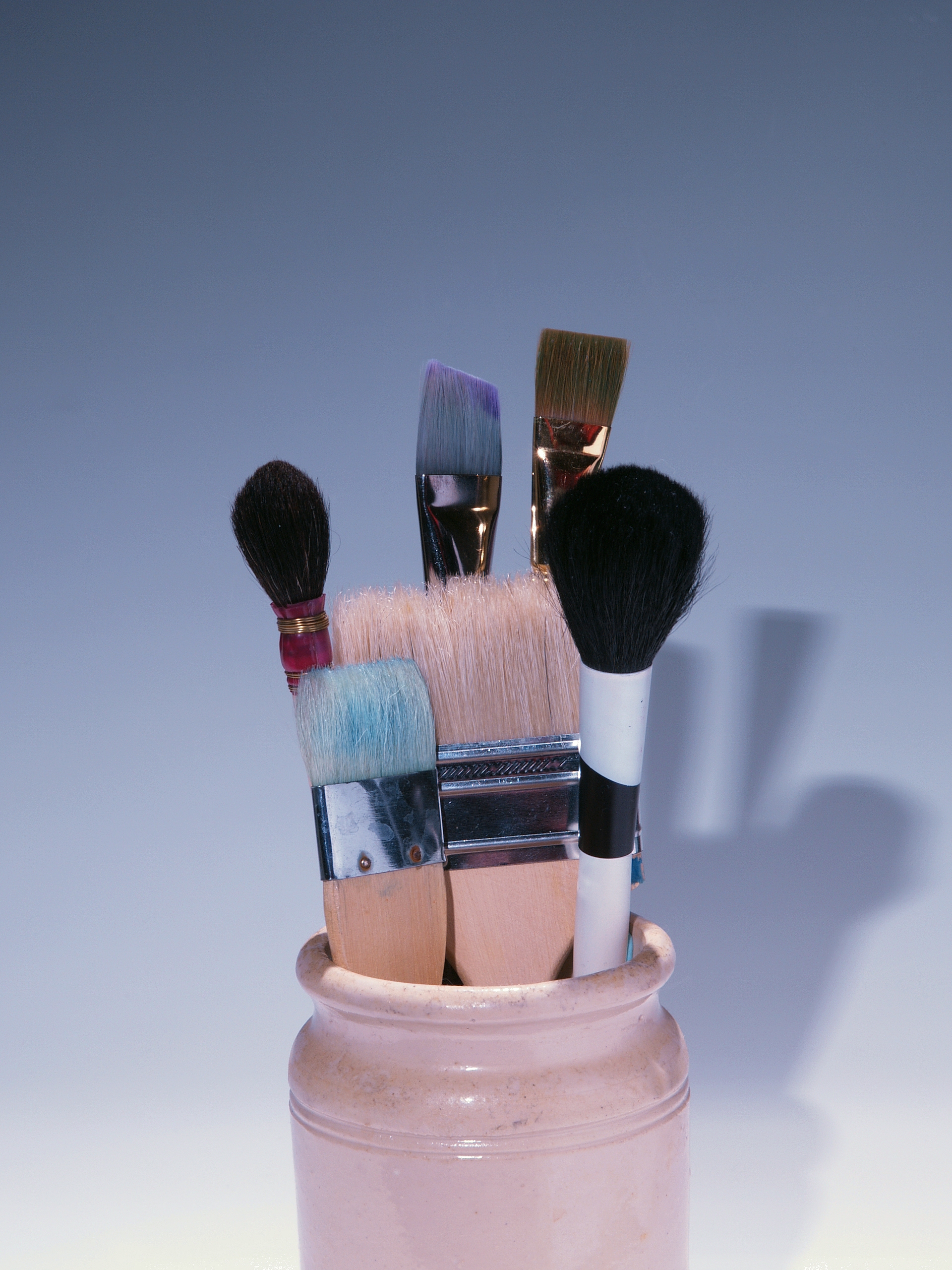
Brushes used by watercolorists for washes include mops and hakes. Both are very soft, generally natural-hair brushes used to create wonderful wash effects. If you’d like to experiment with one of these, I recommend a small mop to begin with. Several of the first washes in the Dark/Light paintings were created with a da Vinci Series mop brush, size 0.

Watercolor paper: I like both Arches and Winsor & Newton papers but I generally use Winsor & Newton Artists’ Water Color Cold Press 140 lb. (300 gms). It’s good quality, easy to find, and economical. You can buy it in sheets of 30″ x 22″ (760 x 560 mm) and sometimes get a great discount when you purchase a package of five, although one is plenty to get you started.

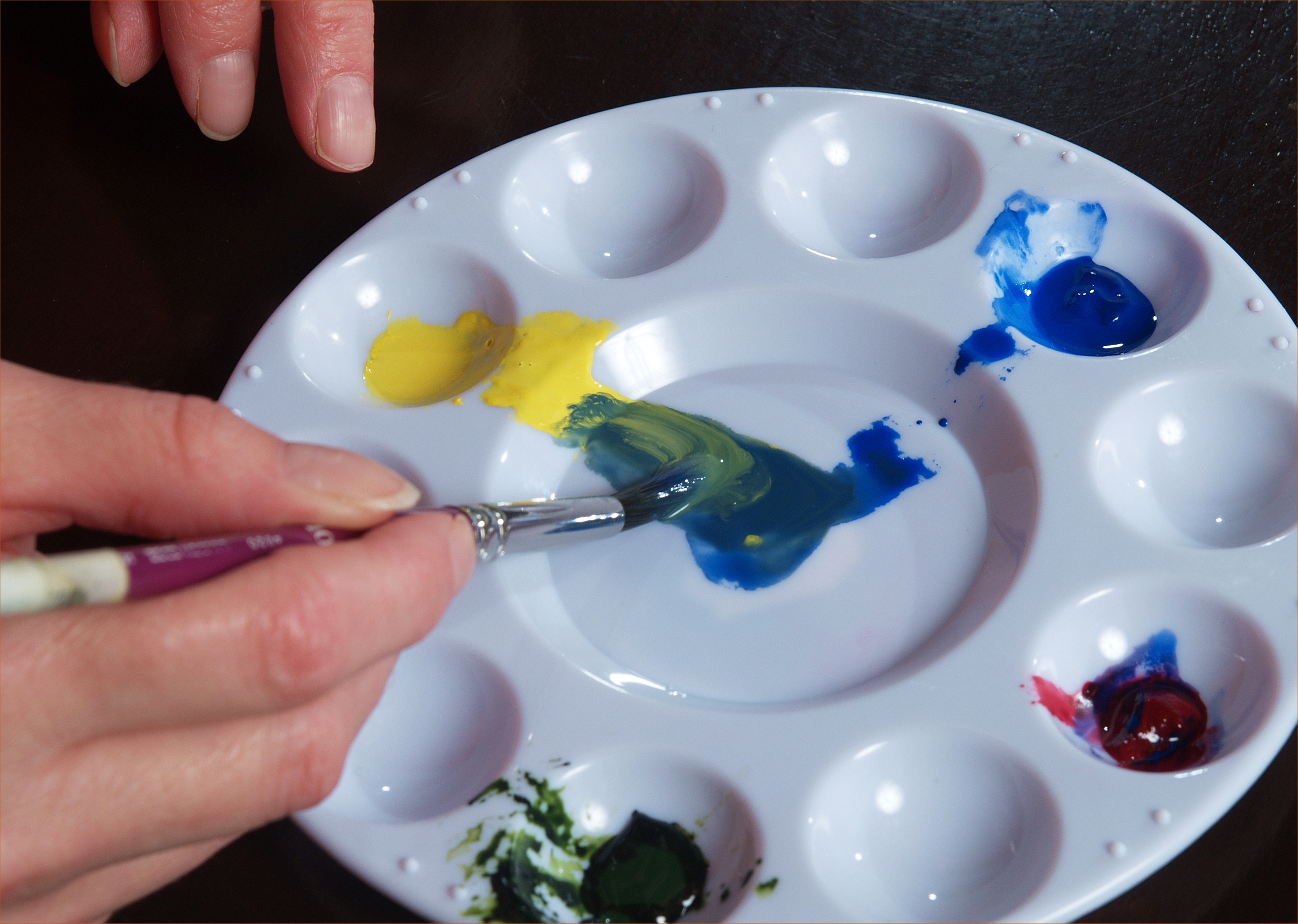
Palette: My preference is a round plastic palette with lid. It’s about 7” (12.5cm) across and doesn’t take up much room on the table. With the lid it’s very handy for traveling and storage. A suitable alternative is a small styrofoam tray or plate. Whichever you choose, it’s a good idea to have several on hand, although one is fine to begin with.

Backboard: You will need at least one flat, sturdy piece of wood or plastic, to which your cut papers will be taped. Corrugated plastic (eg. “Plasticore”) is ideal. It’s lightweight and cleans up well. My local Home Depot carries it in three sizes, any of which can be cut to the desired size of 12” x 16” (30 x 40cm).

Masking tape: 1” (24mm) wide preferably, although ¾” also works well. Almost any kind, white or green, will do but I favor Painters Mate Green. It has great sticking power and is easy to handle. A light green, it also makes for straighter borders, as it’s easier to see through when taping the edges of the paper to the backboard.

Containers for water and brushes: You will need two small glass jars for water, and one tall jar to store wet brushes in. Or, instead, a plastic water-well that is designed specifically for painting. Mine is about 6 ½” (17cm) square and has holes along one side to hold brushes. It’s compact, not terribly expensive, and might be found at your local art and crafts outlet.

Scissors, ruler or yardstick, pencil and kneadable eraser: These will be used to measure and cut your paper. A yardstick will make the job easier, but a 12” (30cm) ruler will do. If you have a choice, a 2B drawing pencil makes softer marks that erase better than those of a regular pencil. A kneadable eraser is best; it leaves no smudges.

Paper towel: Choose something absorbent and soft (which is easier on your brushes). One roll will last a very long time. I use Bounty.

Portfolio/Report Cover with Pocket: A paper or plastic cover, bag, envelope, approximately 9 ½” x 11 ½” (24 x 29 cm) will protect your papers before painting.

Sticky Notes: One small-medium sized pad.

Storage containers: Two small plastic containers with lids, one for your tube paints and another for your other small supplies. All can be kept together in a cloth bag or a box. Whenever you are ready to paint, simply bring out the storage container.

Waterproof sketch pens (optional): Not necessary, but great for adding fine details and/or lettering after painting. I use black Staedtler pigment liners, generally sizes .03 and .005.

Hand-held Hairdryer (optional): For quick drying between washes. I didn’t use one for the Dark/Light series but I do have a compact model I’ve found useful in other projects.

*Update: I used Grumbacher and Winsor Newton watercolour paints for years, loved them, and still have a few in my collection. More recently, I began using Daniel Smith Extra Fine Watercolors. They’re pricier but worth a try.

Once you have all your supplies you can begin preparations for painting. If you are new to this process, please don’t be intimidated. We’ll walk through it together step-by-step.

The first task will be to divide your paper into 10” x 8 ½” (25.5 x 21.5cm) sheets, which will eventually be cut into 2 ½” x 8 ½” (6.5 x 21.5cm) pieces. I’ve often used this small, bookmark size for individual and group instruction because it’s economical, because it lessens the anxiety facing a large blank canvas can arouse, and because paintings can be completed in a relatively short period of time. When I began the Dark/Light paintings, I chose this size for similar reasons:

  • I wanted to flit freely, at my whim, from one piece to the next without concern about waste. It was liberating to know, in advance, that if I did make a mess, the loss of material was minimal.
  • I didn’t want to labor on any one painting for too long. With most paintings I achieved closure in reasonably good time.
  • I prefer working on smaller surfaces. For me, repetitive movements, particularly those that are large and involve my entire upper body can, at times, be tiresome and painful.

For this last reason, and also that preparations involve more linear, logical brain functions than right-brain intuitive functions, I made prep-time a separate activity from painting. So that you may get the maximum benefit from your painting sessions, I recommend that you do the same.

NOTE: You can use any size paper and choose to cut, or not. Below, for your convenience, is a detailed outline of how I break down a 30″ x 22″ sheet.

Preparing the Paper

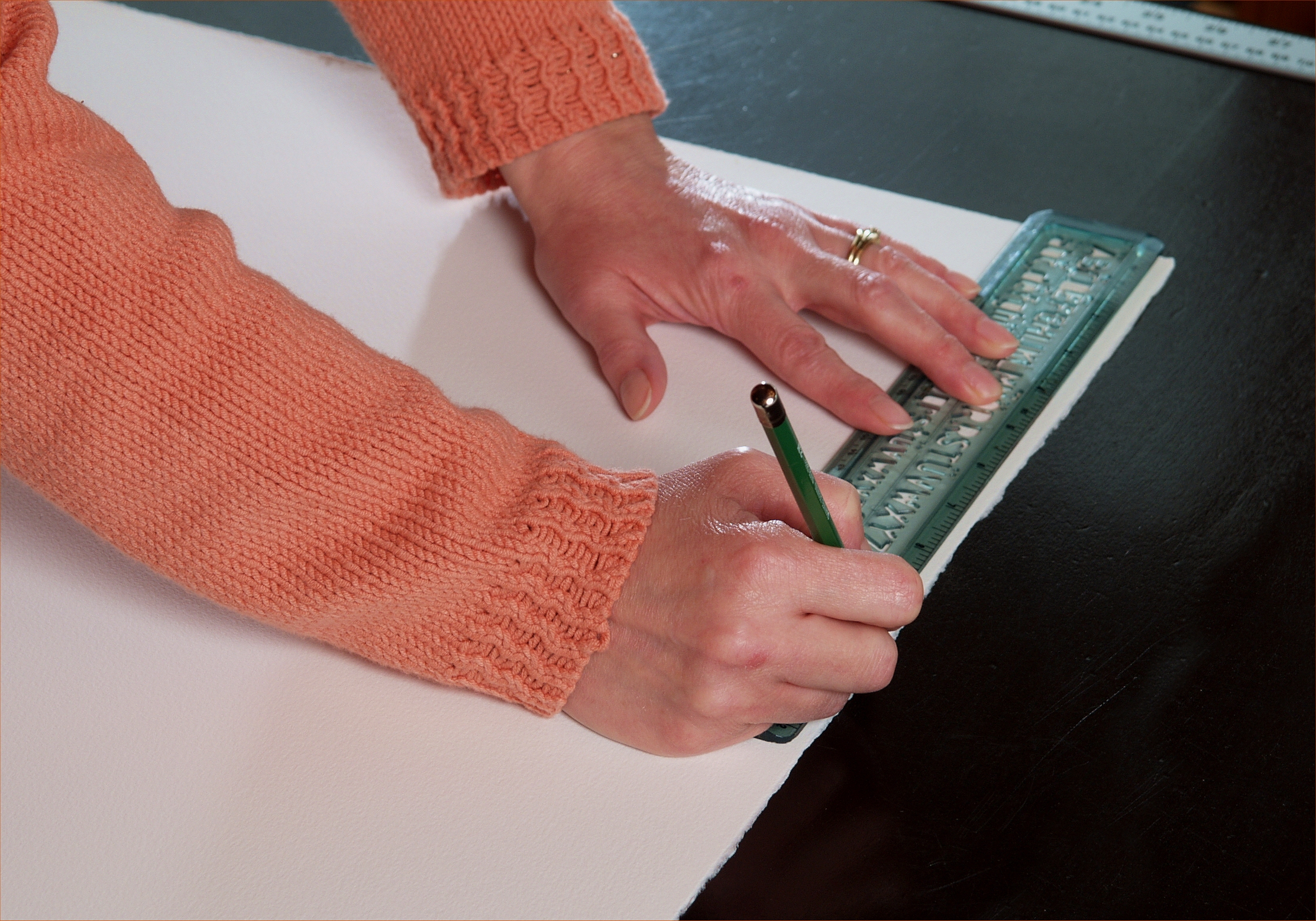
The following describes, step-by-step, how to divide a 30” x 22” (760 x 560cm) sheet of watercolor paper into 10” x 8 ½” (25.5 x 21.5cm) blocks. You may use either a ruler or yardstick. Whichever you use, before measuring, lay the paper lengthwise on your work surface with the embossed seal (e.g. the Winsor Newton logo) face up. This is the ‘right’ side of the paper, the one most suited for painting on.

Using a Yardstick

1. Measure the perimeter of the paper:

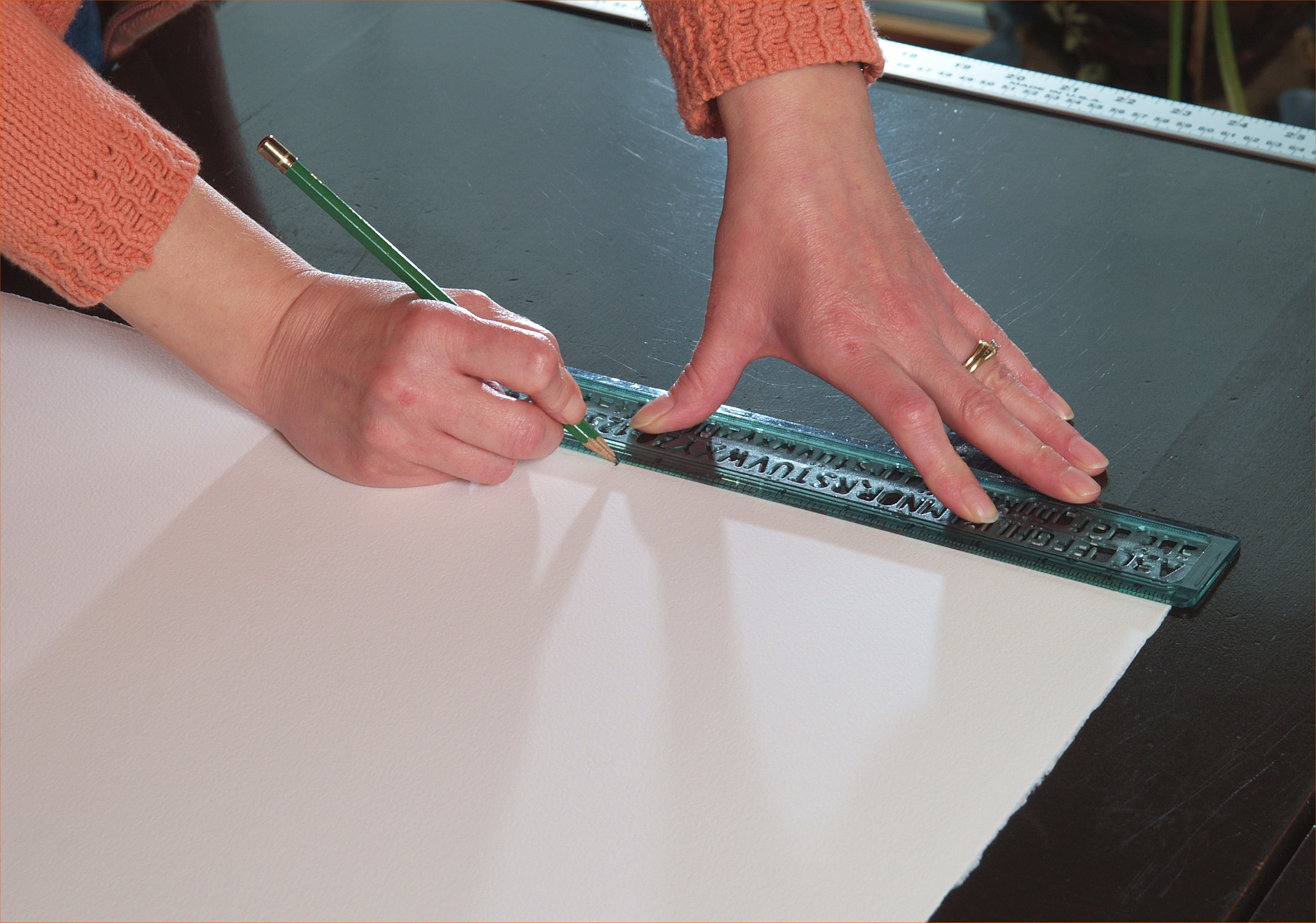
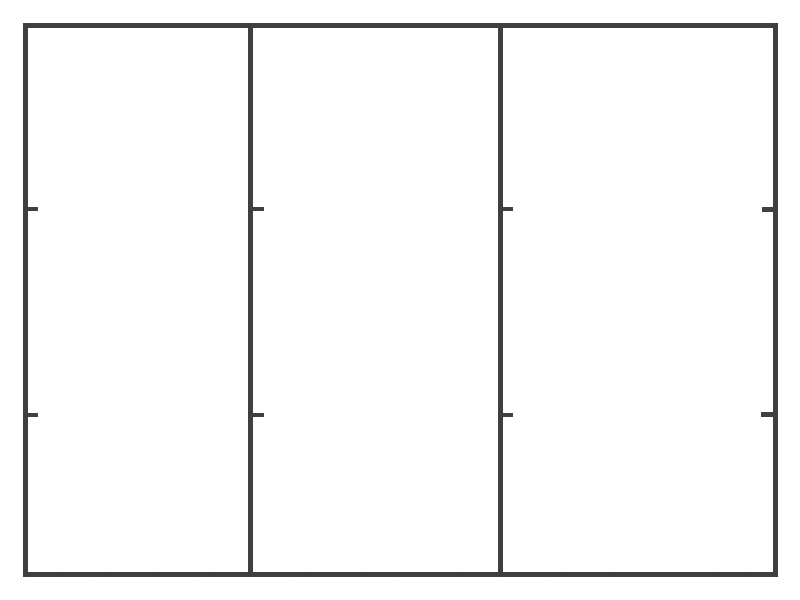
Working from left to right using a ruler or yardstick, measure and mark off the top and bottom edges of the paper in 10” (25.5cm) intervals. Don’t worry if there is a bit more than ten inches (25.5cm) at the far right, which may have a deckle (fringed) edge.

Working from top to bottom, measure and mark both side edges of the paper at 8 and 1/2” (21.5cm) intervals. There will be five inches (13cm) remaining at the bottom of the paper on each side.

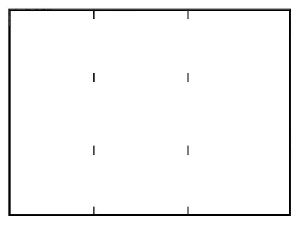
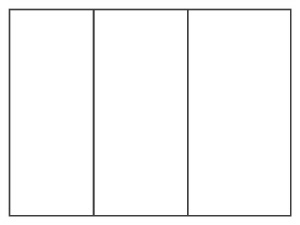
The markings on your paper should resemble this diagram.

2. Drawing the lines:

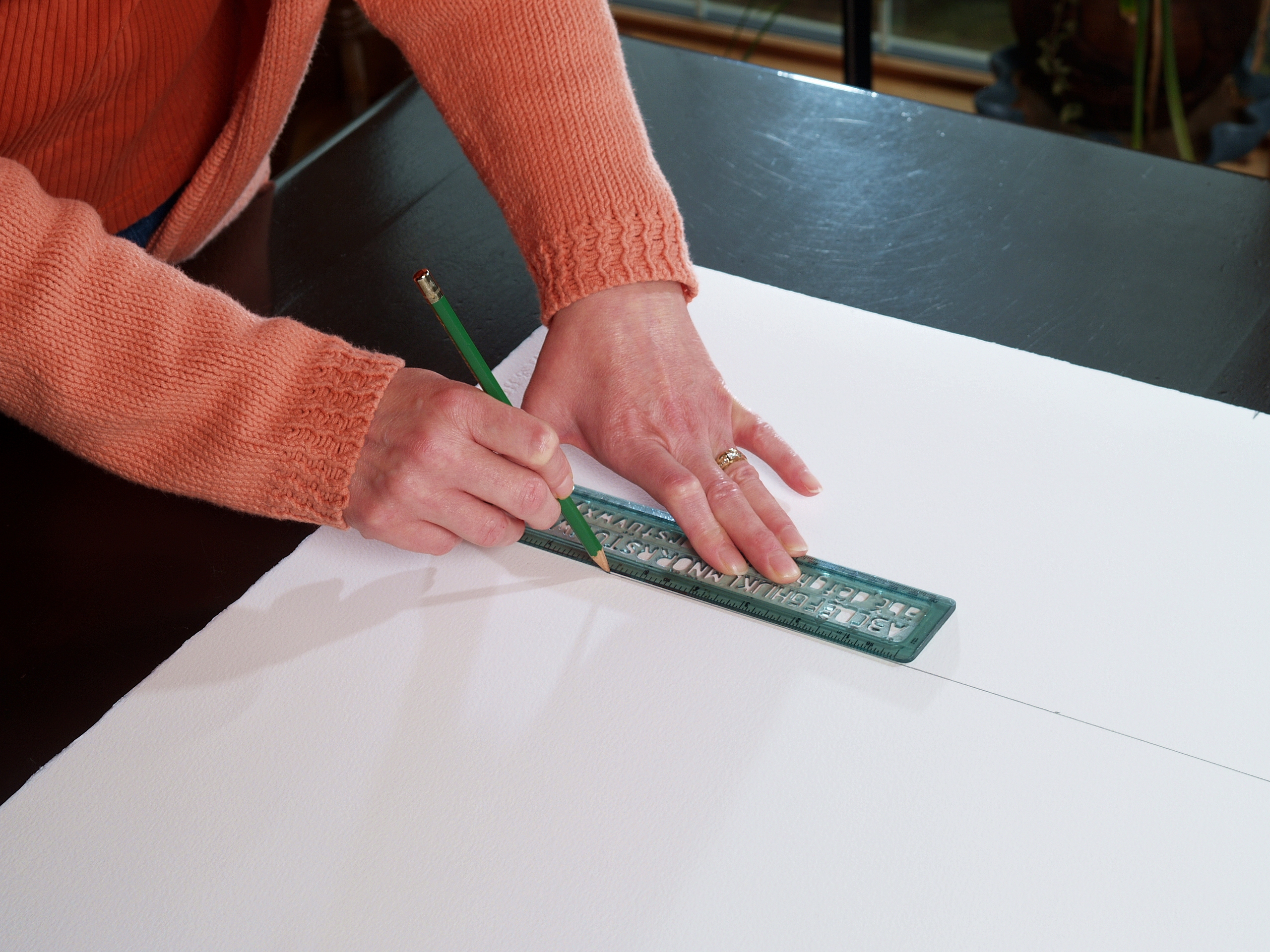
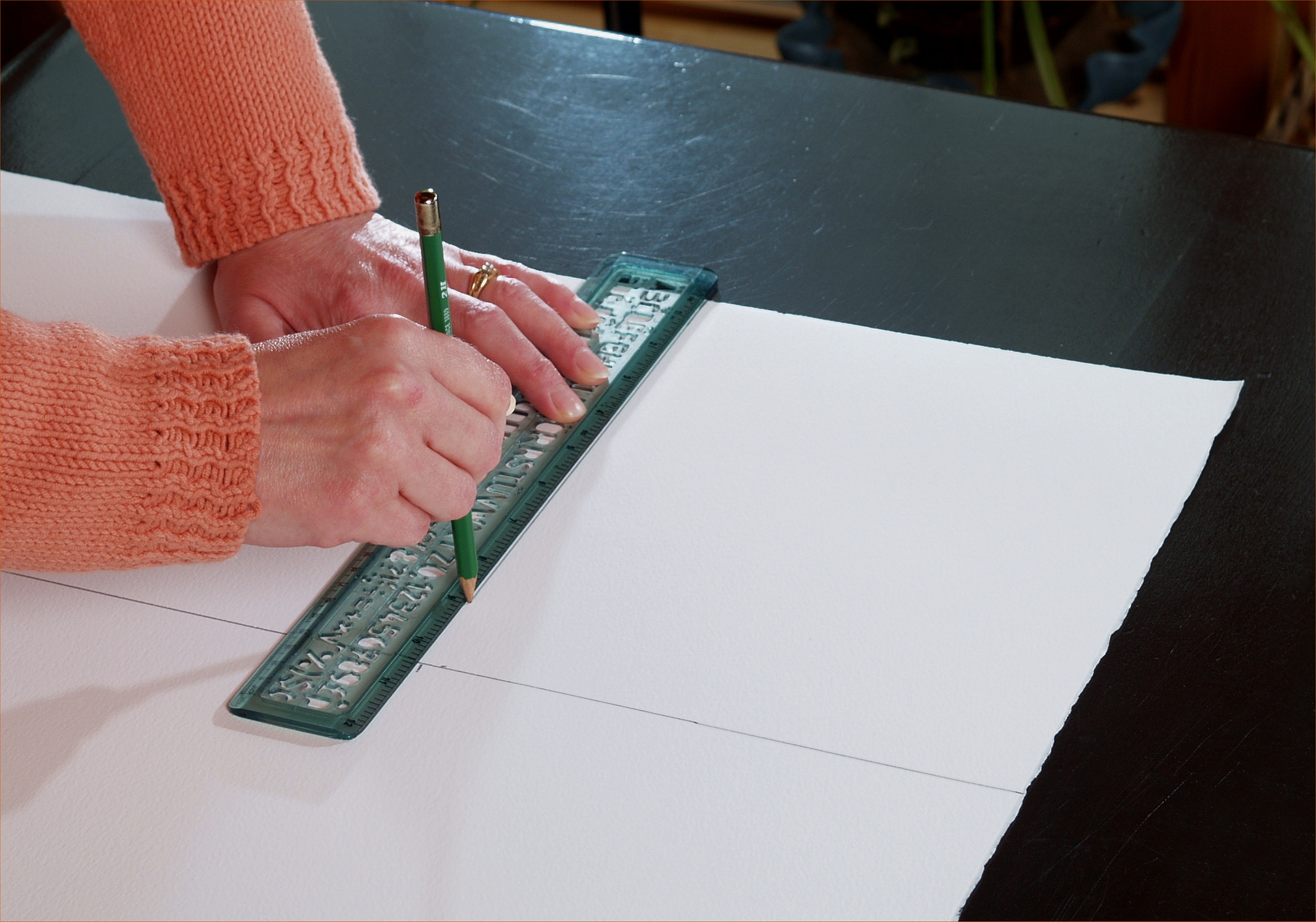
Drawing the lines is merely a matter of connecting the dots. Lay your yardstick vertically on the paper, line up the first set of 10” (25.5cm) marks at top and bottom, and draw a line along the edge of the stick. Repeat with the next set of marks. You should now have three vertical columns of equal width—not including the deckle (fringed) edge of the paper, which you can simply discount in the math and leave intact to create extra-wide, extra-interesting pieces.

Next, lay the yardstick horizontally across the paper, line up your first set of 8 ½” (21.5cm) marks, and draw a line along the edge of the yardstick. Repeat this process to make the final horizontal line at the remaining marks.

When the measuring is finished: You should have six 10” x 8 ½” (25.5 x 21.5cm) blocks, plus three 10” x 5” (25.5 x 13cm) blocks, enough to make thirty 2 ½” x 8 ½” (6.5 x 21.5cm) paintings.

Before cutting the paper, pencil in a small “x” on one corner of each block. This will designate which side is to be painted on. Cut along your drawn lines, stack the papers and place them in a protective cover.

Using a Ruler

1. Create two vertical lines:

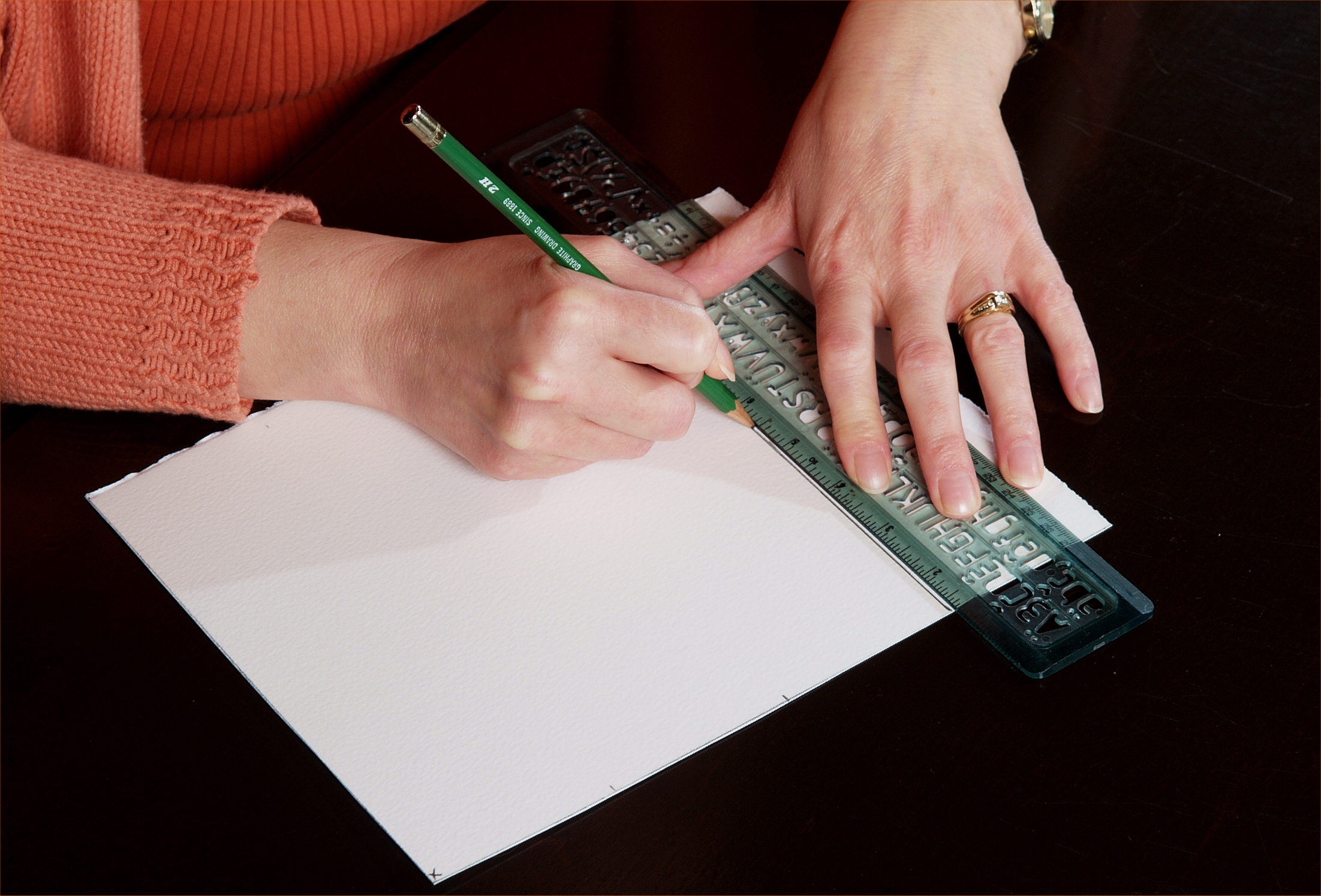
Working from left to right, measure and mark off the top and bottom edges of the paper in 10” (25.5cm) increments. Don’t worry if there is a bit more than ten inches (25.5cm) at the far right, which may have a deckle (fringed) edge. This can be used to create extra-wide, extra-interesting pieces.

Working your way down the paper, create two sets of vertical marks across the paper in 10” (25.5cm) intervals.

The markings on your paper should resemble those in this diagram.

Drawing the vertical lines is now merely a matter of connecting the dots. Line up your ruler along the markings to complete two vertical lines.

2. Create two horizontal lines:

Working from top to bottom, measure and mark both side edges of the paper at 8 and 1/2″ (21/5 cm) intervals. There will be five inches (13cm) remaining at the bottopm of the paper on each side.

On each vertical line, working from top to bottom, measure and mark the at 8 ½” (21.5cm) intervals. The markings on your paper should resemble those in this diagram, with five inches (13cm) remaining at the bottom of the paper.

With your ruler, connect the markings to create two horizontal lines.

Before cutting the paper, pencil in a small “x” on one corner of each block. This will designate which side is to be painted on. Cut along your drawn lines, stack the papers and place them in a protective cover or box.

When painting the Dark/Light series, I usually had three or four boards on the go at one time, which meant I had up to sixteen works in progress. This made it possible to ignore pieces I was unsure of until I was ready to complete them.

Whether you are working with one board or several, if you have difficulty deciding when a piece is finished, leave it alone for awhile. Return, admire, and ask if you’re ready to let it be what it is. Some of my paintings were actually complete after the first color application (see Week Sixteen, Breathing, and Week Twenty-Three, Morning). If you get a feeling that your painting works just as it is, move on. If not, ask what it wants to be. Start a dialogue with your inner muse and ask for inspiration. If the muse remains silent, try adding a bold brush stroke or motif to your painting. Sometimes the simplest change is enough to inspire.

Should you absolutely dislike what you see, try using the Reverse technique. Above all, don’t be discouraged. There is far more going on than creating images. You are creating recovery. Healing is taking place.

I can tell you that all the pieces do fall into place; the techniques do become absorbed and some, even invented, as soon as you see yourself in the painting. It is then that the great dialogue with yourself begins…

~Jeanne Carbonetti


With practice, you will become more comfortable with the process. You may become so immersed that you lose track of time, and even find yourself reluctant to end the painting session. So much to explore, so much to be discovered!

To help bring each session to a close, and to prepare yourself for the rest of your day, take a few minutes to tidy up your work/play area. Don’t rush. Enjoy the ritual of re-entry to the world around you. Clean your brushes. Empty your water jars. Tighten the caps on your paints. Wipe the table…


When you feel that all of the paintings on your board are done, leave them to dry. In a day or so you can remove the tape. Do so by lifting one corner and pulling it gently towards yourself, rather than straight across the edge of the paper. This helps prevent the paper from tearing. Peel one strip at a time, turning the board as needed to work your way around the painting.

Always sign and date your work. If you don’t want to interrupt the flow of the images on the front of your paper, sign the back. A waterproof pen is best but almost any will do as long as it makes clean, clear, permanent marks. If you are inspired with a theme for your work, give it a title. This can be written on the back of the paper also or, if you dare, on the front.

In the pages of Creating Recovery yet to come, you may be inspired to do any number of things with your creations. In the meantime, enjoy the process of bringing them to life.


When doing this for the first time, I suggest making it an activity separate from your regular painting session. Once you have had a chance to become comfortable with the process, you may find that it can be an enjoyable prelude to painting.

Begin by laying one 10” x 8 ½” (25.5 x 21.5cm) sheet of paper lengthwise on the table with the ‘right’ side (the side with the “x” on it) face down. To create four 2 ½” x 8 ½” (6.5 x 21.5 cm) strips, measure and mark off the paper at 2 1/2″ intervals across both top and bottom edges.

Use your ruler to line up the marks between top and bottom, then draw the vertical lines. As you cut off each strip, turn it over and pencil in a small “x” on one corner. This will later help you identify the ‘right’ side for painting. The pencil marks can be erased later.

When you have cut all four strips, turn them face up (with the “x” visible) and arrange them on the backboard. I laid mine in a single row. They were easy to tape that way and it never occurred to me to do it differently, but you can set yours out any way that suits you. Don’t resist the urge to experiment!

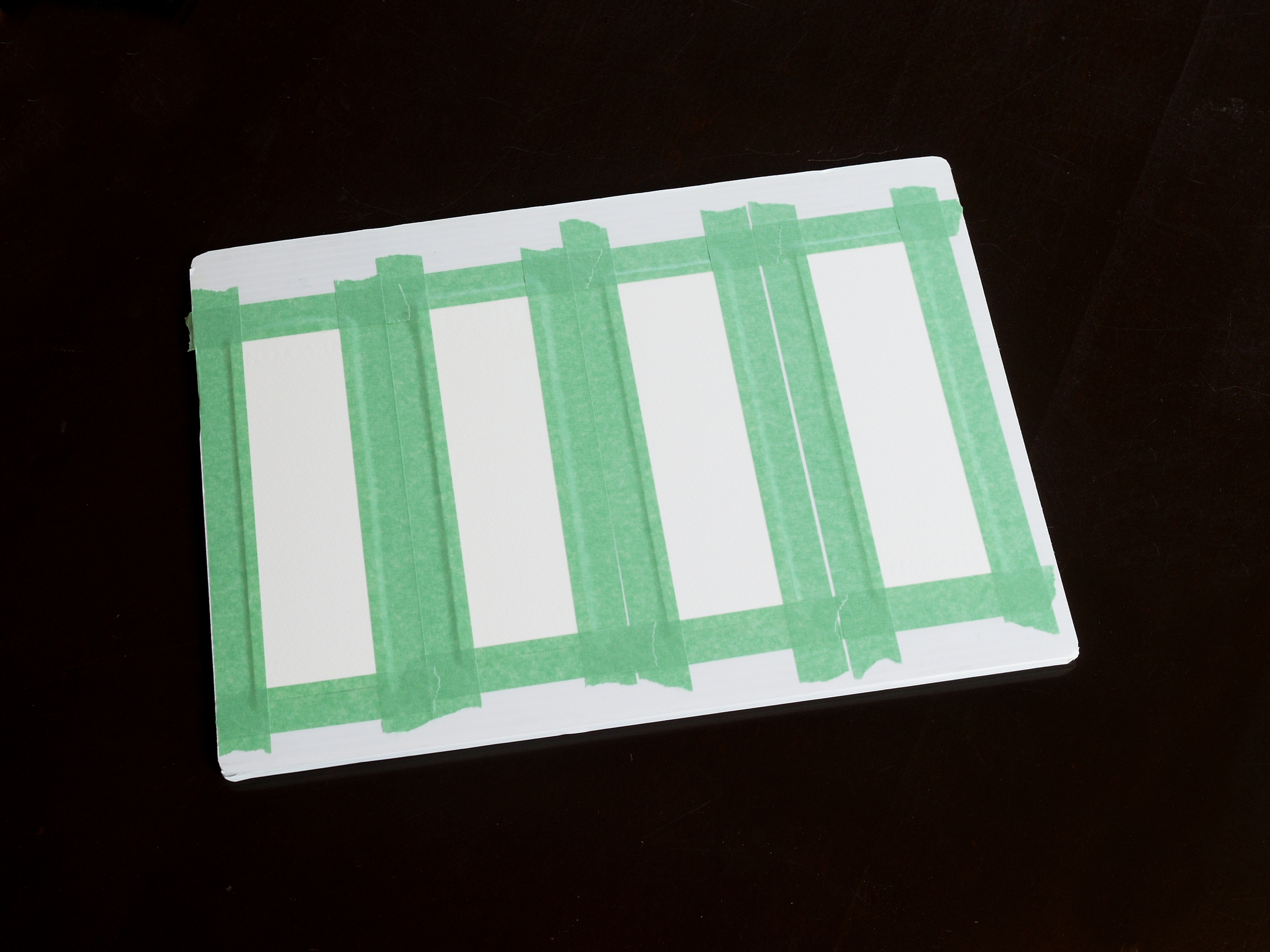
The next and final step in preparing the board is to tape the papers down. Doing so not only secures the paper in place, it also creates a border around your piece and gives it a clean, finished look. For these small pieces I aimed for a border of about 3/16to ¼” (six to seven millimetres). I didn’t actually measure until the moment of preparing these directions, only to give you some idea of what to shoot for. It’s really a matter of personal preference. Just remember that you want to leave as much room as possible for paint, but a reasonable outside margin as well.

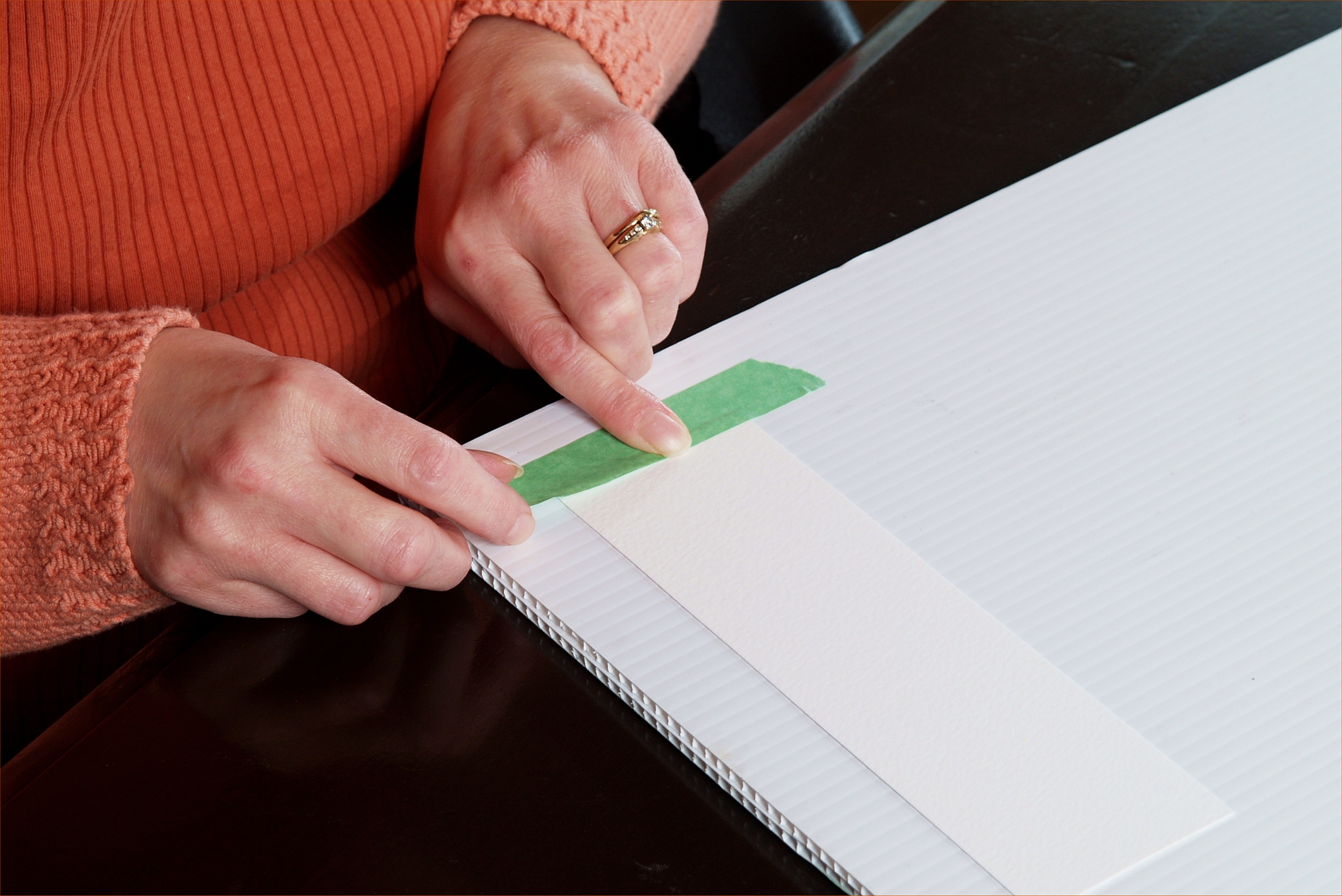
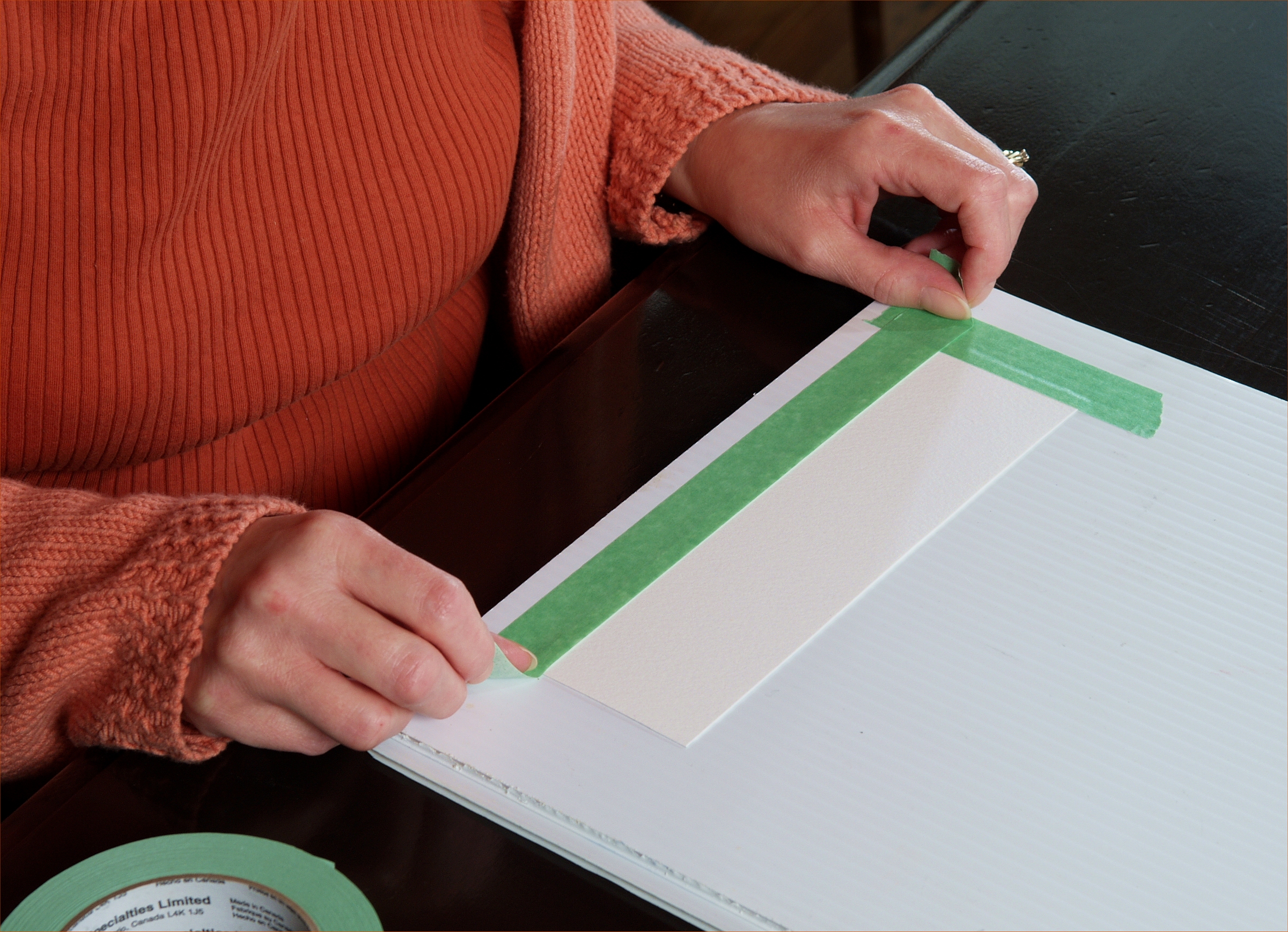
Tear off a strip of masking tape about 4” (10cm) in length. Don’t worry if your measurements are not exact. With practice this will become second nature. Secure one short side of the paper, extending the tape about ¾” (18mm) or so past both edges of the paper.

Next, tear off a 10-11” (26-29mm) strip and secure one long side of the paper. Follow up with the remaining two sides, working your way around the paper. If your paper has a deckle edge you can make either your painting space, or your border, just that much wider.

Tape each paper, one by one, in place. When all are fastened, check to ensure that they are secure. If not, water may seep under the tape onto your border.

Your papers are now ready for paint! Before painting, however, please read the following segments on approach, painting process and techniques.

APPROACH

Art is a constructive way of allowing energy to manifest without destroying one’s self or others. It is the most ancient way of getting in touch with the healer within.

~Michael Samuels with Mary Rockwood Lane

If you’ve never painted with watercolors before, or have very limited experience, the first session or two may be heavily centered on becoming familiar with the tools and basic techniques. With practice, you will begin to focus less on technical aspects, and more on what you are gaining in terms of enjoyment and insight. The goal, after all, is not to achieve mastery in painting but to gain personal satisfaction from the process.

When, and how often, to paint is a matter of choice and circumstance: I am a binge painter. I go blithely about my business for weeks without touching a brush. Then a craving sets in. Once I get going and am reminded how good it feels, I either stay at it for hours, or return for shorter, daily sessions until eventually I’ve had enough. Until the next bout of longing cycles in. Or the opportunity simply presents itself, as it occasionally will in the company of others.

My mother and I have often painted together during summer holidays. She prefers to paint in the natural light of day. When I’m alone, however, I often paint during the early hours of the morning. I like the quiet solitude and lack of distraction. The remains of my dark-time musings are free to seep, tumble, and flow. By the time morning light creeps in I’ve usually found some nugget of inspiration, and am ready for the rest of the day.

Whatever your rhythm, prepare yourself mentally before you paint: If you like to listen to music, choose a favorite collection of tunes and put them on consecutive-play or repeat. Fill your water jars, place all tools within reach, and get comfortable.

Approach each session as opportunity to play, explore and experiment—with purpose. It’s not mindless splotching on paper. Not a waste of time or materials. You are creating recovery. Expression is an integral part of that. As are inspiration, risk-taking and choice- making. All of the above and more are involved in creating these small but powerful works of art, these valuable parts of the real masterpiece: your self.

It’s highly likely that what you uncover in the process is not yet consciously known to you. Set aside preconceived notions of what your painting will look like when it is complete. Pretend that’s none of your business. Your job is to show up. And begin.

PROCESS

If you hear a voice within you saying “you are not a painter”, then by all means paint, and the voice will be silenced.

~Vincent Van Gogh

Choosing your colours: Select four to seven colours of tube paint and place a dime-size blob of each one on your palette.

Don’t worry if a little more than you want oozes out. Even when the paint dries it will still be good for future use. And, as we’re not concerned with correct placement for mixing with this method of painting, set your colours randomly around the palette.

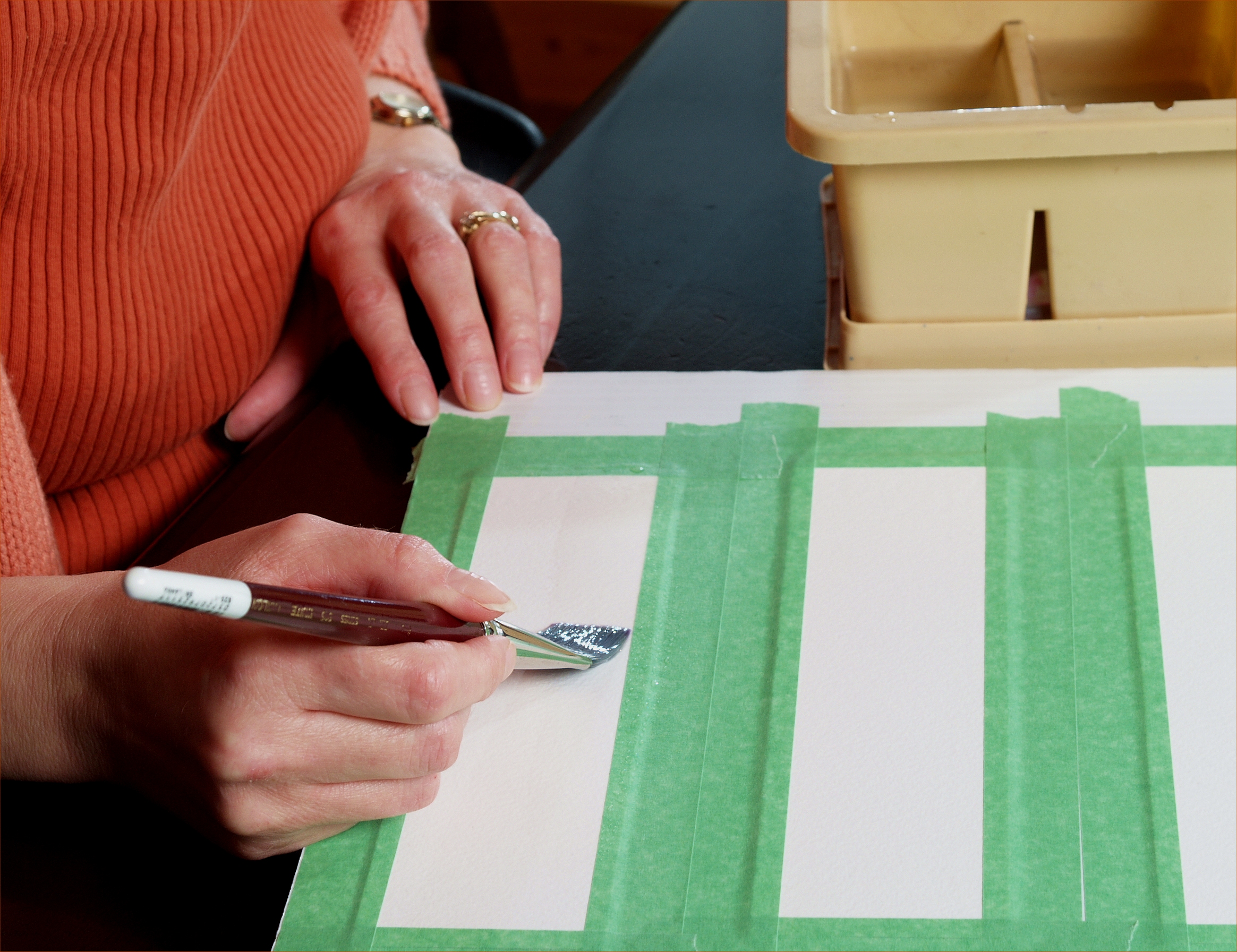
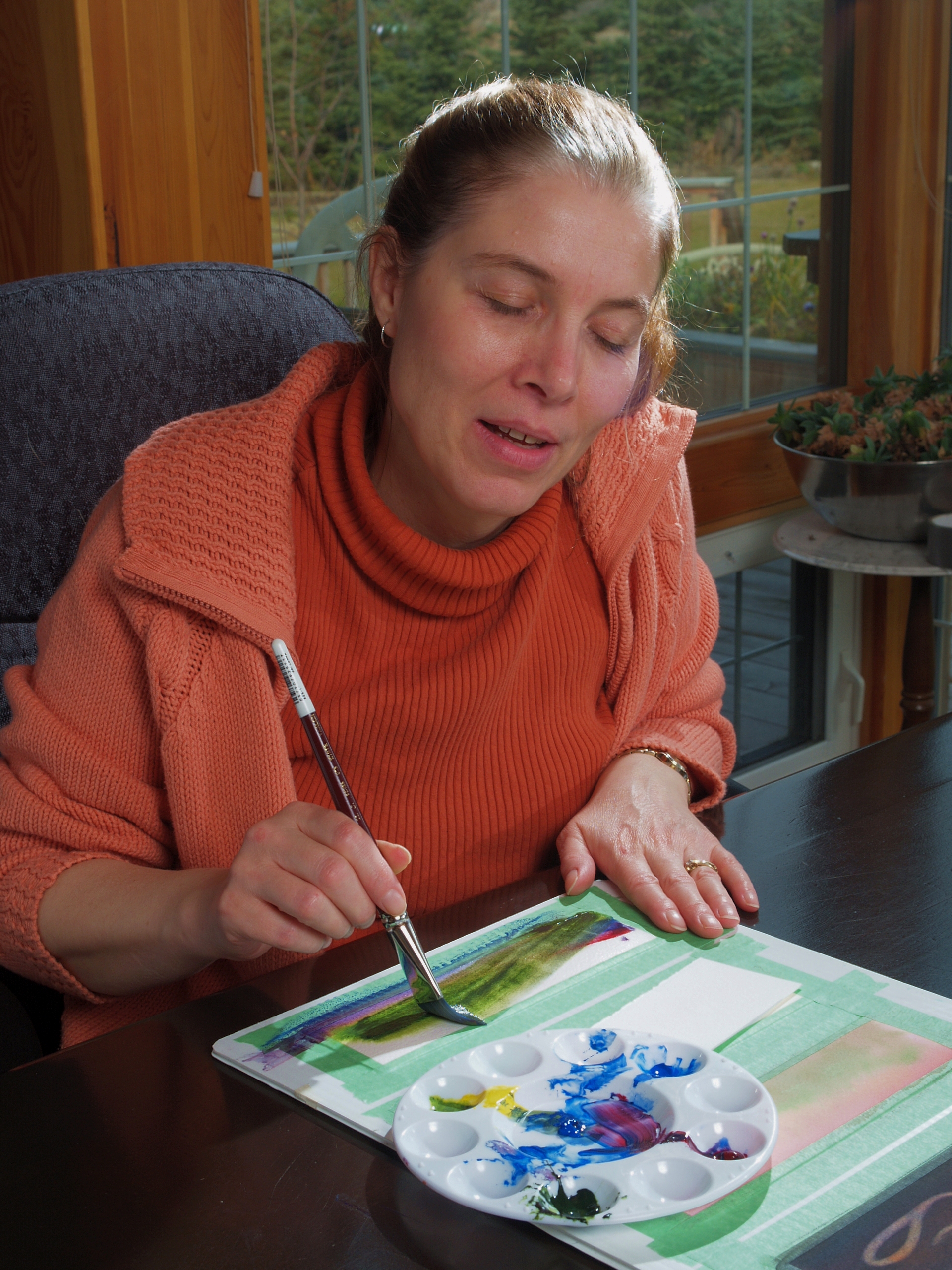
Applying paint: Begin by dipping your wash brush into the water, and then with long broad strokes, wet the entire surface of one of your papers. Don’t be alarmed if the paper swells; it will flatten again as it dries. Waste no time thinking about what you are going to paint. Simply dip your brush in water again, and load your brush with the first color that catches your eye.

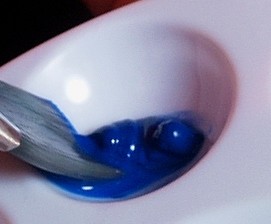
To load the brush, “drag” or “tease” the edge of it at the outside perimeter of the paint blob. Notice how the color seeps away from the blob into the droplets of water from your brush. If the paint on your brush is too thick to suit your tastes, you can use a bit more water to dilute the paint further. The more water, the less intense your color will be when it dries.

Quickly, before the water on your paper evaporates, lay in your first color choice. Cover as much or as little of the paper as you like. Use long broad strokes or short quick flares. Don’t think. Just brush in paint. Rinse your brush by swishing it vigorously in the rinse-water and then, if you like, select another color. I suggest using a maximum of three colors for the first application in this initial session, particularly if you are new to watercolor painting. You can use as many as you need or want in later paintings but it is important to become aware that the simplest of beginnings can be powerful.

Follow this procedure with each of the papers on your board, choosing colors without forethought. Trust your choices, and your sense of timing. Quit when you feel it’s time to move onto other activities.

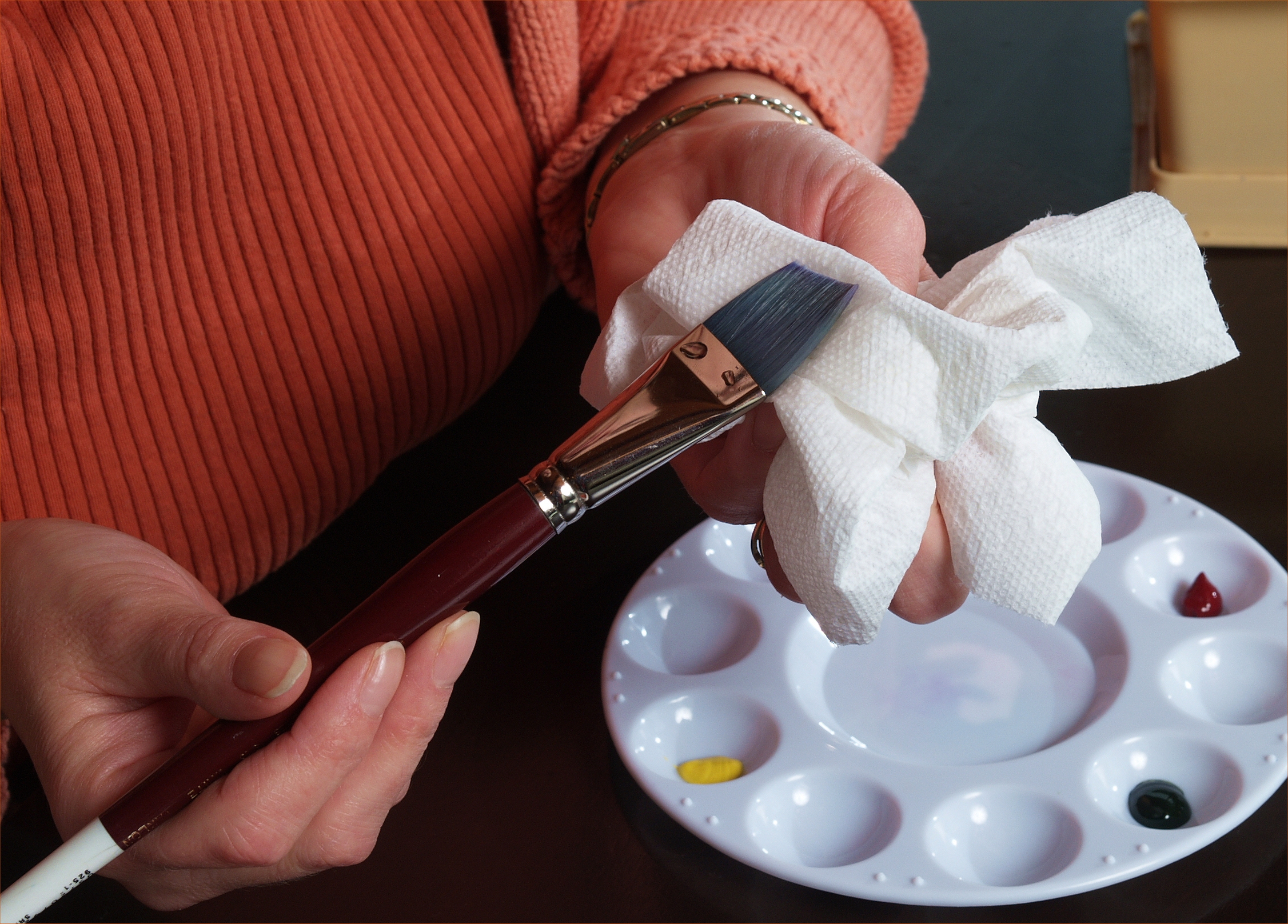
After each use, be sure to rinse your brush thoroughly, gently dab off excess water, and store it bristle-side up. Leave the paint on your palette to dry before covering, and tighten the caps on all paints securely. Lay your boards on a flat surface until the paintings are dry enough to prevent the paint from running (unless, of course, that is the effect you’re after).

If you wish to continue working on your pieces in this session: Use a hairdryer to dry each painting before proceeding with more paint and water. Hold the dryer about six inches above the board, allowing the air to blow gently over the surface of the papers. As they flatten and loose their glossy sheen, lightly touch each paper with the tips of your fingers. If it feels damp or cool, continue the drying procedure a bit longer. Should any of the tape lift, simply press it back in place.

When you are ready to move into the next phase of the process: Take a deep breath, sit comfortably and relax. Make sure you are free from distractions. I find it best not to try to paint as a “fill-in” while doing other things. (Have you ever tried to hold two conversations at one time?)

Admire your work. At first glance, do you see potential in any of the pieces? Is there an obvious setting waiting for detail? Or some entity just begging to come to life? Do you sense a particular mood?

It’s absolutely fine if you don’t find something immediately. Continue to gaze at the markings you have made. Allow your mind to wander where it will. If anything especially interesting pops into your thoughts as you peruse your paintings, jot it down on a sticky note, and then attach the note to the board beside the corresponding piece.

Take a playful, respectful approach. You are learning to trust your muse, your inner knowing. It cannot be forced.

We have five senses in which we glory and which we recognize and celebrate, senses that constitute the sensible world for us. But there are other senses –secret senses, sixth senses, if you will – equally vital, but unrecognized, and unlauded …unconscious, automatic.

~Oliver Sacks

Expect nothing. And everything. Your goal here, besides finding joy in the process, is to achieve some interplay between outer sight and inner sight, between what is in front of you and what you intuitively know about it.

If you see something right away: Go with it. Be brave. You may be surprised at what you can do. Don’t focus on what you think you can paint. Paint what is there.

If you do not see something right away: Don’t fret. It will come, with practice—and sometimes a second application of color. Repeat the process of laying in paint, only this time choose a different brush, different colors, and/or some of the various techniques described a little further on.

Hope begins in the dark, the stubborn hope that if you just show up and try to do the right thing, the dawn will come. You wait and watch and work: you don’t give up.

~Anne Lemott

In either case, treat anything and everything on the paper as if it has purpose. Entire scenes can be built around the simplest detail. Even bits of lint and stray brush-hairs make interesting marks that inspire. Allow your imagination to hook into and use what you see.

Don’t get hung up on how well you think you can paint an imagined object, or whether the images that appear seem “real”. You are creating. These are your impressions, your expressions, your works of art. Follow your instincts and dare to add colour, quickly and boldly, or bit by cautious bit.

Observe. Linger. Look away for a minute…for a day…or longer if you must.

Return with fresh eyes. Observe. Linger. Surrender the lead. And gain a new-found sense of control as your paintings come alive.

The Secret Garden Visualization, Version Two

Take a deep breath in through the nose. And let it go out through the nose.

Close your eyes and take another deep breath. In the nose. Out the nose. Blow away distracting thoughts.

Relax and think about the muscles in your feet.

Let any tension that is stored there move outward from your body and away from you.

Remember to breathe. Breathe easy. Breathe naturally. Do so deeply when it feels right.

Think about the muscles in your calves and allow them to relax. Let tension float away.

Now focus on the muscles in your thighs. Release any tension you feel in that part of your body.

Let your legs go limp. Remember to breathe.

Think about the muscles in your buttocks and hips. Allow tension and pain to seep through the fibers of the chair, cot or floor, out and away from your body.

Give yourself permission to let go and relax.

Bring your attention to your hands. Imagine tension slipping away from each finger, as if you were removing the fingers of a glove one-by-one. Take your time. As the gloves slip away, feel tension and pain ease from your hands and wrists.

Relax. Breathe.

Think about the muscles in your upper arms. Release any tightness there.

Allow your arms to be limp, like those of a rag doll. Feel yourself grow light, comfortable, at peace.

Concentrate now, on your tummy. Feel a warm, soothing liquid slide through your inner body like a magic tonic. Take a deep breath; in through the nose, then out through the nose. Let pain and tension go.

Let your breathing return to normal.

Think about the muscles of your lower back. Allow tension there to seep through the fibers of the chair, cot or floor, out and away from your body.

Focus now on the muscles of your upper back, around your shoulder blades. Release tension. Release pain. Relax.

Think about the muscles in the back of your neck and in your shoulders. Let tension go. Let it go. Let it go. Let tension go away from you.

Think about the muscles in the front of your neck. Swallow, if you can. Then open your mouth slightly and release all tensions.

Think about the muscles in your jaw and release any tightness there.

Take a deep breath in through the nose. Feel your chest rise. Breathe out through the nose and release tension in your chest, around your collarbone and the front of your shoulders. Relax, and remember to breathe. Breathe easy, naturally.

Now focus on the muscles in your forehead, around your eyes, nose and mouth. Let go any tension you may feel in your face.

Take a breath and concentrate on the parts of your body that may have tension. Release. And relax. Breathe easy. Breathe naturally.

Be still, and at peace.

All worries and cares have floated away. This moment is yours to enjoy.

Bring to your mind a favorite treat. It can be anything you want. Anything.

It might be something you like to eat.

Or perhaps something you enjoy doing.

It can be somewhere you like to go.

Whatever it is, there is an abundance of it in your Secret Garden. And you are on your way there, right now.

You’re in no hurry. You are satisfied, full, relaxed. There is plenty of time and this space is your own. You are the only one who has the key to the door of your Secret Garden.

Do you feel the key in your hand? What shape is it? What colour is it?

Move slowly towards the door.

As you fit the key into the lock, and open the door, what sounds do you hear?

Step into the garden and close the door. Turn the lock. No one may follow unless you invite them to do so. This is your Secret Garden, your personal, intimate space. It is exactly as you wish. You are safe and at peace here.

Take a few moments to admire your garden. What is there? Are there any distinct shapes, colours or textures? Are there any odors?

Feel free to reach out and touch at any time, if you like. These are your things.

Breathe deeply. Do you smell something? What is it? Is it something good to eat? Breathe in the aroma. Enjoy.

As you move about the garden, does the light change from one area to another? Focus on where you prefer to be and go there now. Take whatever you like with you.

What things are in this special place?

Is it well lit? Softly lit? Dark?

What do you do there? Something you’ve done before but would like to do more of? Or  something you’ve only dreamt of trying? In your Secret Garden, all things are possible. You can do anything you like.

Decide what time of year is it in your special place. Is it summer? Spring? Winter? Fall?

How are you dressed? Heavily? Scantily? Not at all?

Get comfortable. Settle in.

You are safe. You are free.

Enjoy.

When you’re ready, prepare to leave the garden.

Touch, smell, taste, hear and observe whatever pleases you as you make your way to the door.

Feel the key in your hand. Insert the key, open the door, and let yourself out. Hear the door quietly shut behind you, and the lock click into place. Everything will be as you wish should you decide to return. You have the only key.

Slowly become aware of your body again. Become aware of your breathing. Wiggle your fingers and toes. Say, silently or out loud, that you are the keeper of your garden and you manage it well. When you are ready, come back to the room, alert and refreshed.

Abundance

Four, Thirty-Four, Fifty

Acceptance

Eleven, Twelve, Twenty-Nine, Thirty-Five, Forty-Four, Forty-Eight, Forty-Nine, Fifty

Adapting

Forty

Adventure

Twenty, Twenty-Three, Forty-One

Alone

Five, Fifteen, Forty-Three

Anger

Twenty-Six, Forty-One

Avoidance

Fifty-One

Balance

Seven, Twenty, Thirty-Six, Forty-One

Beginnings

One, Two

Boundaries

Eight, Thirteen, Twenty-Eight, Forty-One

Celebration

Thirty-Three, Thirty-Six, Forty-Six

Challenge

Two, Thirty-Eight

Change

Thirty-Three, Forty

Choice

Twenty-One, Forty-Two, Forty-Five

Compassion

Twenty-Four, Twenty-Nine

Complete

Seven

Confidence

Three, Eighteen, Twenty-Four, Twenty-Five, Thirty-One, Thirty-Three, Forty-Two

Connection

Six, Ten, Twenty-Five, Thirty-Five, Thirty-Seven, Forty-Nine, Fifty-Two

Continuity

Forty-Six

Control

Six, Eight, Eleven, Twelve, Twenty-One, Twenty-Two, Forty-One, Forty-Eight

Courage

One, Fifty-One

Defensiveness

Forty-Four

Denial

Twenty-Two

Direction

Twenty

Disappointment

Twenty-Three, Twenty-Six, Forty-Four

Diversity

Ten, Forty

Doubt

One, Twenty-Five

Dreams

Twenty, Twenty-Seven, Fifty-One

Embarrassment

Five, Seventeen

Emotions

Fourteen, Seventeen

Endings

Two

Enthusiasm

Twenty-Three, Twenty-Seven, Thirty-One, Thirty-Six, Forty-Four

Escape

Eleven, Thirty-Two

Expectations

Twenty-Six, Forty-Four, Forty-Eight

Exploring

Nine, Thirty-Six

Expression

Nine, Ten, Twelve, Thirteen, Twenty-Two, Thirty-One

Faith

Three, Twenty-Six

Fear

One, Twenty, Twenty-Two, Fifty-One

Flow

Thirty-Five, Forty-Two, Forty-Eight

Focus

Eleven, Twenty-Four, Thirty-Nine, Forty-Eight

Freedom

Twenty-Two, Fifty-One

Frustration

Twenty-Six

Fulfillment

Eleven, Twenty-Five, Forty-One, Fifty, Fifty-One, Fifty-Two

Gratitude

Four, Twelve, Thirty-Four, Forty-Six, Fifty

Grief

Two, Forty-Three

Groups

Five, Six, Eight, Ten, Fifteen, Twenty-Four, Twenty-Five, Twenty-Eight, Thirty-Seven, Forty-Seven, Fifty-Two

Guilt

Eight

Hope

One, Twenty-Six

Humour

Seventeen

Identity

Six, Forty

Individuality

Six, Ten

Inner Wisdom

Three, Nine, Twenty, Thirty, Fifty-One

Inspiration

Twenty-One, Twenty-Three, Twenty-Four, Thirty, Forty, Fifty-Two

Integrity

Thirty, Forty-Four, Forty-Five, Forty-Nine, Fifty-Two

Interdependence

Eight, Forty-Seven

Laughter

Seventeen

Loneliness

Forty-Three

Loss

Two, Six, Twenty-Two

Milestones

Twenty-Seven, Forty-Six, Forty-Seven

Mindfulness

Twenty-Nine, Thirty-Nine

Opportunity

Forty-Two

Overwhelm

Six

Pain

Two, Twenty-Four

Passion

Thirteen, Twenty-Three, Forty-One

Past/Present/Future

One, Two, Nineteen, Twenty-Three, Twenty-Five

Patience

Twenty-Six, Thirty-Eight, Forty-Four

Perfectionism

Twelve, Nineteen, Twenty-Six, Forty-Nine

Perseverance

Forty-Five

Perspective

Nine, Nineteen, Twenty-Four, Thirty-Four, Thirty-Nine, Forty-Five, Fifty

Planning

Twenty-Seven

Play

Seventeen, Thirty-Six

Potential

Twenty-Five, Twenty-Seven, Thirty-Eight, Fifty-One

Power

Thirty-One

Progress

Fifteen, Twenty-Six, Twenty-Seven, Thirty-Eight, Forty-Six

Rejection

Five, Forty-Nine

Relationships

Eight, Sixteen, Eighteen, Twenty-One, Twenty-Two, Twenty-Eight, Thirty-Three, Forty-Four, Forty-Five, Forty-Seven

Relaxation

Thirty-Two

Respect

Twenty-Nine, Forty-Four, Forty-Five, Forty-Seven

Risk

Five, Thirteen, Thirty, Thirty-Three, Fifty-One

Secrets

Twenty-Two

Security

Four, Fifteen, Eighteen, Forty, Forty-Seven

Self-consciousness

Five, Forty-Eight

Self-image

Twelve, Forty-Nine

Senses

Thirty-Six

Shame

Nineteen, Twenty-Two, Twenty-Three

Sharing

Five, Sixteen, Thirty-Seven, Forty-Four, Forty-Nine, Fifty-One, Fifty-Two

Solitude

Forty-Three

Strength

Two, Fifteen, Nineteen, Forty-Seven, Fifty-Two

Support

Five, Fifteen

Synchronicity

Thirty-Five

Tolerance

Twenty-Nine, Forty-Four

Tranquility

Thirty-Two, Thirty-Four, Forty-Three

Transformation

Three, Nineteen, Twenty-Six

Trust

Eighteen, Twenty, Thirty, Forty-Two

Unity

Ten, Thirty-Seven, Forty, Forty-Three

Validation

Sixteen, Forty-Seven

Vulnerability

Five, Eighteen, Forty-Seven


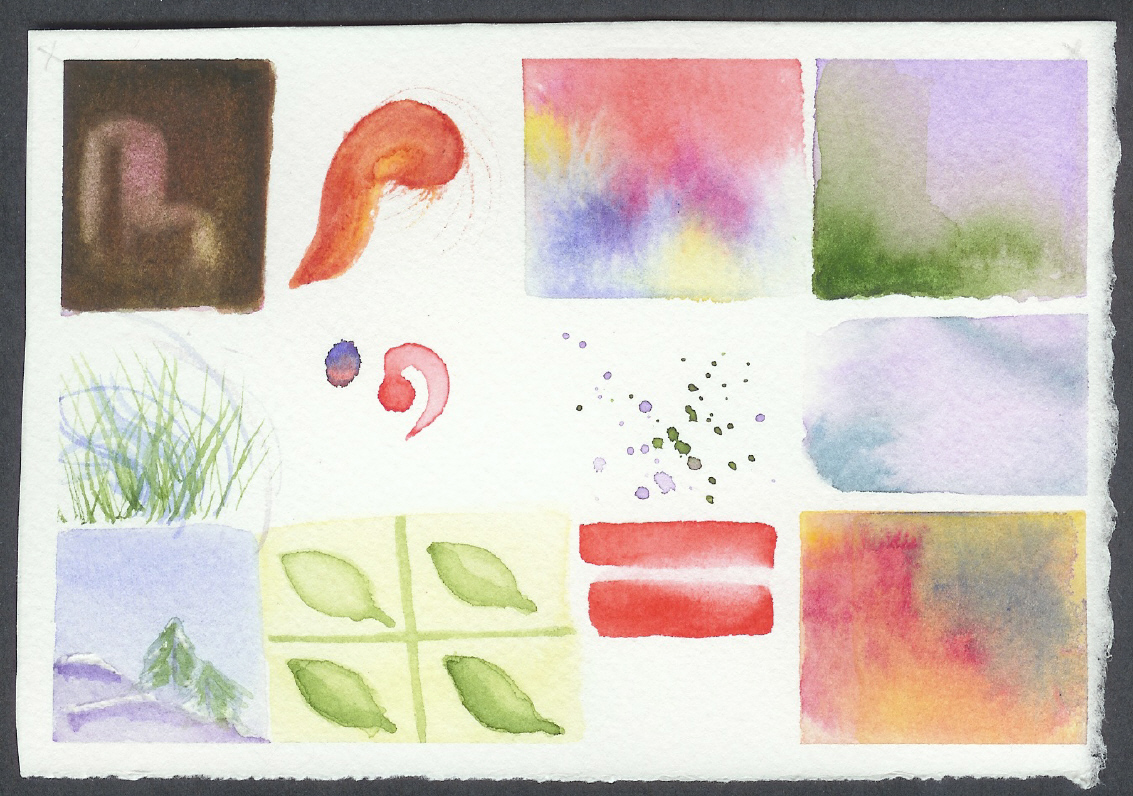
The following are a few basic techniques I used in the Dark/Light series, randomly or for intended details in an emerging scene. I encourage you to experiment.  Use my works for visual reference but don’t paint my paintings. Paint yours.

Dropping in color

First, apply clear water to the entire surface of the paper. The paper should be wet enough so that it shines, but not so much that the water runs or pools along the sides of the tape. Next, wet your round brush generously with water, and then choose a color from your palette. Load the color on your brush to desired strength.

Either hold the loaded brush over your paper and let the liquid drip, or lightly touch the tip of the brush to the paper. This technique allows colors to bleed and blend when one color is applied on or next to other wet colors on the paper. I use it mainly during first or second color applications.
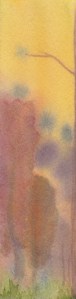
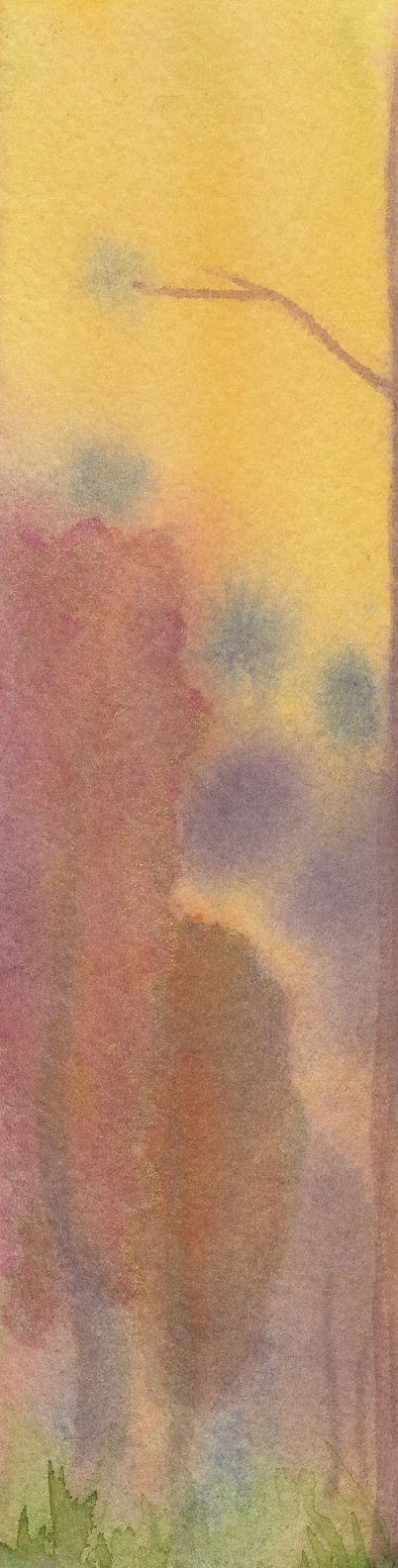
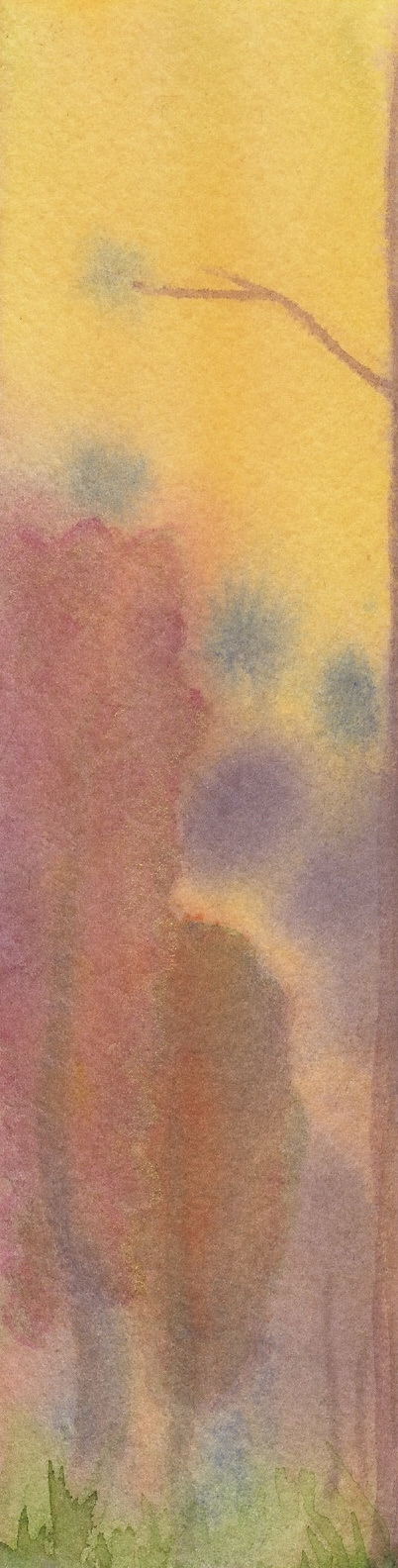
Meditation Forty-Eight, Fantasy Forest, Overworked: The blue and purple treetops in the background were created using the Dropping technique.

Blobbing

This is my term for loading a damp* brush into the paint so that a generous blob of color coats the tip, and then applying it to the paper as desired. This will add a heavy concentration of color to the paper.

If, after application, the color is heavier than you like the excess can be dabbed off with a scrunched paper towel. It can also be removed with a brush. Rinse your round brush, load it with a moderate amount of water and dilute the color right on the paper. The paint, if your brush is not too wet, will lift from the paper into the brush. Rinse and repeat as necessary but don’t labour at it too long. I generally use this technique for dramatic effects when I’m beginning a painting but have also used it in finishing details.
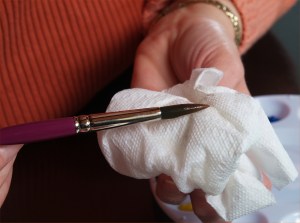
*To create a damp brush load it with water, gently tap it on the side of the water container to remove excess water, then press it ever so lightly onto a scrunched paper towel.
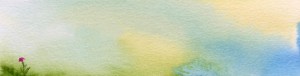
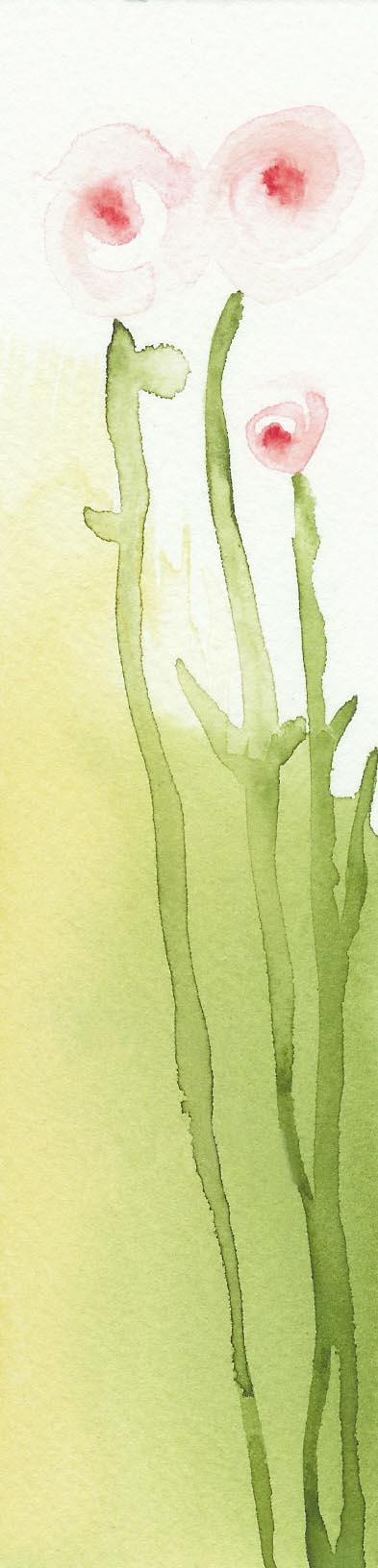
Meditation Twenty-Four You are a little bit of Heaven: I used the angular wash brush during a first paint application to add a flush of green at the bottom left corner. When it was dry I added a single flower.
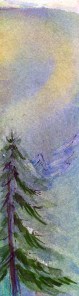
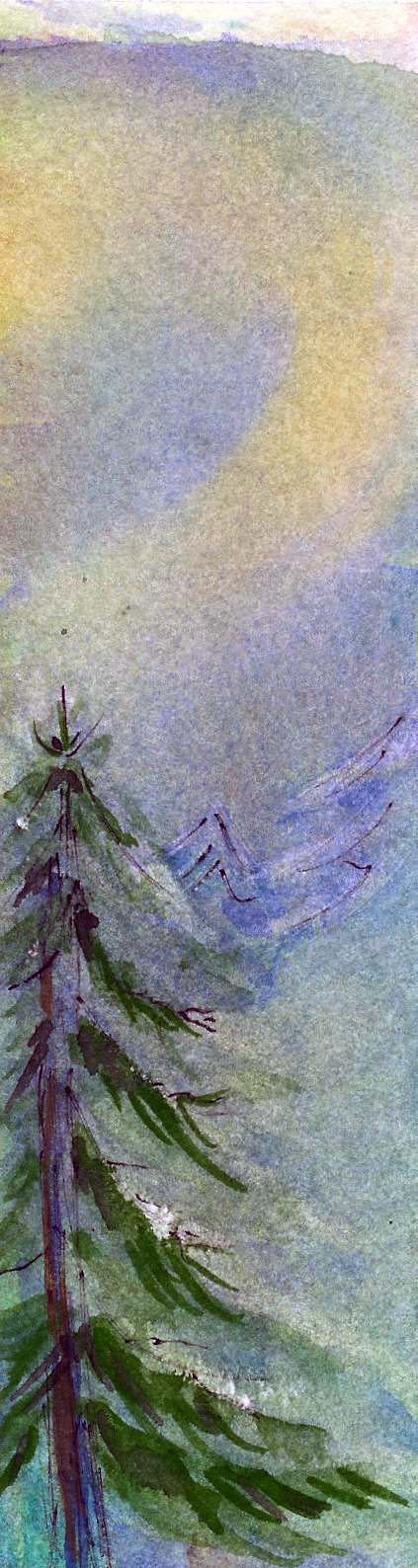
Meditation Nineteen, Rise: With a round brush I blobbed in some snow on the evergreen branches.

Mixing Color

Colors can be mixed either on the palette or on the paper.
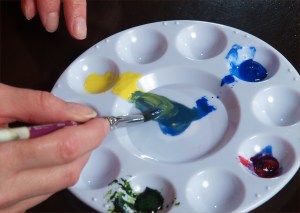
Mixing color on the palette, for our purposes, is fairly straightforward. Choose two colors and mix together a small blob of each. (See Paints under Tools and Materials for combinations of primary colors to create secondaries.) If your paints have dried on the palette, simply add water to one color and drag it to a neutral location on the palette. Add water to the second color and drag it into the neutral location. Mix the two together, adding more of one or the other until you get a third color that appeals to you.
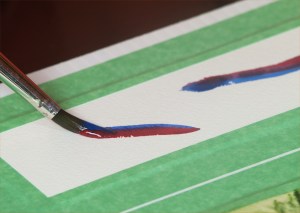
Mixing on the paper is riskier because you may not know exactly what you’re going to get until it’s too late. That also makes it exciting.

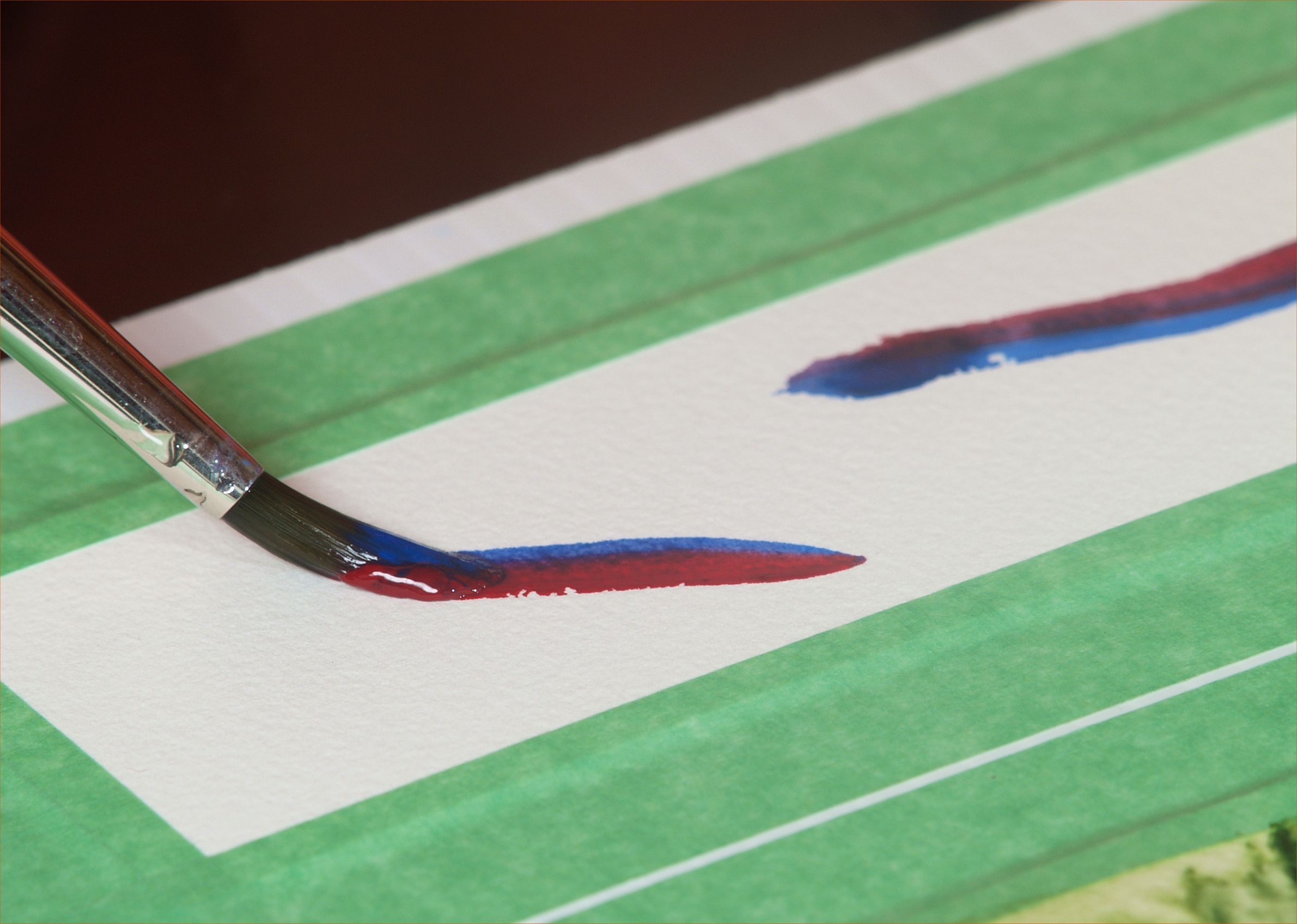
Meditation Fifty-Two, go softly: Near the bottom of this piece, color was applied by loading my brush with two colors at once. I loaded a generous amount of paint on two sides of a wet round brush (one color on each side). As I trailed the brush across the wet paper, the two colors randomly mixed in some locations and remained true in others. Because the results are so spontaneously generated, this is a technique I especially love.

Glazing

Layering color (glazing) is a relatively simple process that adds depth to your painting. In essence, it is one color brushed over another after the preceding color has dried.
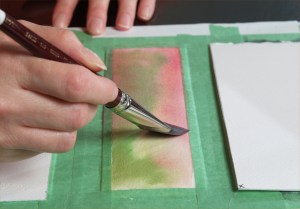
For the most dramatic effects use heavy concentrations of color. Apply the first color and allow it to dry completely. When you’re ready for the next layer, you can wet your paper with clear water before adding the color, if you like. Glazes can be applied to either wet or dry paper. How much of the total area to glaze is also entirely up to you, and you can add as few or as many layers as you wish. The important thing is to allow the paint to dry thoroughly between layers.
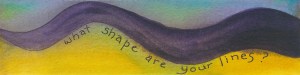
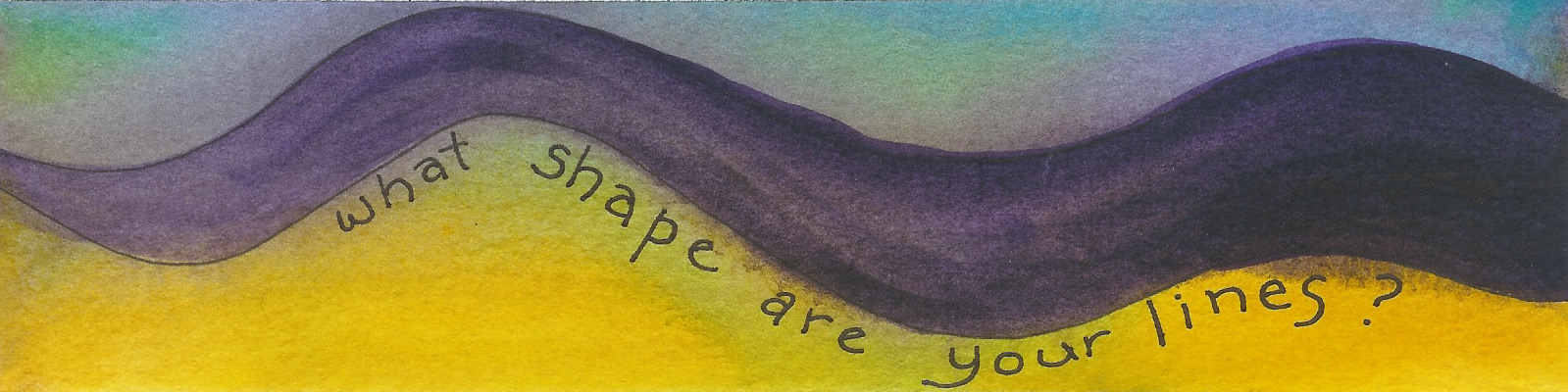
Meditation Eight, what shape are your lines?: This piece began with a medium-to-heavy application of several colors. Brushing heavy concentrations of paint on the purple ribbon added definition. Lighter glazes of purple over the upper half of the painting created depth, enhanced the feeling of movement, and injected vitality into the picture.

Fanning

Approach the use of a fan brush with the intent to experiment. Used early in the process of a painting it can produce dramatic textures that may inspire a theme for your painting. It’s also wonderful for use in finishing.
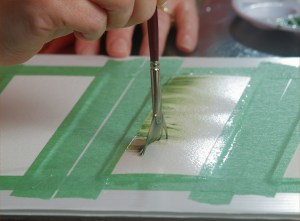
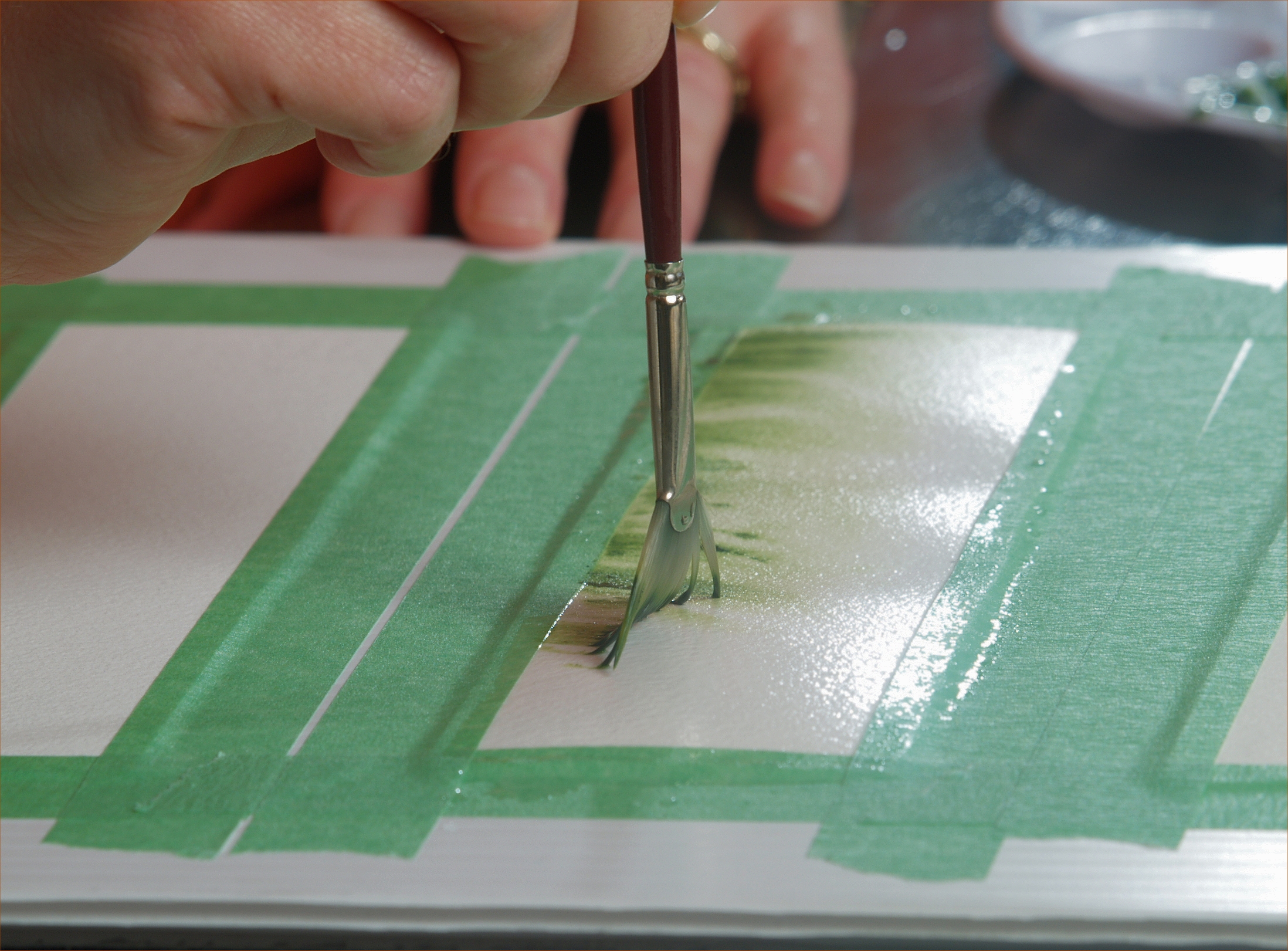
If the paint on the paper is still wet, simply lay in a few strokes with a damp fan brush. Color may be loaded directly onto the brush and then applied to paper, wet or dry. If you want delicate marks load the color on the brush sparingly. Load your brush liberally for bolder details. For an intriguing effect, try twirling the handle of the brush in your fingers. As the bristles move across the paper you’ll get a variety of interesting marks.
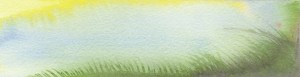
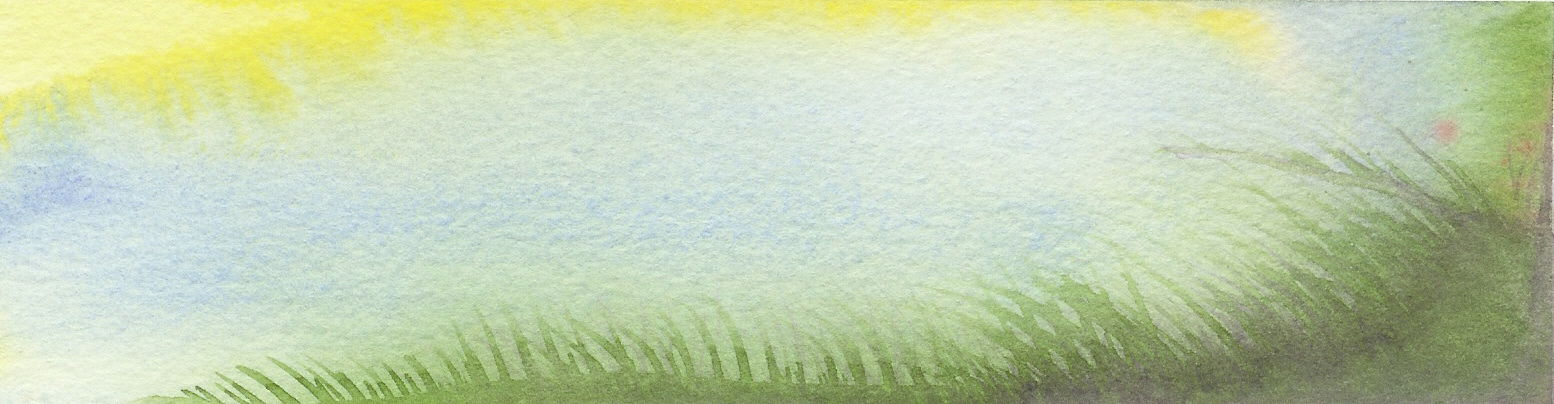
Meditation Forty-One, Groomed for Wildness: The grass fronds in this piece were created by fanning upwards from a heavy application of wet paint along the bottom edge.

Water Beads

Load a round brush generously with water and hold it vertically over the water container to allow excess drips to fall.
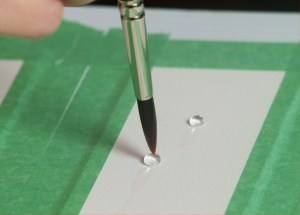
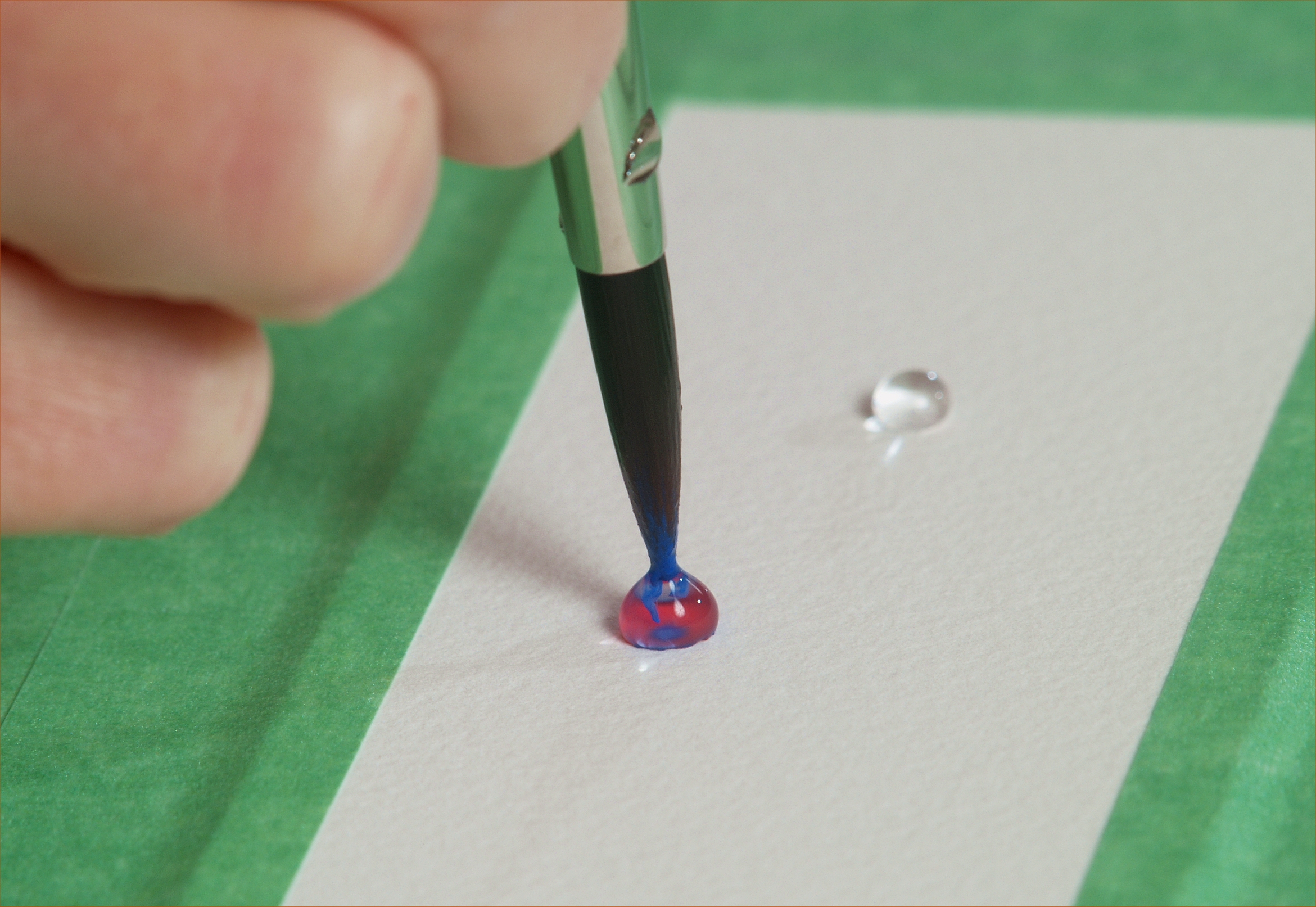
Touch the tip of the brush lightly to the paper then gently lift the brush, leaving a small bead of water on the paper. To increase the size of the bead, repeat the loading process, touch the brush lightly to the bead of water on the paper, and lift. Repeat until the bead reaches the size of your choosing.
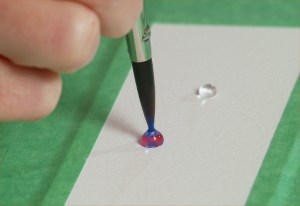
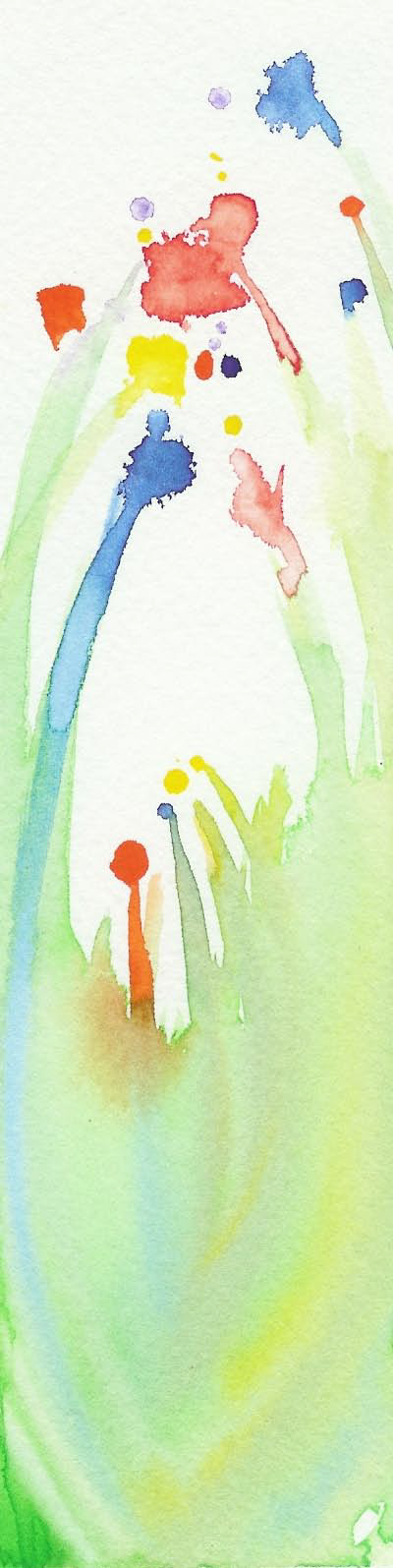
Next, load a damp round brush with color. Push the tip of the brush through the top of the bead, and then lift the brush out. If you prefer tiny swirls of color in various parts of the bead, bring the tip of the brush to the bead off-centre, gently break the surface, and lift. Use one color or several. You can leave the bead to dry as is, or create shapes and interesting effects by breaking it.
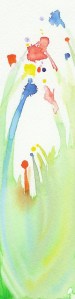
Meditation Ten, Common Roots: This piece began with the water beading process. I filled each bead with fairly heavy concentrations of color, let them be for a short while, and then broke them with my brush. I then pulled some of the color across the paper, creating the “stems” which inspired the theme for the finished work.
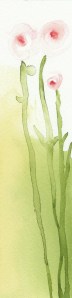
Meditation Twenty-Nine, bloom gently, was created from the bottom up. By the time the flower blooms were begun everything else was done and I knew what I wanted—three similar, delicate, spiraling blossoms. Once the color was infused I simply pulled it out of the bead, dragging the brush on the paper in broad, spiraling strokes.

Try merging two or more adjacent water beads, or create your own variation of this technique and see what fantastic images come of it.

Dab dabbling

Dab dabbling is a lighthearted term that takes the edge off attempting to paint challenging images. Tell yourself that you’re only dabbling. This releases pressure, and gives you permission to putter and ‘see what happens’ over time. That’s how I managed to complete the critters that appeared in the Dark/Light series. Their basic shapes emerged in the first color applications, but as I have little experience in drawing animals, and wanted to follow through on my commitment to use only my imagination (which meant no visual references), I was hesitant to follow through. I wanted these creatures to survive, however, so pressed onward–keeping the concentration of the color very thin and adding a bit at a time over a number of sessions.
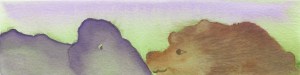
Meditation Twenty-Two, Freeing the Elephant: To minimize the hard edges that can form when applying wet over dry, I covered the entire surface of the elephant with water at each session, adding color only where I wanted to deepen tones—in this case, along the backbone, ear, top of the head, and trunk.

Interesting shapes will emerge in your paintings. Don’t be afraid to tackle them. The round brush is best for this technique. Use plenty of water and add color sparingly. Concentrate on one area of the painting at each session, dabbing in a tiny bit at a time. Let the painting dry for at least a day before returning to add more.

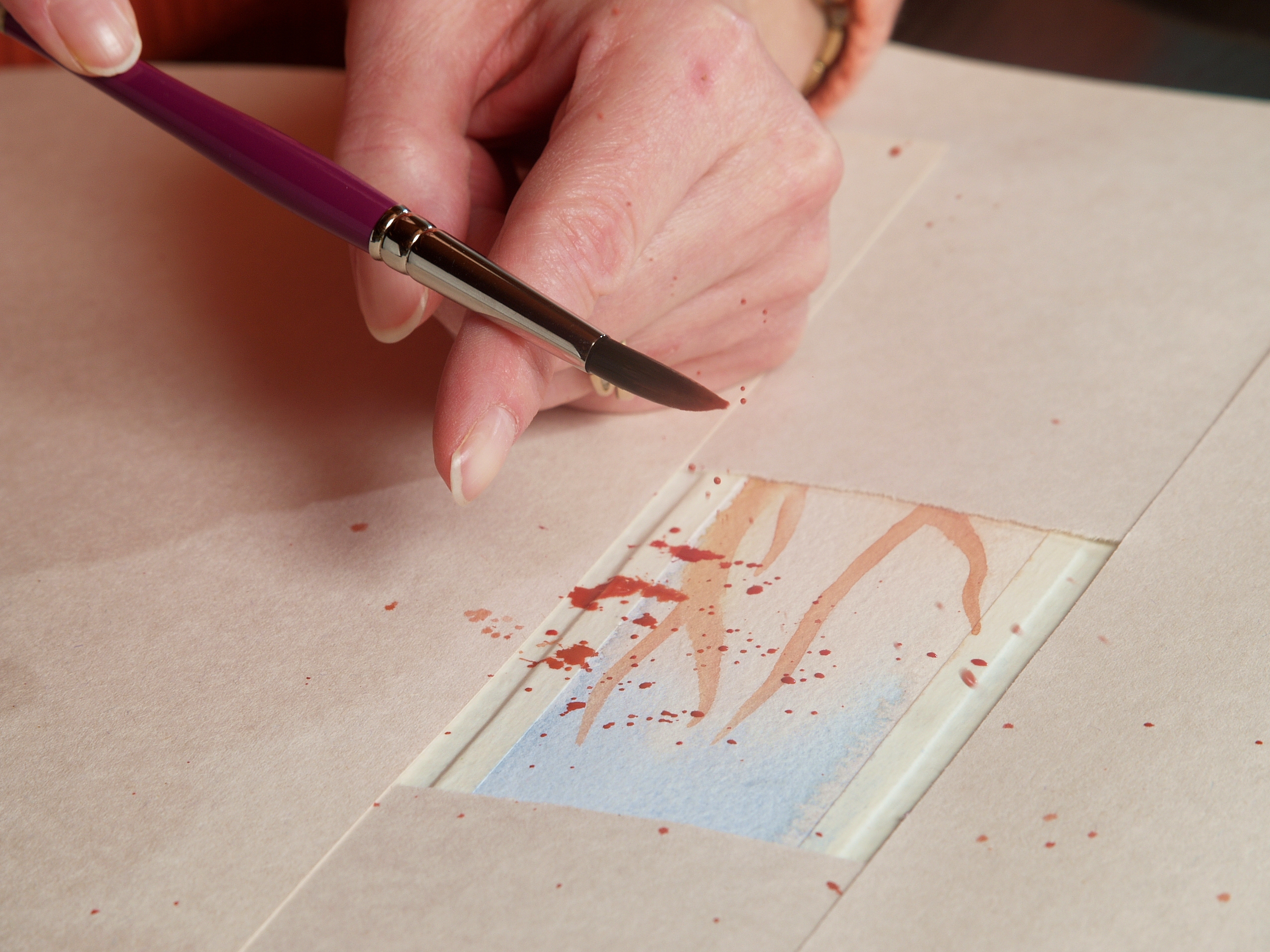
Spattering

Use this technique in initial color applications or for finishing details. If the paper is wet the color will bleed, creating soft, blurred edges. Used as a finishing touch on a dried surface, the edges of each spatter are more defined, adding texture and/or detail that can represent a collection of objects.
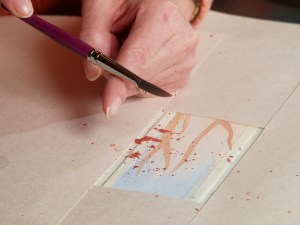
To spatter a specific area of your painting, first lay scraps of paper over the spaces where you don’t want this effect. Wet your round brush generously with water and then load your color. Hold the brush over the area you want to spatter. Gently tap the brush-handle (near the bristles) on the index finger of your opposite hand. If you prefer, you can use a pencil or any other blunt object to tap the brush on. I have found this results in smaller and more abundant spatters.
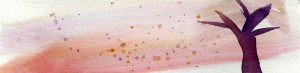
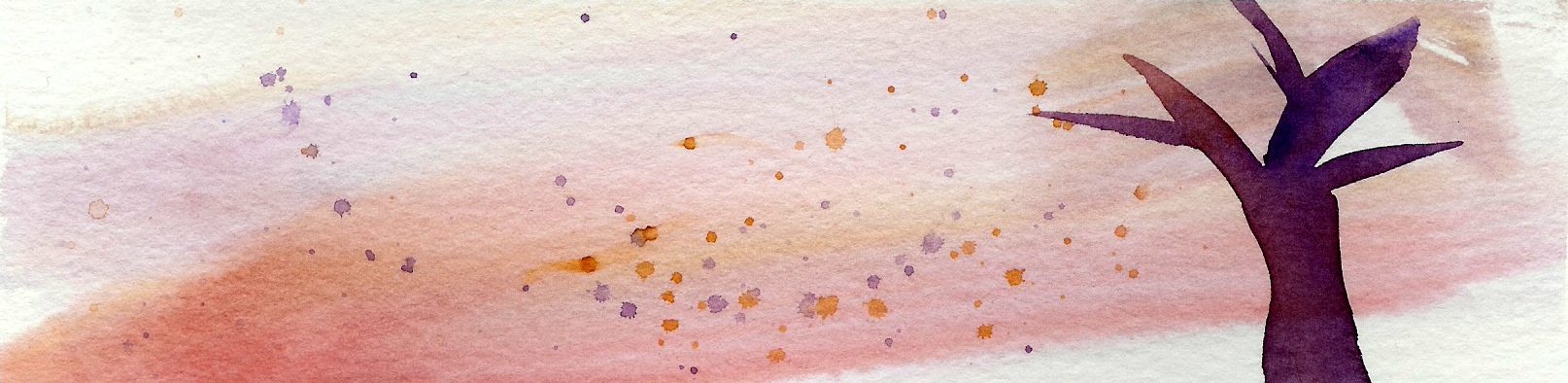
Meditation Forty-Seven, Scattered: I wanted to accentuate the movement generated by the background brush strokes, so added a spattering of ‘leaves’. Smudging a few of the spatters while they were still wet further increases the effect.

Softening edges
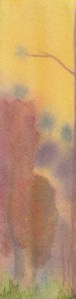
Meditation Forty-Eight: Fantasy Forest, Overworked

I like to use whatever I’m given as I paint, and try not to do much correcting. Occasionally, however, I am confronted with something I do not like. During the creation of Fantasy Forest Overworked I regretted some of the hard edges, and went back in to remove them.
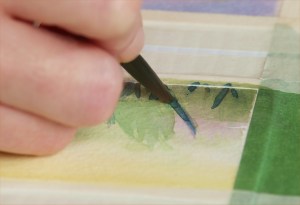
If you want to soften the edges of an image take a damp round brush and apply it to the area in a light, quick, scrubbing motion.
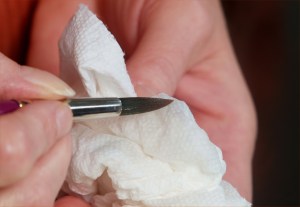
Dab the lifted paint onto a scrunched paper towel, but don’t allow your brush to dry out as this can be hard on the bristles. Rinse it frequently during the process and thoroughly when you’re done.

Before Fantasy Forest Overworked was finished, I realized that a little edge is okay. In fact, a line here and there is defining, and adds character. The real challenge was remaining true to myself and the work.

Reverse

This process involves placing copious amounts of color on the paper and then removing some of it. If you are working with a piece that just does not seem to be going anywhere, try this technique.
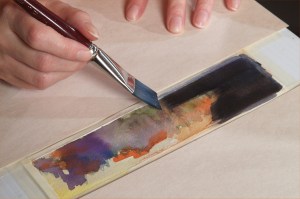
Keep adding color. Lay it in boldly. Use at least three colors, mix them together and cover most, if not all of the surface of the paper. Keep going until the entire paper is covered in paint and it begins to look like mud. Let it dry.
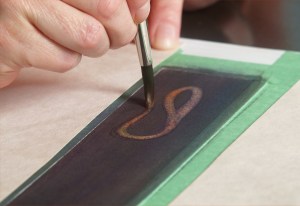
Take a clean damp brush and begin to leach some of the color from the paper. Experiment with different brushes and brush strokes. Remember, if you don’t like what you see, you can always cover it again and start the process anew. Just be sure to let it dry first.

You will likely need to rinse your brush frequently. As you rinse, pause to consider the potential of your piece. Continue to leach out color until you are satisfied.
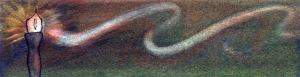
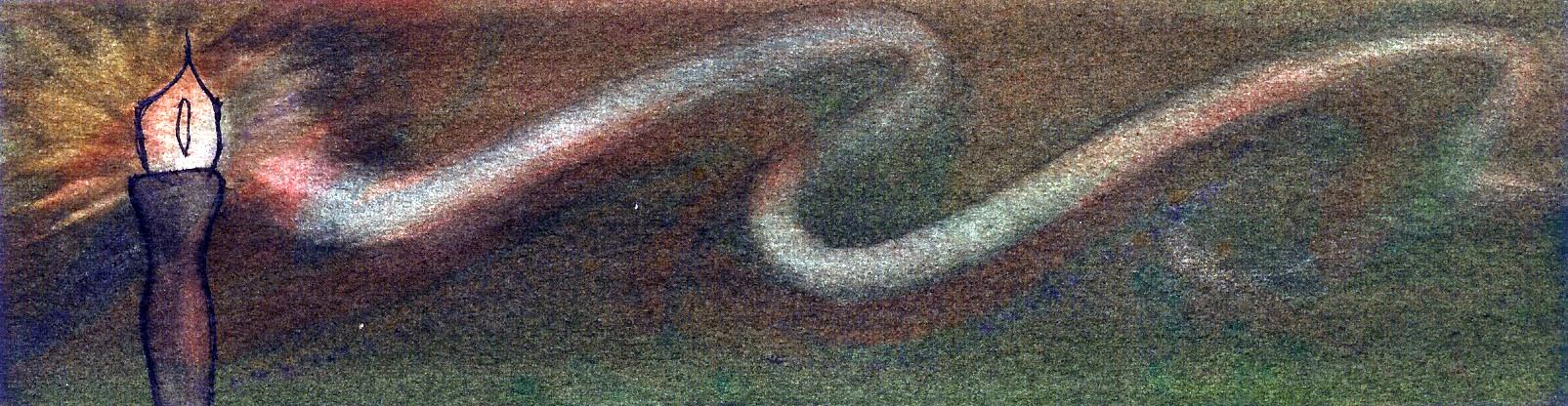
Meditation Nine, Writing in the Dark: This piece took me a long way before I had any idea of what it would become. The first color application did not inspire me, nor did the second. So, I continued to add color to the paper until the entire surface was a ruddy brown mix. With a round brush, I leached out color to create the shape of a candle flame, and was finally inspired with the idea for the finished design. Notice how the original colors pop out in contrast to the darkness surrounding them.

Scratching

When you are finished adding color you may want to create highlights in an area of your painting. This technique is exactly as it sounds.
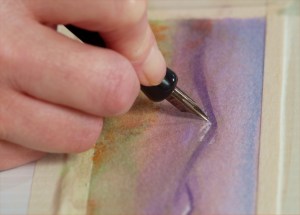
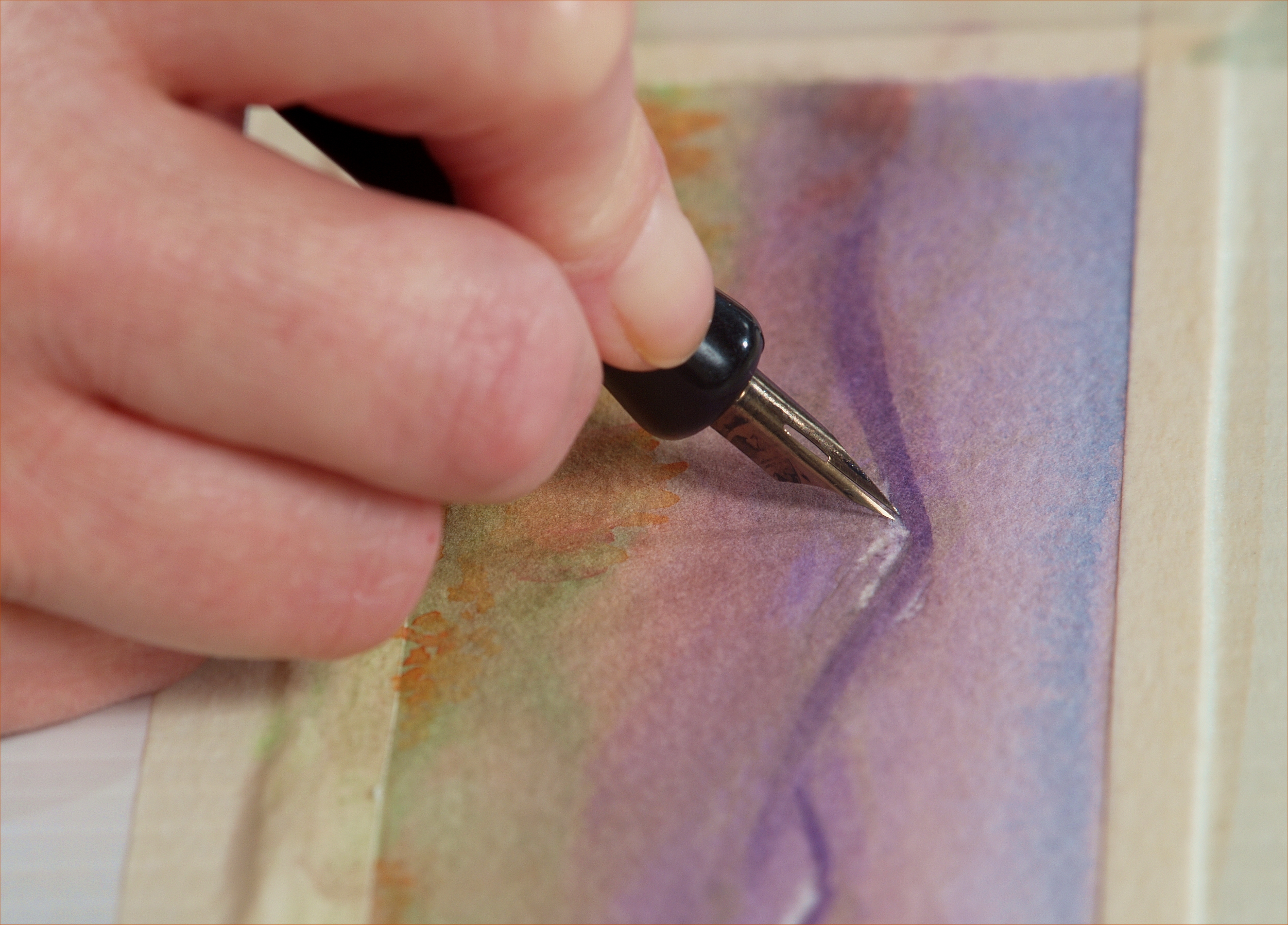
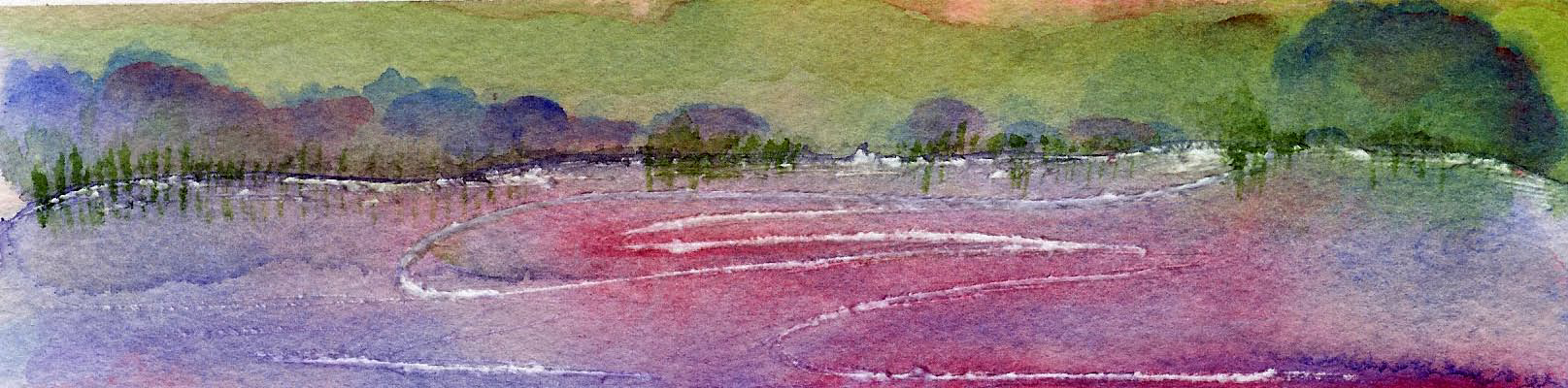
Once the paint is thoroughly dry, take a sharp object and scratch layers of paint and paper away until the white underneath shows through. I used the nib of an old calligraphy pen. With your fingers or a utility knife, gently peel away the bits of paper fluff you don’t want left behind.
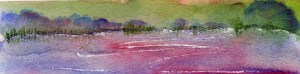
Meditation Thirty-Eight, Scratching the Surface: I decided after painting that I wanted some movement in the water, so scratched in ripples and a few splashes along the shoreline.

Closed-eyes wash

Brave this one—it can be fun and the results may astound you!

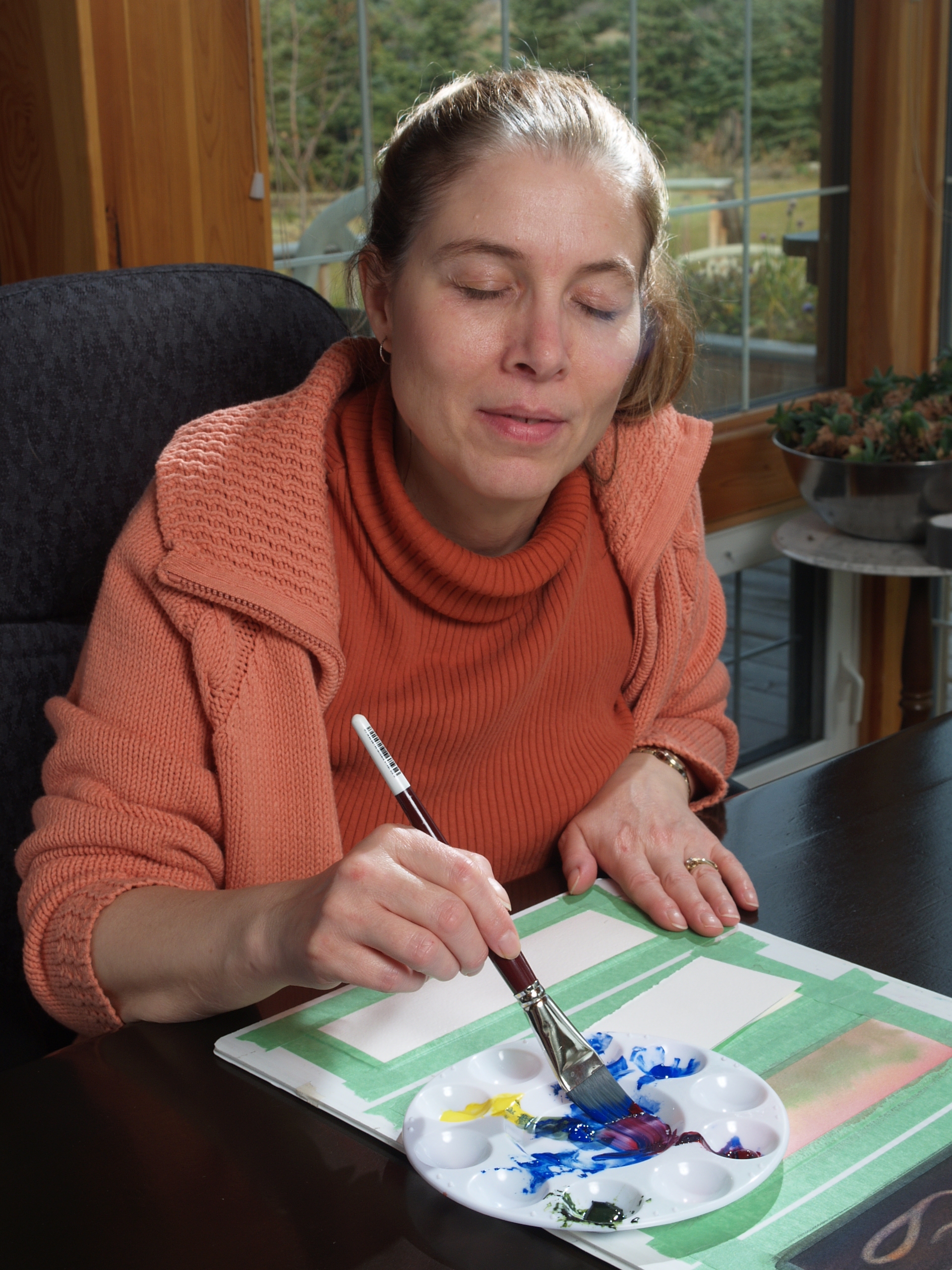
Set your palette within easy reach. If possible, secure it to your work surface with sticky-tack or masking tape, or you’ll risk dragging the palette onto your paper. Protect areas of your board you don’t want paint on by covering them with scraps of paper. Fasten the paper scraps with short strips of masking tape.

When you are ready to begin painting, wet the surface of your blank paper with clear water. Place your non-dominant hand at the edge of the paper. Wet your wash brush and place the bristle end in the middle of your palette.
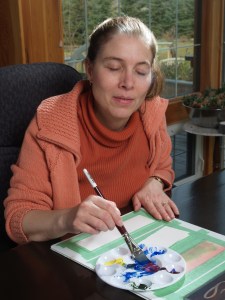
Now, close your eyes and move the brush around your palette, loading it generously with color. No peeking!
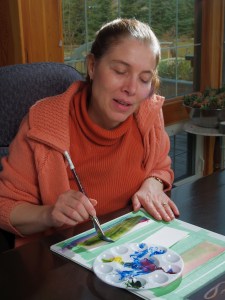
Bring the brush to your paper and lay in some brush strokes. Without looking, return the brush to the palette and load up more paint. Lay a few more brush strokes on the paper, then open your eyes and admire your closed-eyes wash. Let it dry before adding any more paint. Complete your painting with eyes open, allowing the first wash to inspire you.

Meditation Forty-Seven, Scattered: The entire background was created in a closed-eyes wash. The movement of color strongly suggested wind. With the addition of a tree and leaves later, with eyes open, the composition was complete.
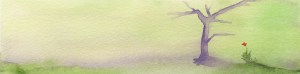
Meditation Forty-Nine, Bloom from the Shadows: A closed-eyes wash resulted in the soft shadows of green and mauve that inspired the theme for this work.

The Prompt Page

In order to focus on the real work in this method of painting, you will want to keep your work area and your mind clear of excess clutter. That includes your copy of Creating Recovery. Feel free to photocopy the Prompt Page, which was designed as a quick-reference guide to the techniques described earlier. It will take up less room on your table, and less of your valuable painting time.

Creating Recovery Prompt Page

Begin Painting

  1. wet paper
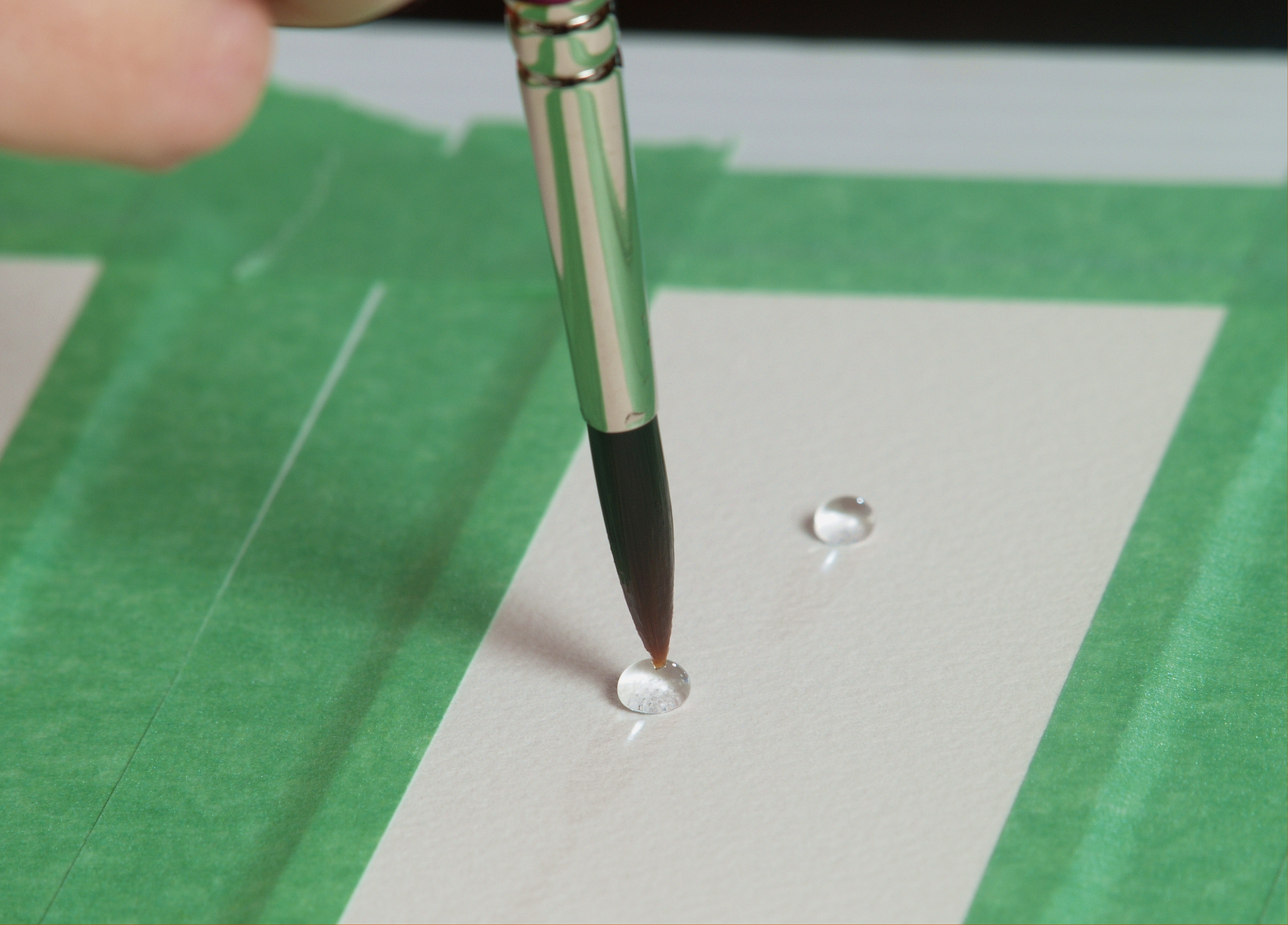
  2. wet brush
  3. load brush, choose colors randomly
  4. apply paint to paper
  5. repeat steps 3 and 4 as desired
  6. rinse brush as necessary
  7. air-dry or blow-dry

Set aside preconceived notions

Play   Explore   Experiment

Expect nothing, and everything

Go with the flow

Capture word impressions on sticky notes

Use these basic techniques randomly to induce exciting surprise effects or, with intention, for details in an emerging scene:

What does your inner muse want you to see?