
The following are a few basic techniques I used in the Dark/Light series, randomly or for intended details in an emerging scene. I encourage you to experiment. Use my works for visual reference but don’t paint my paintings. Paint yours.
Dropping in color
First, apply clear water to the entire surface of the paper. The paper should be wet enough so that it shines, but not so much that the water runs or pools along the sides of the tape. Next, wet your round brush generously with water, and then choose a color from your palette. Load the color on your brush to desired strength.
Either hold the loaded brush over your paper and let the liquid drip, or lightly touch the tip of the brush to the paper. This technique allows colors to bleed and blend when one color is applied on or next to other wet colors on the paper. I use it mainly during first or second color applications.
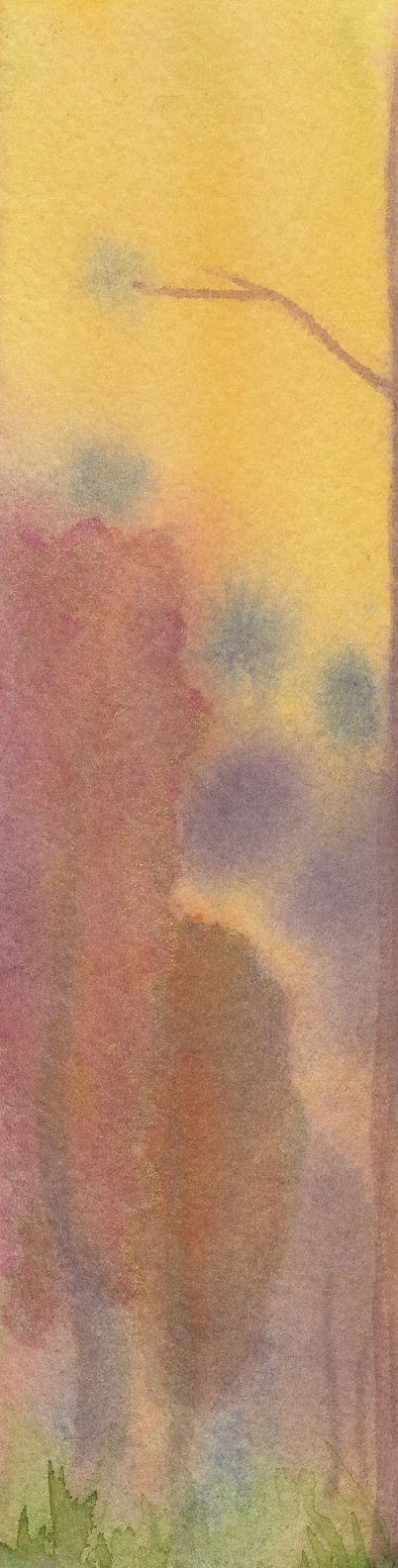
Meditation Forty-Eight, Fantasy Forest, Overworked: The blue and purple treetops in the background were created using the Dropping technique.
Blobbing
This is my term for loading a damp* brush into the paint so that a generous blob of color coats the tip, and then applying it to the paper as desired. This will add a heavy concentration of color to the paper.
If, after application, the color is heavier than you like the excess can be dabbed off with a scrunched paper towel. It can also be removed with a brush. Rinse your round brush, load it with a moderate amount of water and dilute the color right on the paper. The paint, if your brush is not too wet, will lift from the paper into the brush. Rinse and repeat as necessary but don’t labour at it too long. I generally use this technique for dramatic effects when I’m beginning a painting but have also used it in finishing details.

*To create a damp brush load it with water, gently tap it on the side of the water container to remove excess water, then press it ever so lightly onto a scrunched paper towel.

Meditation Twenty-Four You are a little bit of Heaven: I used the angular wash brush during a first paint application to add a flush of green at the bottom left corner. When it was dry I added a single flower.
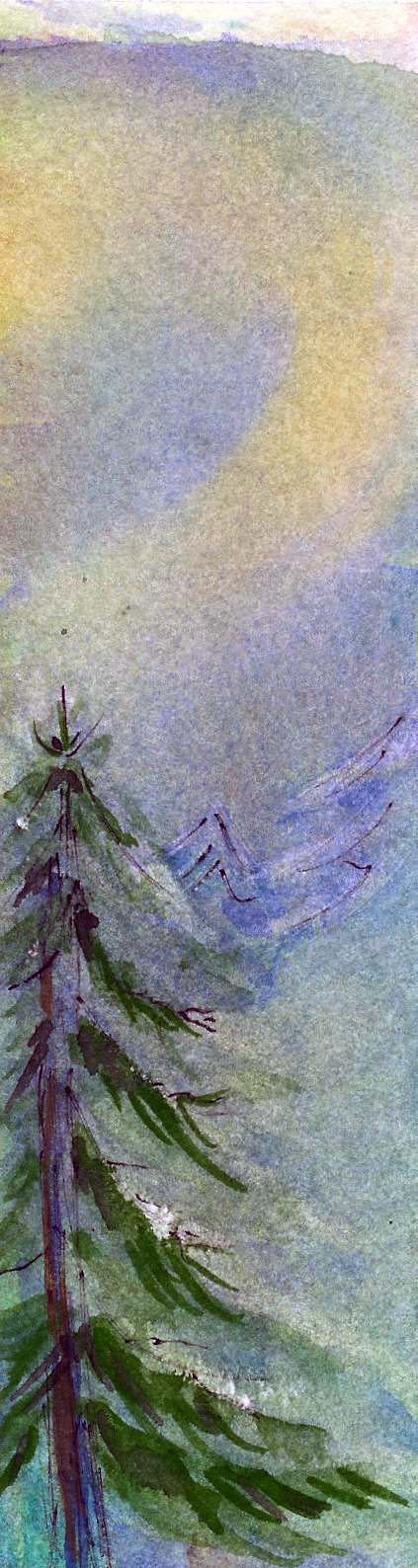
Meditation Nineteen, Rise: With a round brush I blobbed in some snow on the evergreen branches.
Mixing Color
Colors can be mixed either on the palette or on the paper.
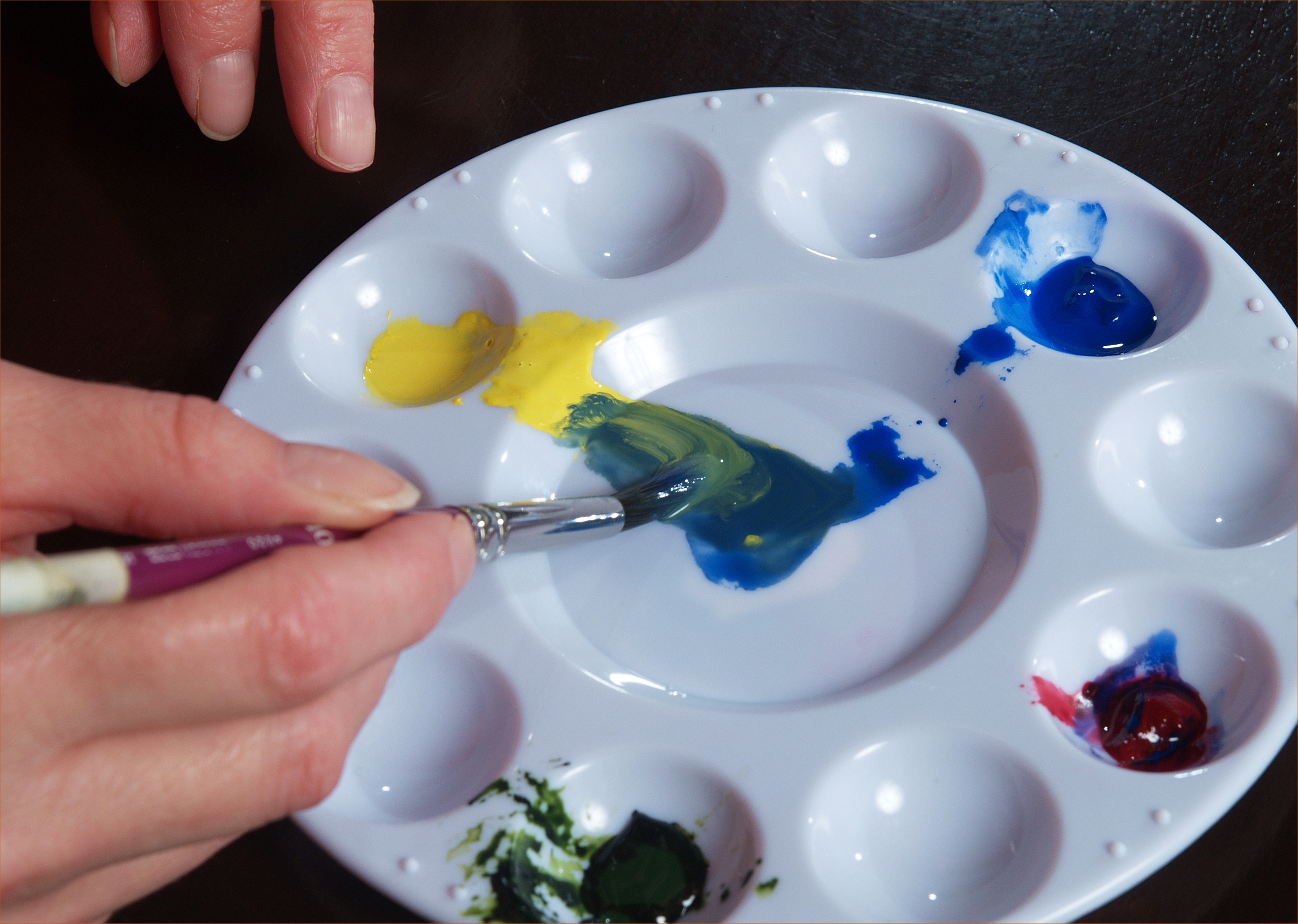
Mixing color on the palette, for our purposes, is fairly straightforward. Choose two colors and mix together a small blob of each. (See Paints under Tools and Materials for combinations of primary colors to create secondaries.) If your paints have dried on the palette, simply add water to one color and drag it to a neutral location on the palette. Add water to the second color and drag it into the neutral location. Mix the two together, adding more of one or the other until you get a third color that appeals to you.
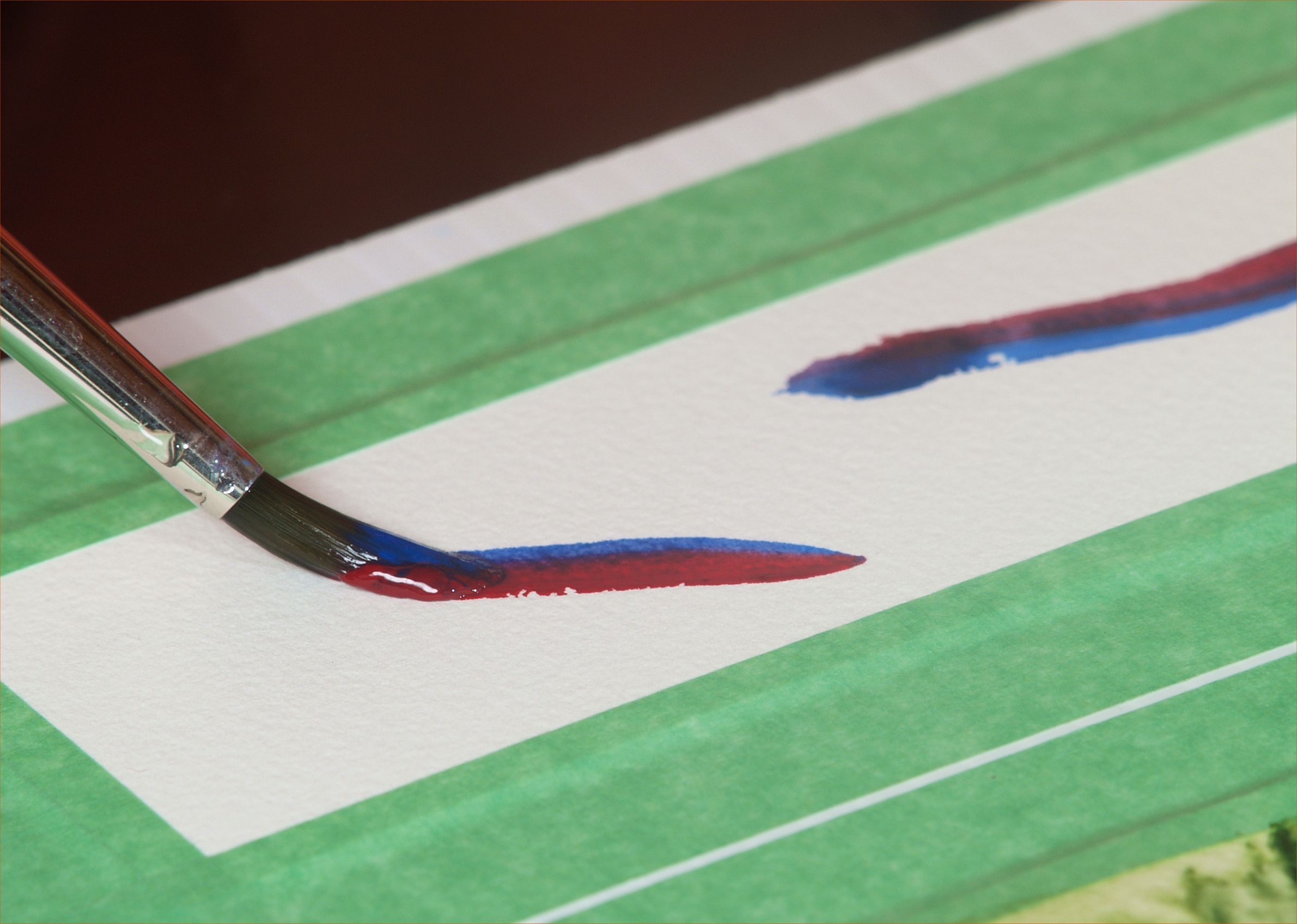
Mixing on the paper is riskier because you may not know exactly what you’re going to get until it’s too late. That also makes it exciting.
Meditation Fifty-Two, go softly: Near the bottom of this piece, color was applied by loading my brush with two colors at once. I loaded a generous amount of paint on two sides of a wet round brush (one color on each side). As I trailed the brush across the wet paper, the two colors randomly mixed in some locations and remained true in others. Because the results are so spontaneously generated, this is a technique I especially love.
Glazing
Layering color (glazing) is a relatively simple process that adds depth to your painting. In essence, it is one color brushed over another after the preceding color has dried.

For the most dramatic effects use heavy concentrations of color. Apply the first color and allow it to dry completely. When you’re ready for the next layer, you can wet your paper with clear water before adding the color, if you like. Glazes can be applied to either wet or dry paper. How much of the total area to glaze is also entirely up to you, and you can add as few or as many layers as you wish. The important thing is to allow the paint to dry thoroughly between layers.
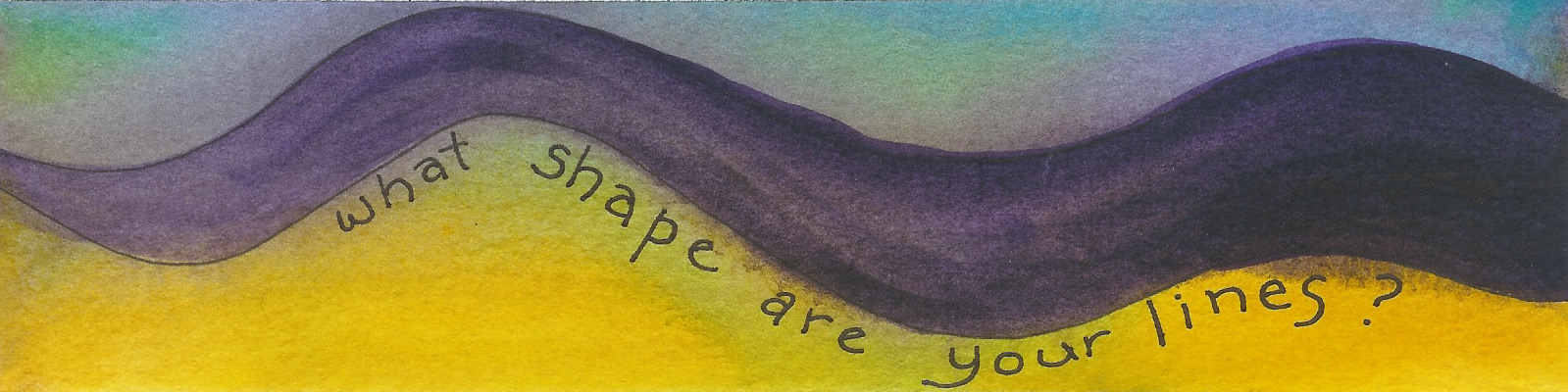
Meditation Eight, what shape are your lines?: This piece began with a medium-to-heavy application of several colors. Brushing heavy concentrations of paint on the purple ribbon added definition. Lighter glazes of purple over the upper half of the painting created depth, enhanced the feeling of movement, and injected vitality into the picture.
Fanning
Approach the use of a fan brush with the intent to experiment. Used early in the process of a painting it can produce dramatic textures that may inspire a theme for your painting. It’s also wonderful for use in finishing.
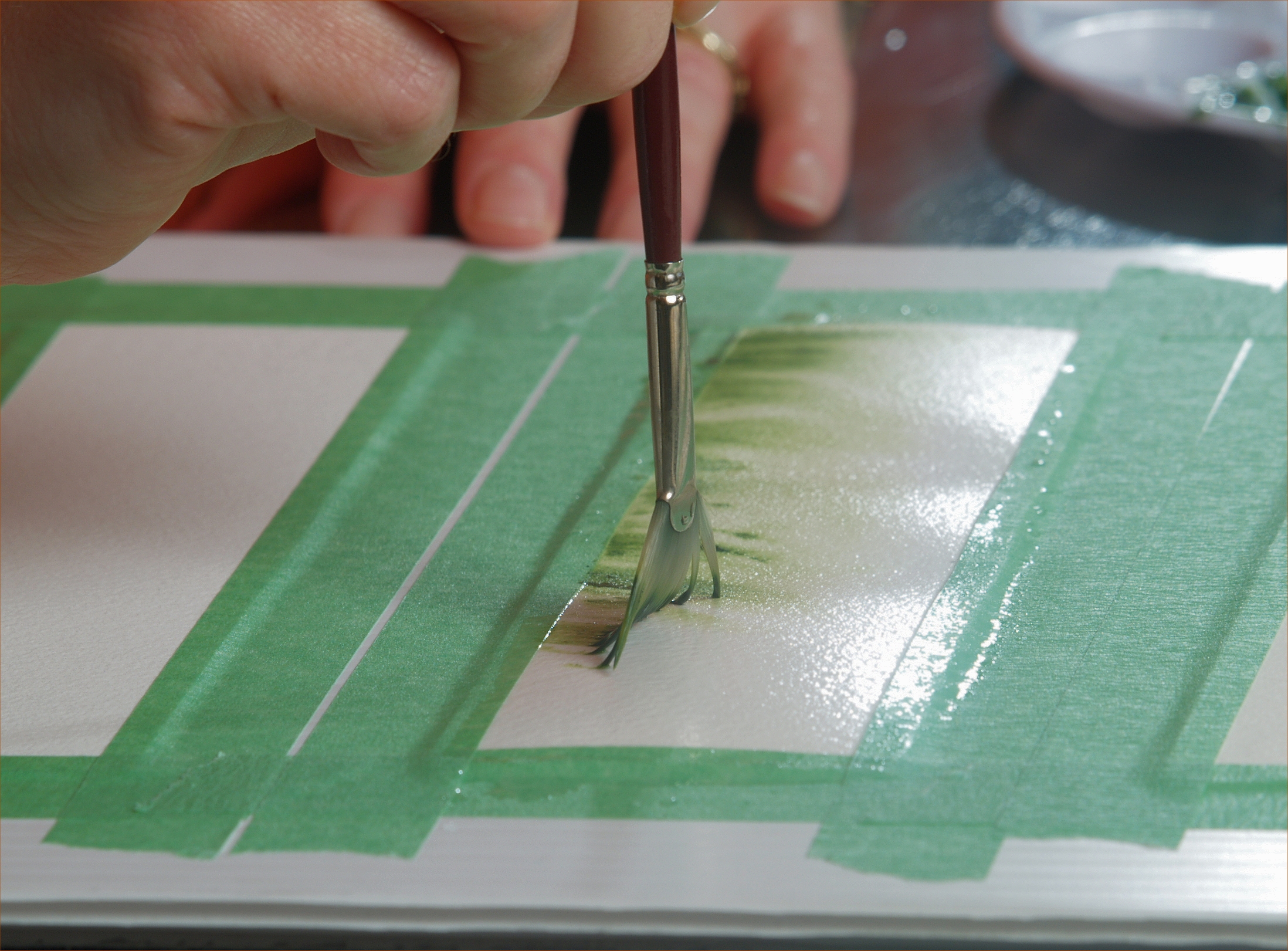
If the paint on the paper is still wet, simply lay in a few strokes with a damp fan brush. Color may be loaded directly onto the brush and then applied to paper, wet or dry. If you want delicate marks load the color on the brush sparingly. Load your brush liberally for bolder details. For an intriguing effect, try twirling the handle of the brush in your fingers. As the bristles move across the paper you’ll get a variety of interesting marks.
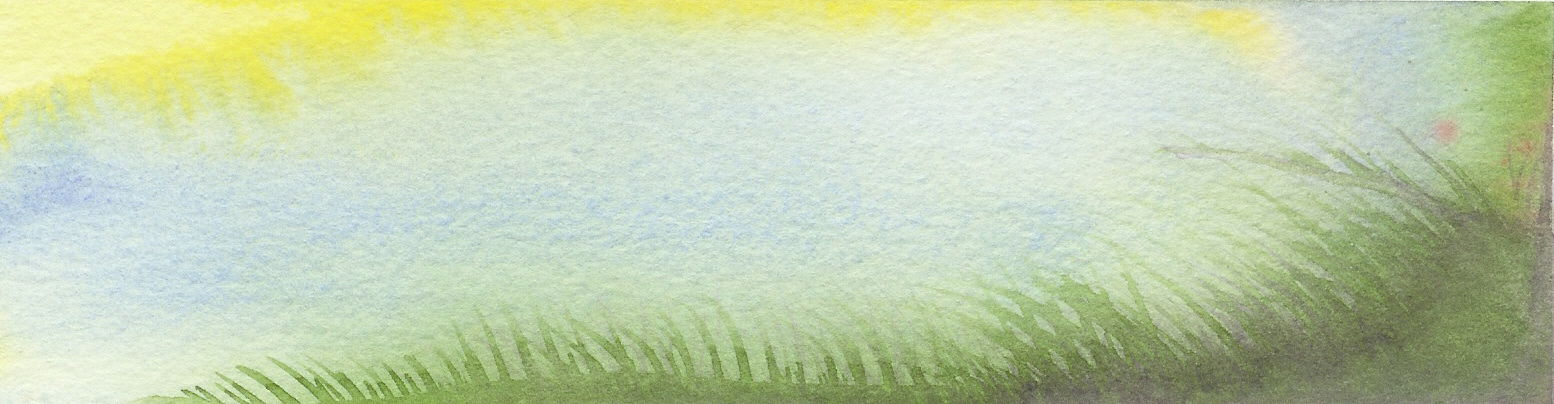
Meditation Forty-One, Groomed for Wildness: The grass fronds in this piece were created by fanning upwards from a heavy application of wet paint along the bottom edge.
Water Beads
Load a round brush generously with water and hold it vertically over the water container to allow excess drips to fall.
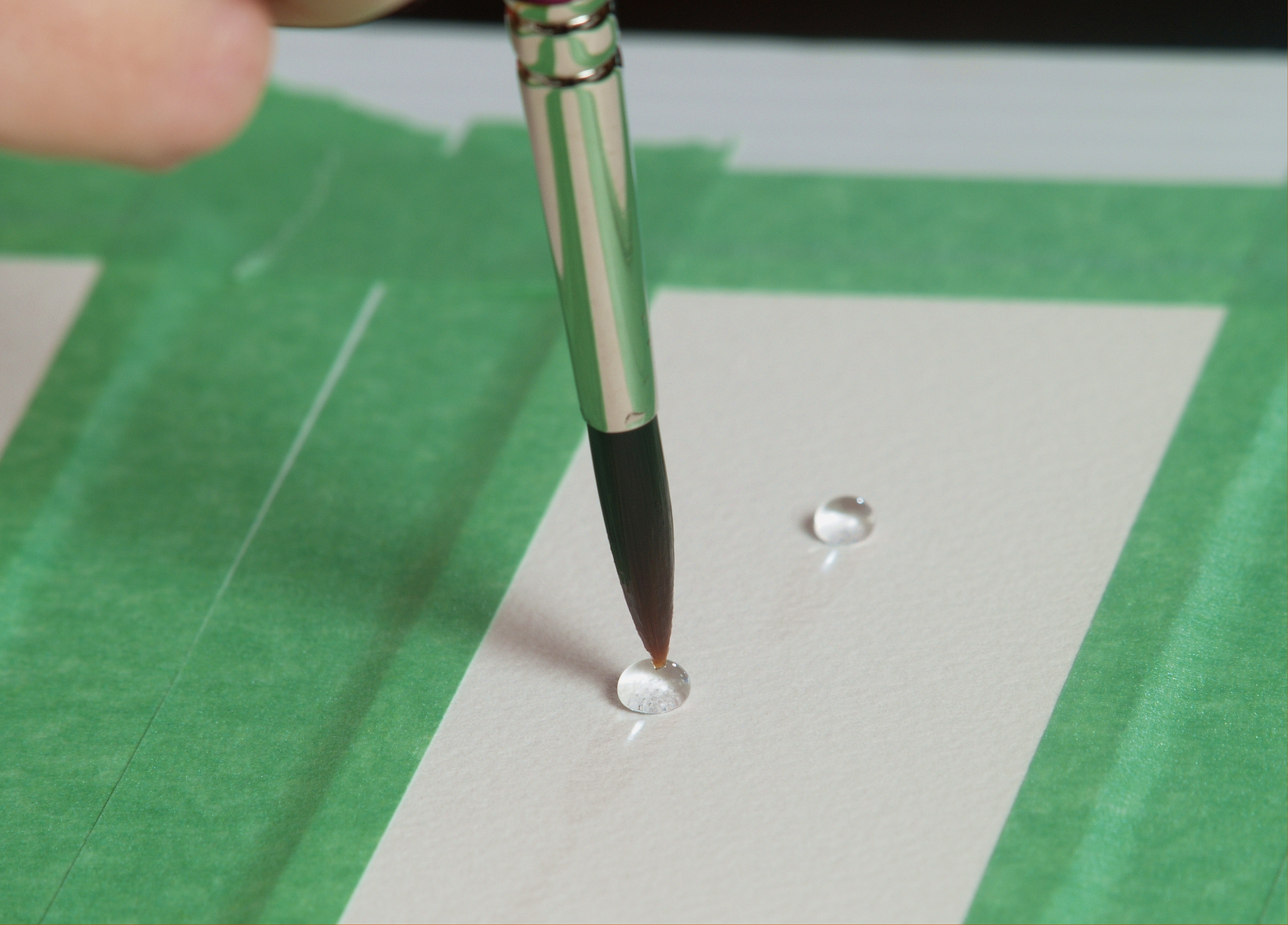
Touch the tip of the brush lightly to the paper then gently lift the brush, leaving a small bead of water on the paper. To increase the size of the bead, repeat the loading process, touch the brush lightly to the bead of water on the paper, and lift. Repeat until the bead reaches the size of your choosing.
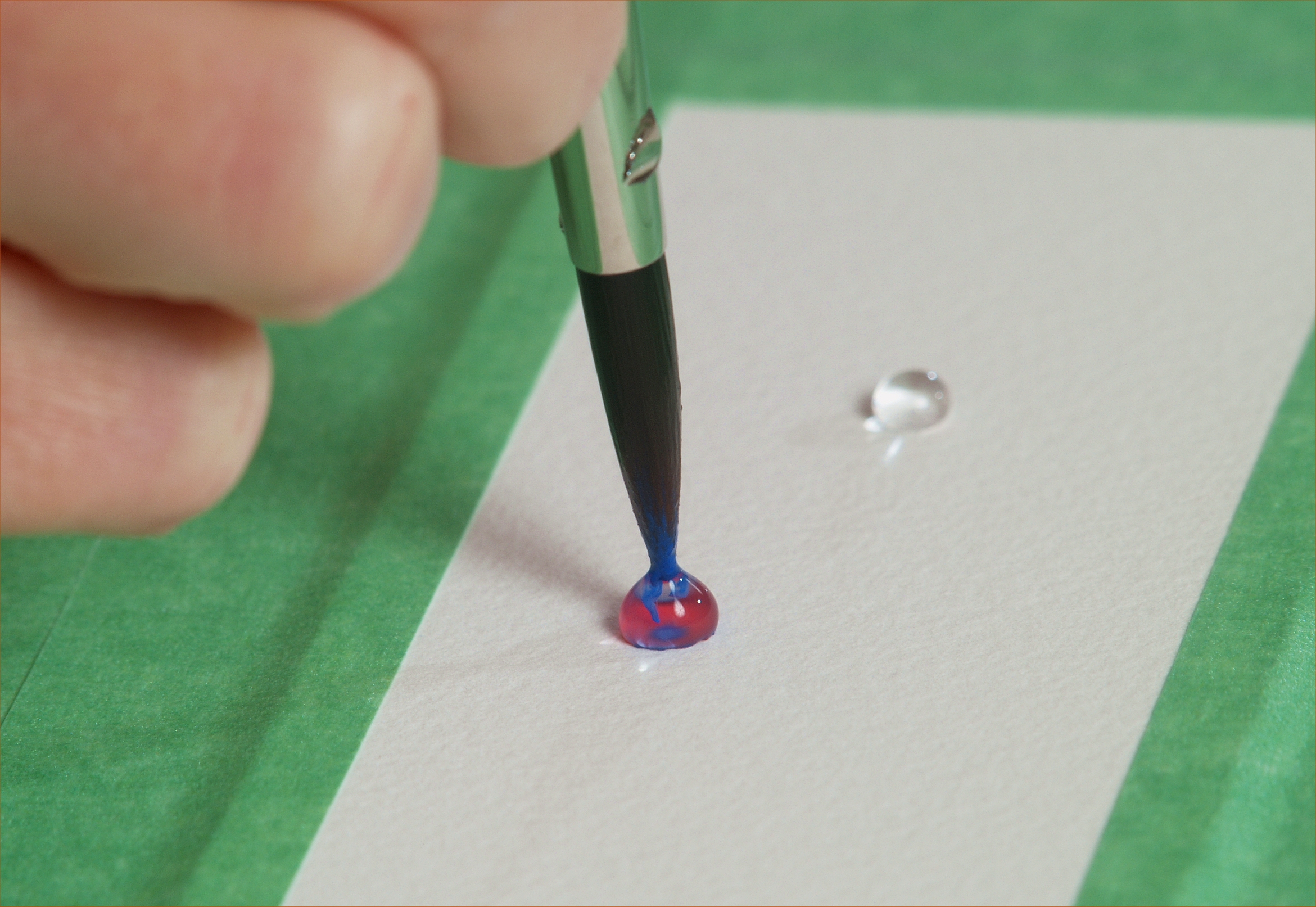
Next, load a damp round brush with color. Push the tip of the brush through the top of the bead, and then lift the brush out. If you prefer tiny swirls of color in various parts of the bead, bring the tip of the brush to the bead off-centre, gently break the surface, and lift. Use one color or several. You can leave the bead to dry as is, or create shapes and interesting effects by breaking it.
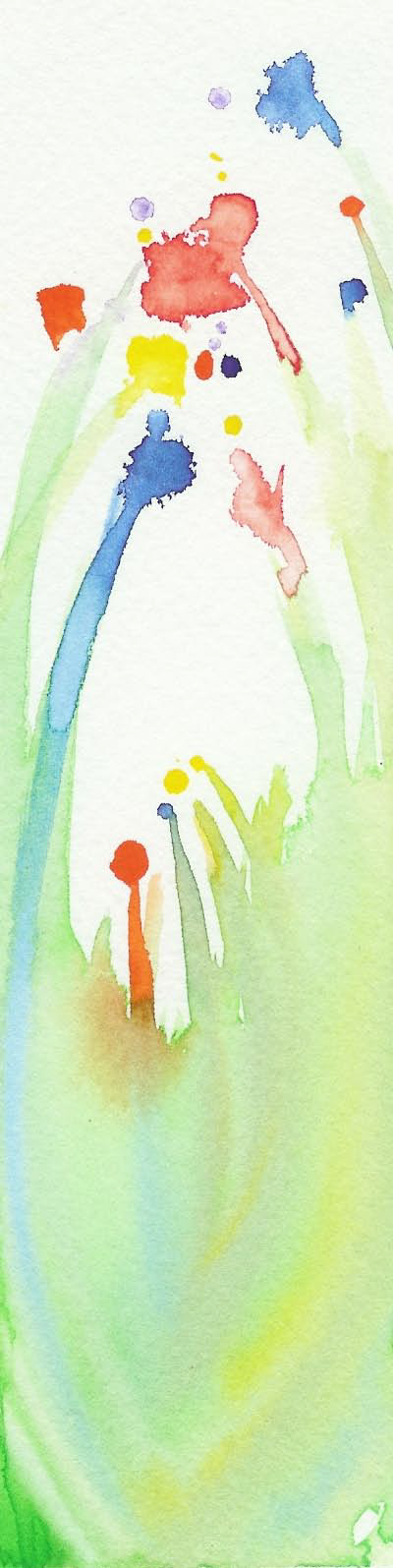
Meditation Ten, Common Roots: This piece began with the water beading process. I filled each bead with fairly heavy concentrations of color, let them be for a short while, and then broke them with my brush. I then pulled some of the color across the paper, creating the “stems” which inspired the theme for the finished work.
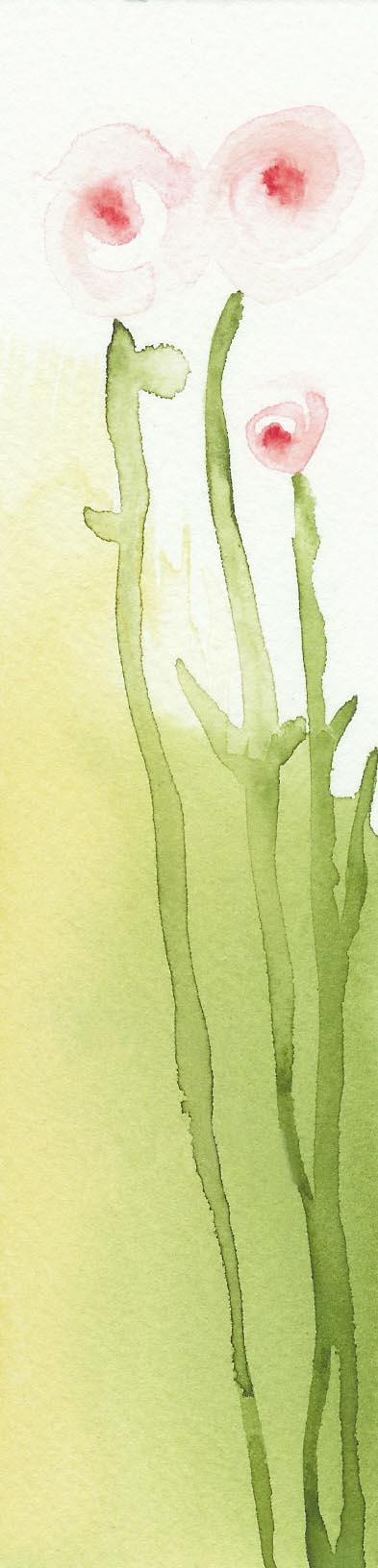
Meditation Twenty-Nine, bloom gently, was created from the bottom up. By the time the flower blooms were begun everything else was done and I knew what I wanted—three similar, delicate, spiraling blossoms. Once the color was infused I simply pulled it out of the bead, dragging the brush on the paper in broad, spiraling strokes.
Try merging two or more adjacent water beads, or create your own variation of this technique and see what fantastic images come of it.
Dab dabbling
Dab dabbling is a lighthearted term that takes the edge off attempting to paint challenging images. Tell yourself that you’re only dabbling. This releases pressure, and gives you permission to putter and ‘see what happens’ over time. That’s how I managed to complete the critters that appeared in the Dark/Light series. Their basic shapes emerged in the first color applications, but as I have little experience in drawing animals, and wanted to follow through on my commitment to use only my imagination (which meant no visual references), I was hesitant to follow through. I wanted these creatures to survive, however, so pressed onward–keeping the concentration of the color very thin and adding a bit at a time over a number of sessions.

Meditation Twenty-Two, Freeing the Elephant: To minimize the hard edges that can form when applying wet over dry, I covered the entire surface of the elephant with water at each session, adding color only where I wanted to deepen tones—in this case, along the backbone, ear, top of the head, and trunk.
Interesting shapes will emerge in your paintings. Don’t be afraid to tackle them. The round brush is best for this technique. Use plenty of water and add color sparingly. Concentrate on one area of the painting at each session, dabbing in a tiny bit at a time. Let the painting dry for at least a day before returning to add more.
Spattering
Use this technique in initial color applications or for finishing details. If the paper is wet the color will bleed, creating soft, blurred edges. Used as a finishing touch on a dried surface, the edges of each spatter are more defined, adding texture and/or detail that can represent a collection of objects.
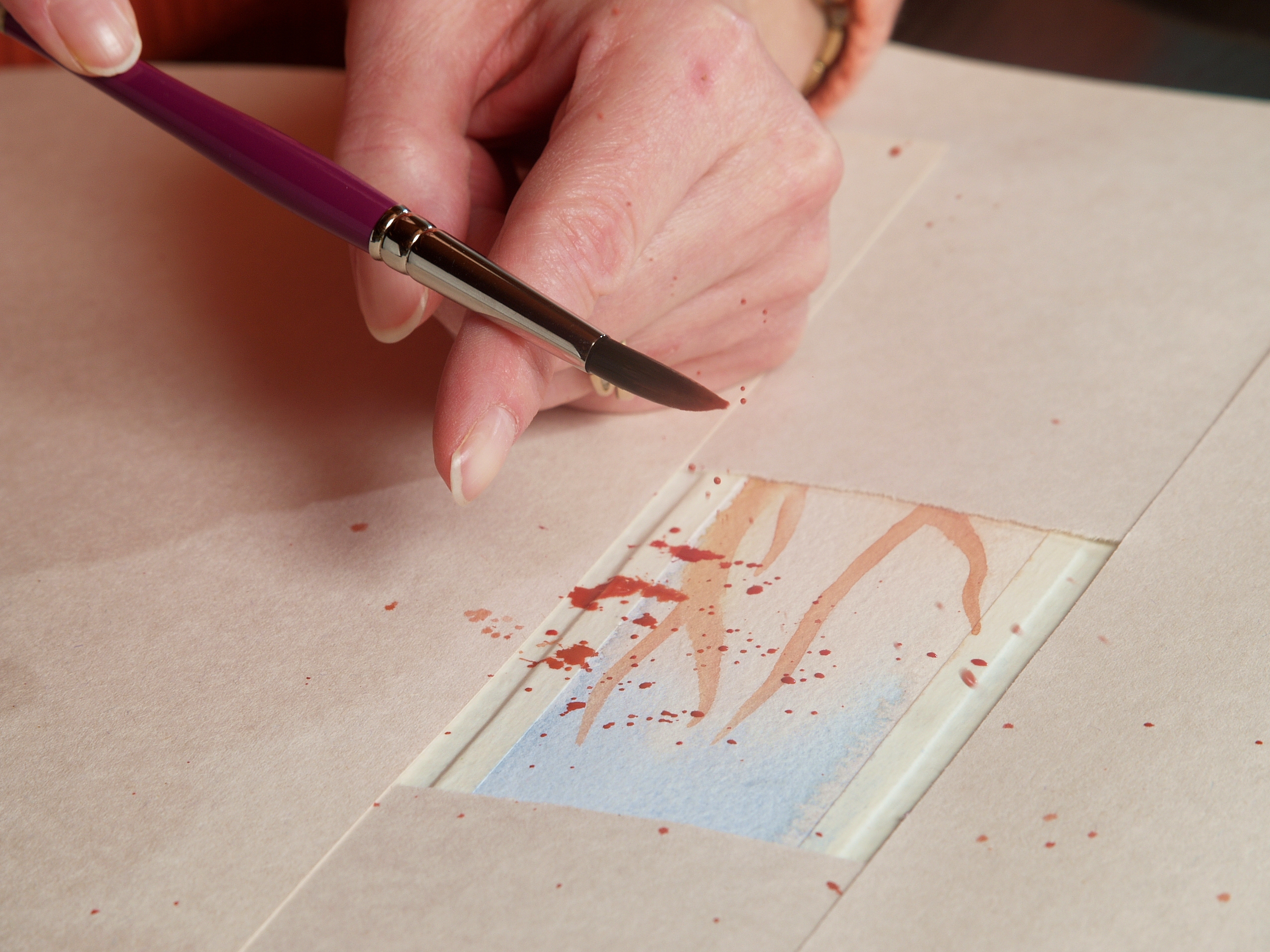
To spatter a specific area of your painting, first lay scraps of paper over the spaces where you don’t want this effect. Wet your round brush generously with water and then load your color. Hold the brush over the area you want to spatter. Gently tap the brush-handle (near the bristles) on the index finger of your opposite hand. If you prefer, you can use a pencil or any other blunt object to tap the brush on. I have found this results in smaller and more abundant spatters.
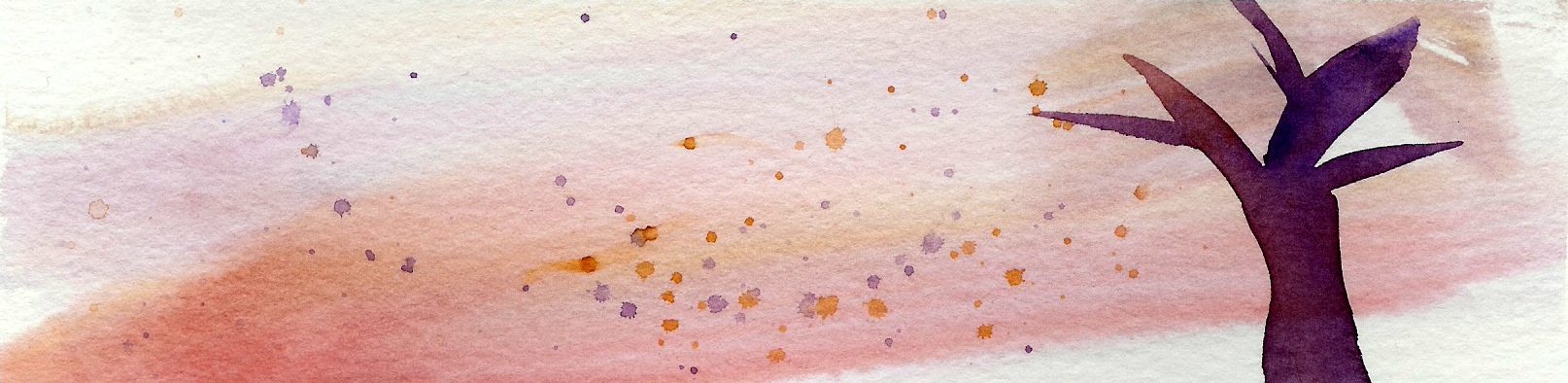
Meditation Forty-Seven, Scattered: I wanted to accentuate the movement generated by the background brush strokes, so added a spattering of ‘leaves’. Smudging a few of the spatters while they were still wet further increases the effect.
Softening edges
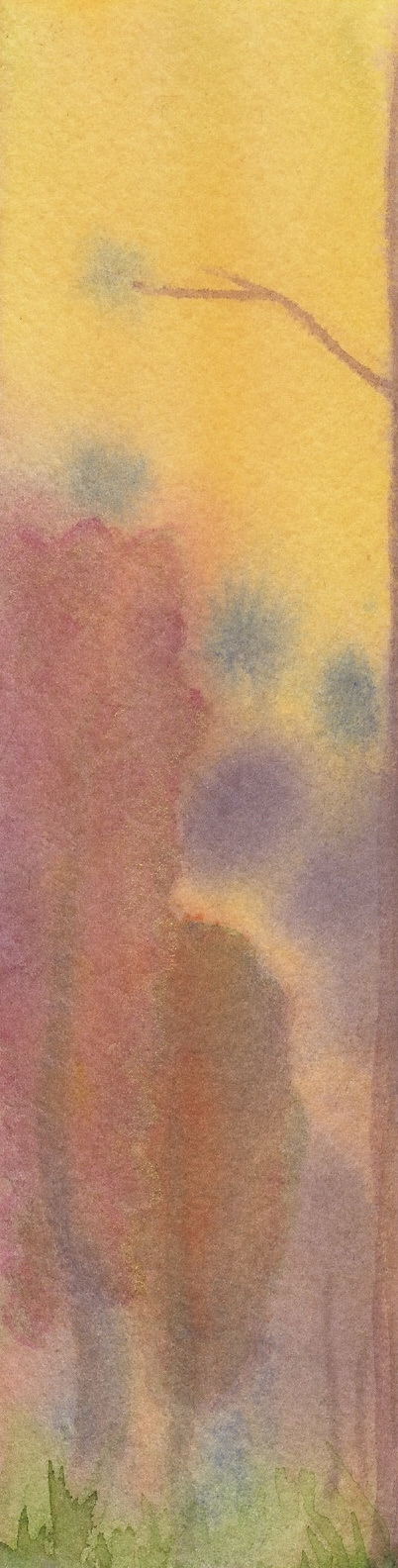
Meditation Forty-Eight: Fantasy Forest, Overworked
I like to use whatever I’m given as I paint, and try not to do much correcting. Occasionally, however, I am confronted with something I do not like. During the creation of Fantasy Forest Overworked I regretted some of the hard edges, and went back in to remove them.
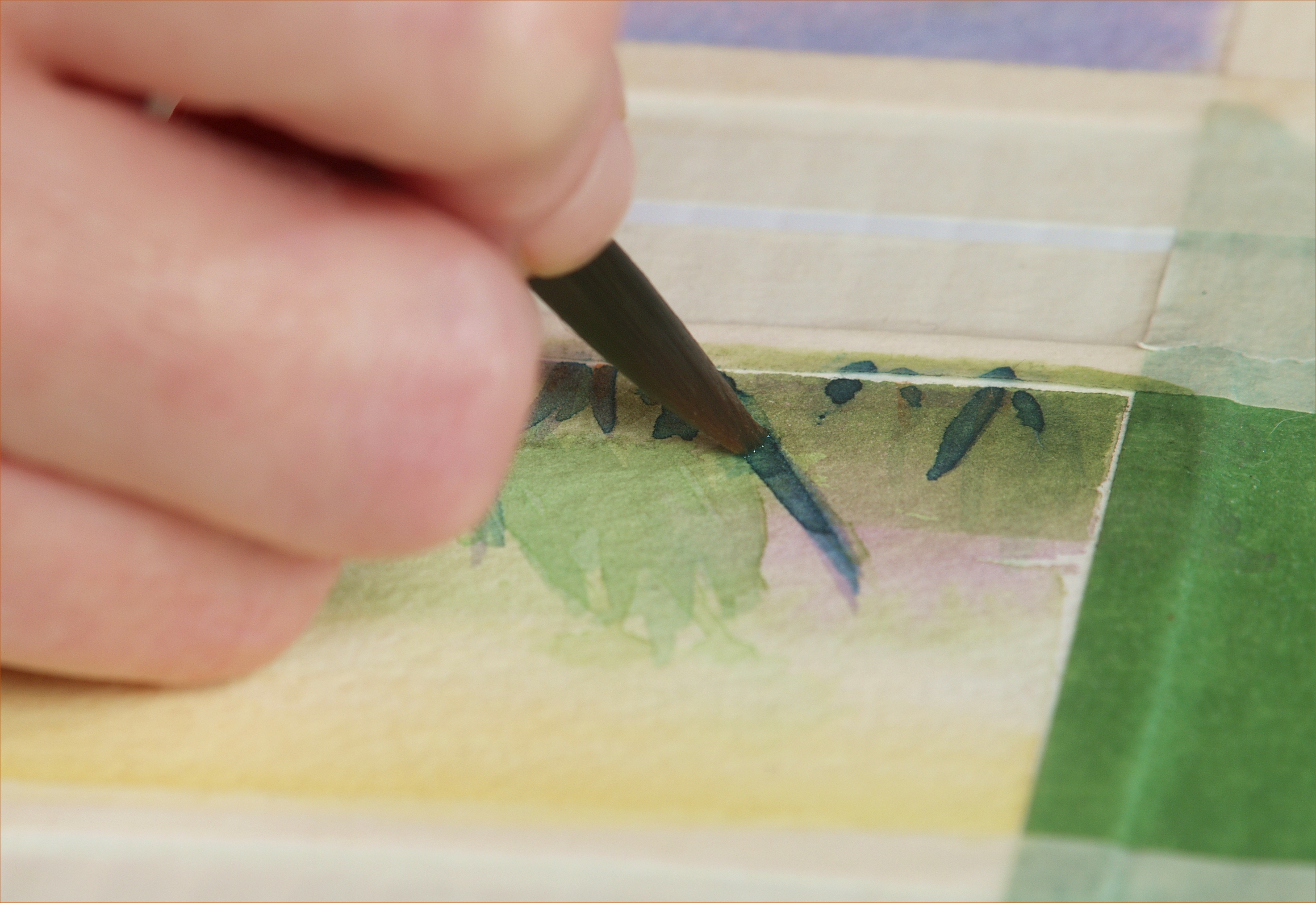
If you want to soften the edges of an image take a damp round brush and apply it to the area in a light, quick, scrubbing motion.
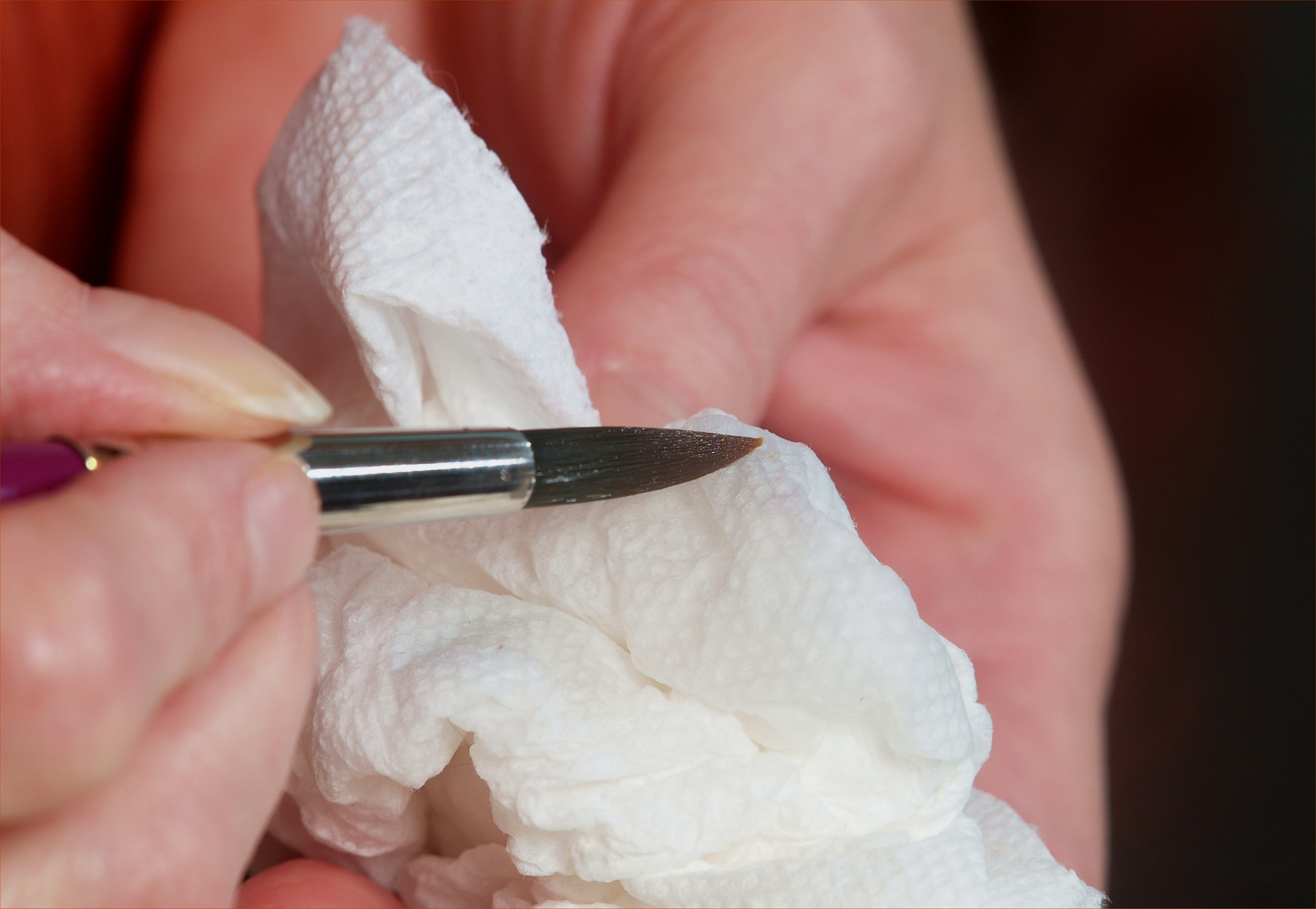
Dab the lifted paint onto a scrunched paper towel, but don’t allow your brush to dry out as this can be hard on the bristles. Rinse it frequently during the process and thoroughly when you’re done.
Before Fantasy Forest Overworked was finished, I realized that a little edge is okay. In fact, a line here and there is defining, and adds character. The real challenge was remaining true to myself and the work.
Reverse
This process involves placing copious amounts of color on the paper and then removing some of it. If you are working with a piece that just does not seem to be going anywhere, try this technique.
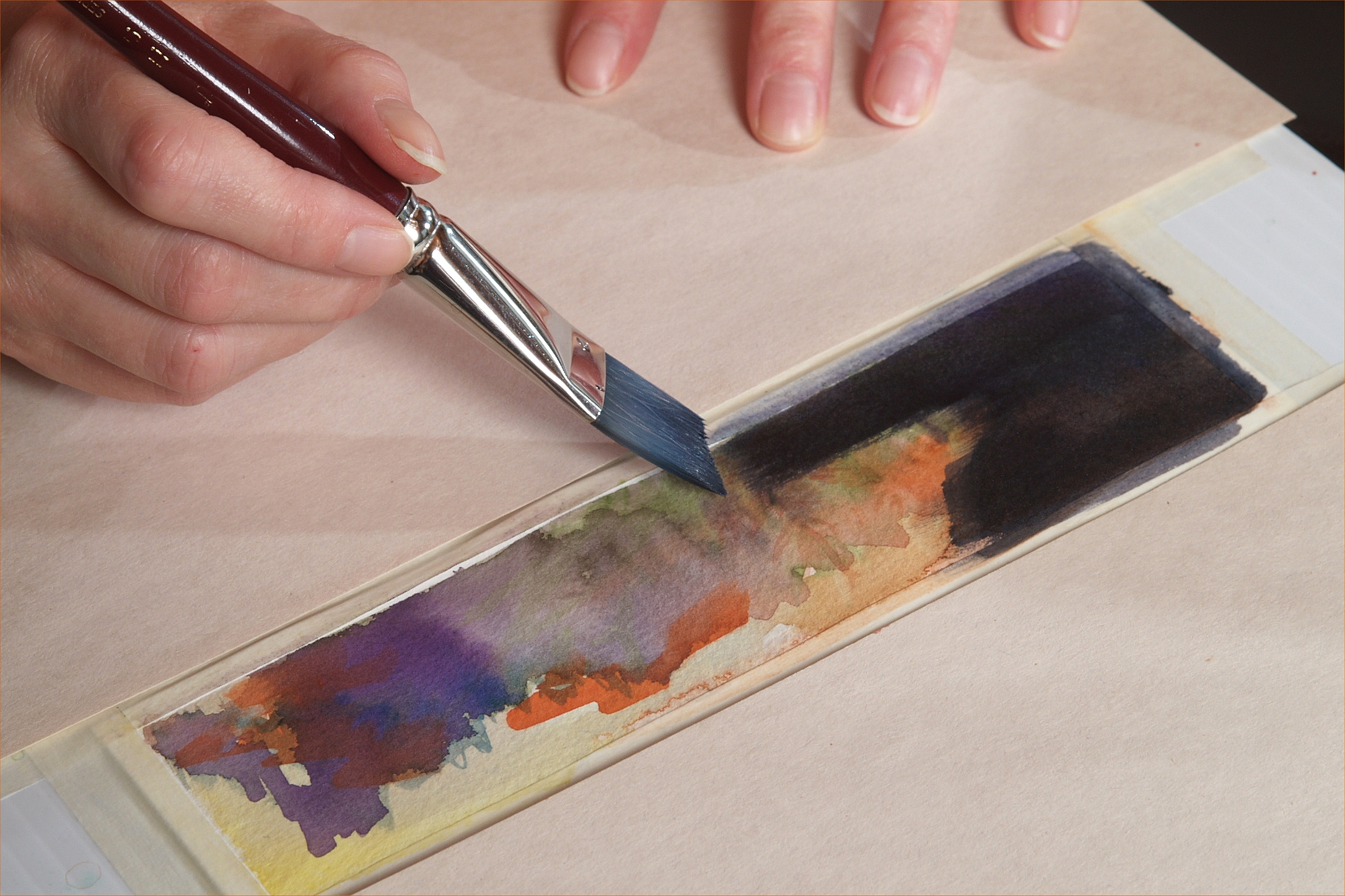
Keep adding color. Lay it in boldly. Use at least three colors, mix them together and cover most, if not all of the surface of the paper. Keep going until the entire paper is covered in paint and it begins to look like mud. Let it dry.
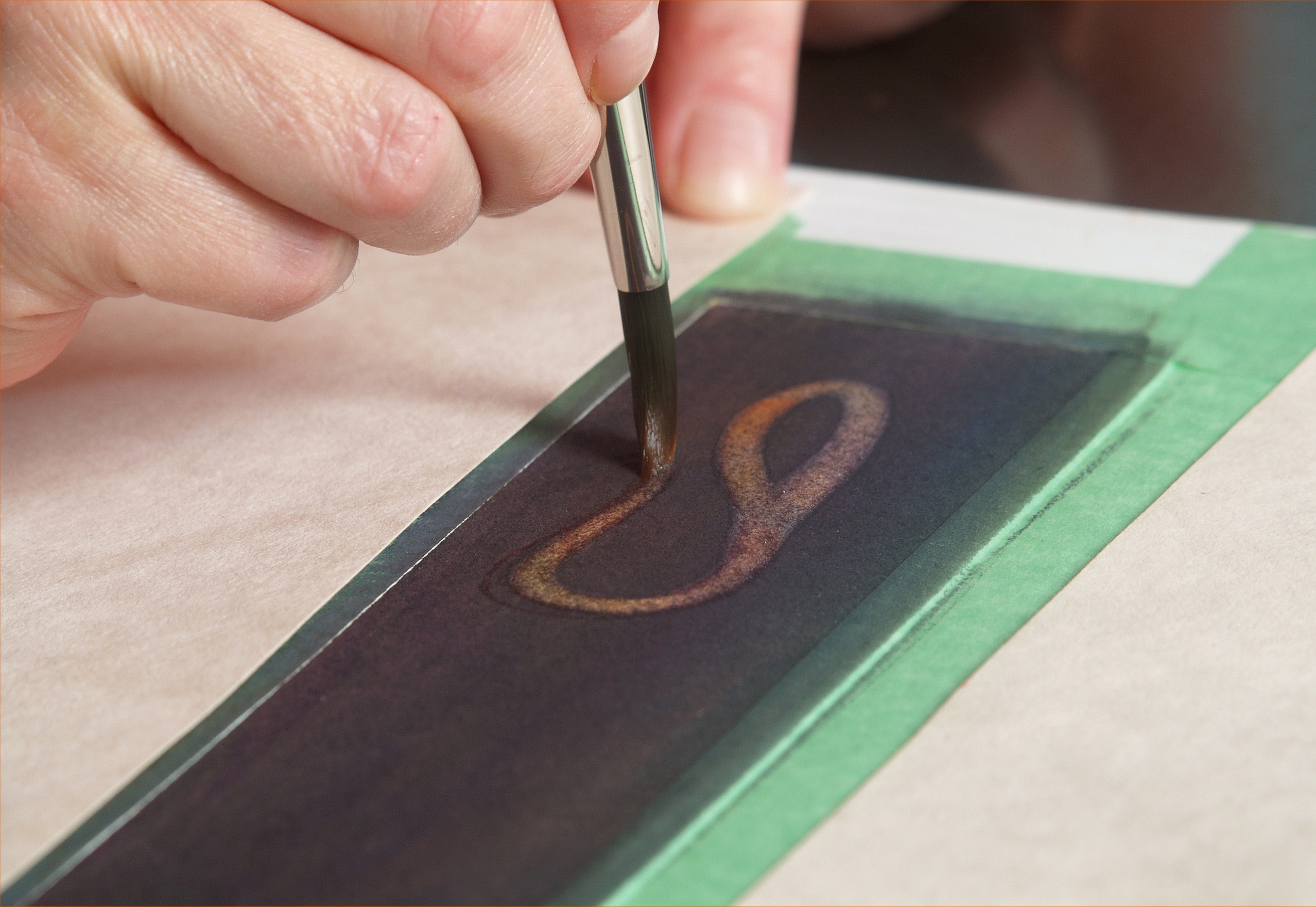
Take a clean damp brush and begin to leach some of the color from the paper. Experiment with different brushes and brush strokes. Remember, if you don’t like what you see, you can always cover it again and start the process anew. Just be sure to let it dry first.
You will likely need to rinse your brush frequently. As you rinse, pause to consider the potential of your piece. Continue to leach out color until you are satisfied.
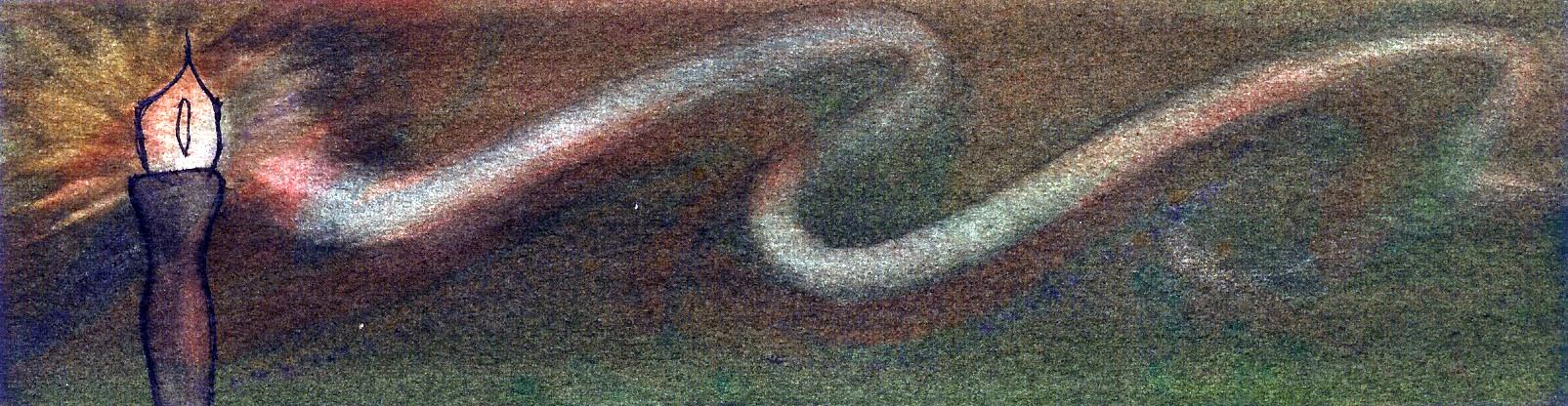
Meditation Nine, Writing in the Dark: This piece took me a long way before I had any idea of what it would become. The first color application did not inspire me, nor did the second. So, I continued to add color to the paper until the entire surface was a ruddy brown mix. With a round brush, I leached out color to create the shape of a candle flame, and was finally inspired with the idea for the finished design. Notice how the original colors pop out in contrast to the darkness surrounding them.
Scratching
When you are finished adding color you may want to create highlights in an area of your painting. This technique is exactly as it sounds.
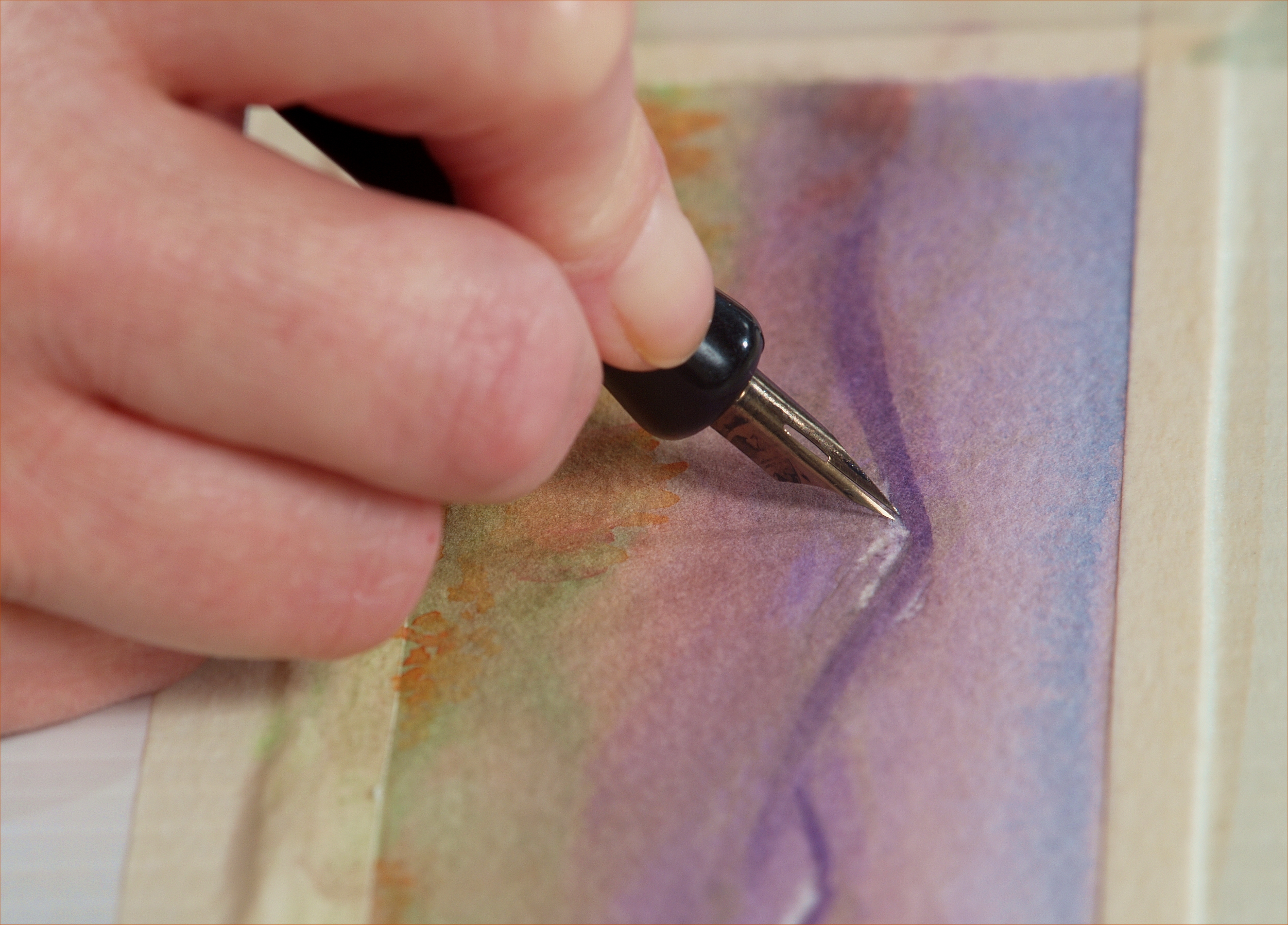
Once the paint is thoroughly dry, take a sharp object and scratch layers of paint and paper away until the white underneath shows through. I used the nib of an old calligraphy pen. With your fingers or a utility knife, gently peel away the bits of paper fluff you don’t want left behind.
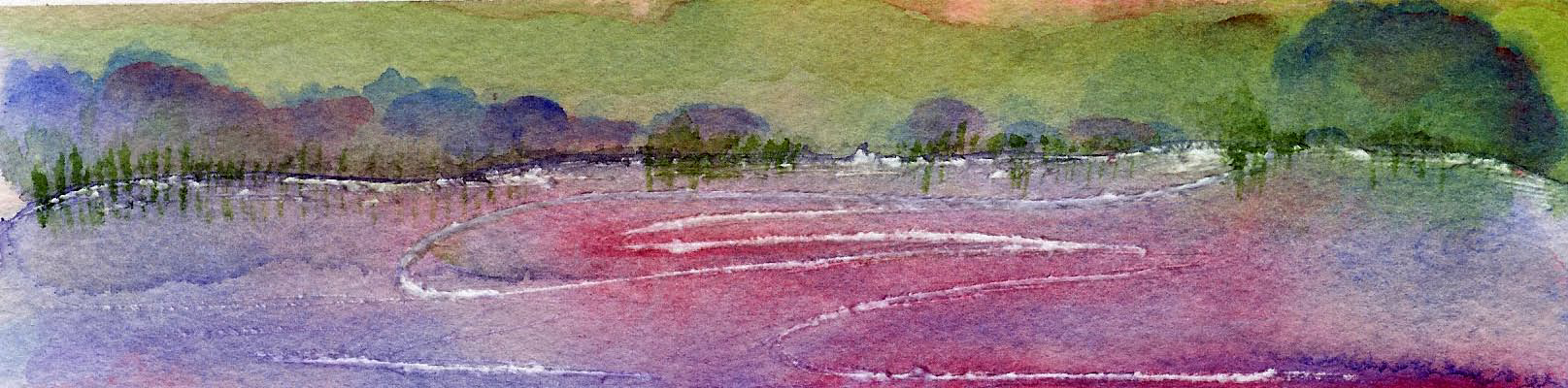
Meditation Thirty-Eight, Scratching the Surface: I decided after painting that I wanted some movement in the water, so scratched in ripples and a few splashes along the shoreline.
Closed-eyes wash
Brave this one—it can be fun and the results may astound you!
Set your palette within easy reach. If possible, secure it to your work surface with sticky-tack or masking tape, or you’ll risk dragging the palette onto your paper. Protect areas of your board you don’t want paint on by covering them with scraps of paper. Fasten the paper scraps with short strips of masking tape.
When you are ready to begin painting, wet the surface of your blank paper with clear water. Place your non-dominant hand at the edge of the paper. Wet your wash brush and place the bristle end in the middle of your palette.
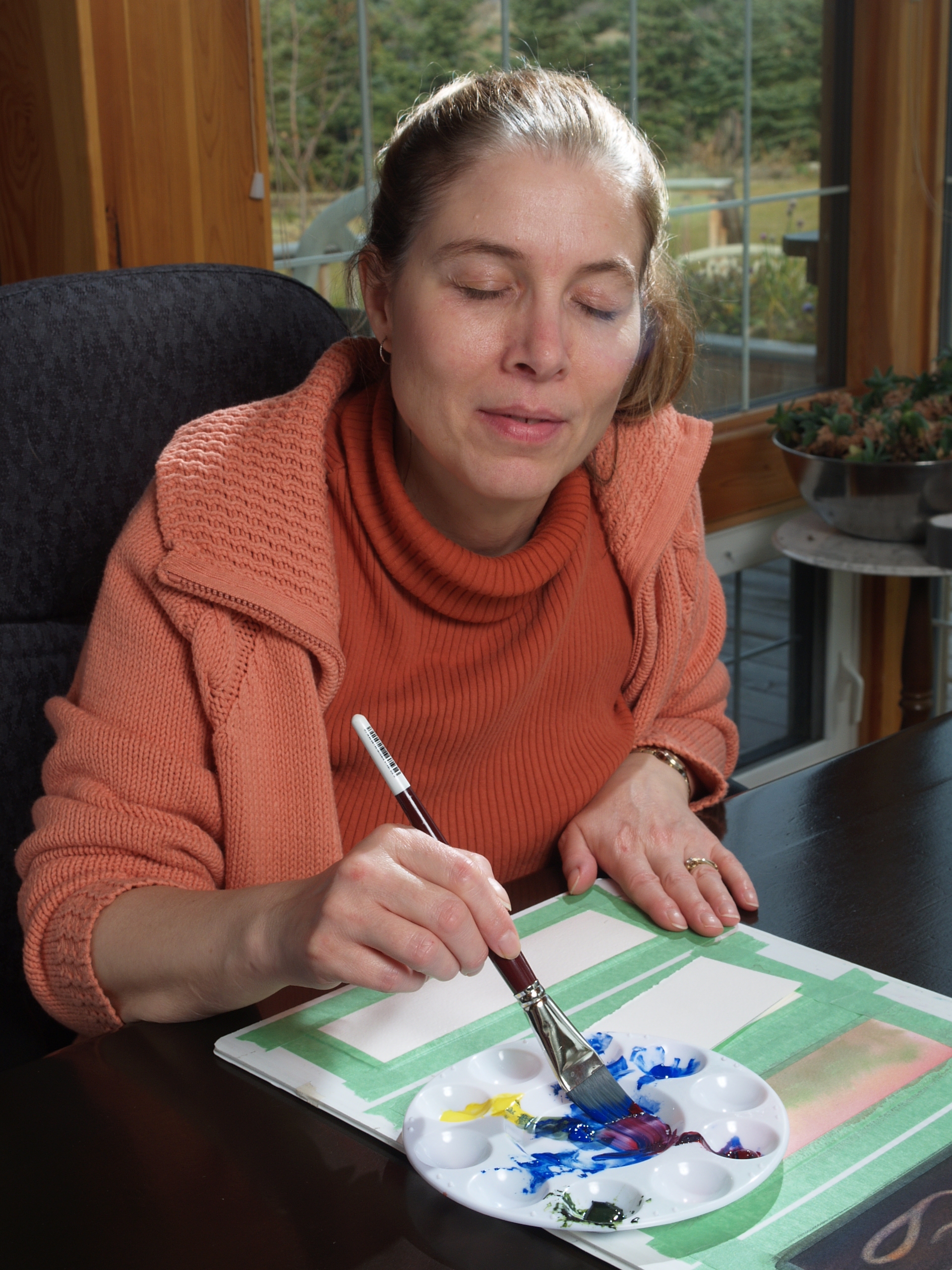
Now, close your eyes and move the brush around your palette, loading it generously with color. No peeking!
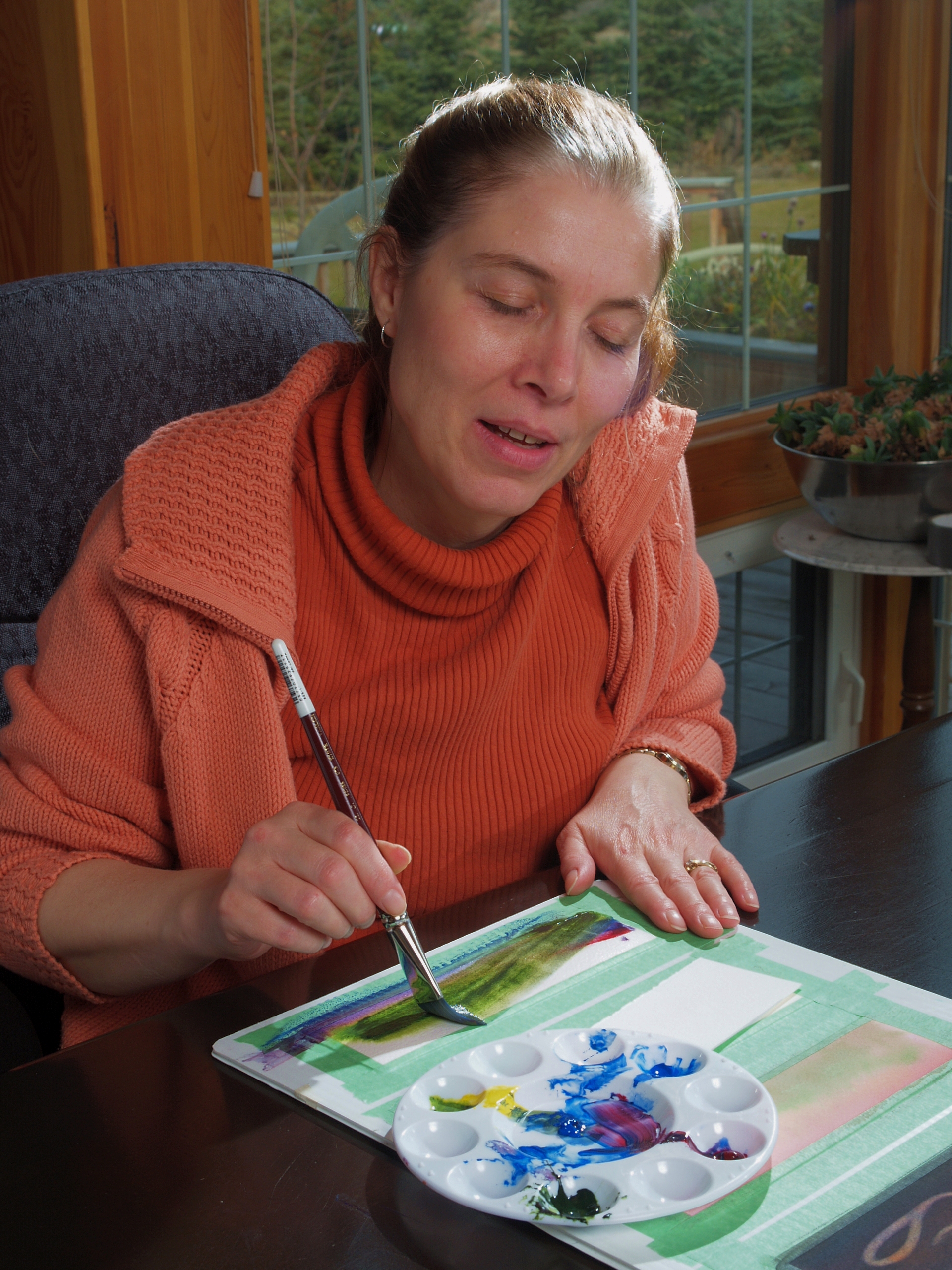
Bring the brush to your paper and lay in some brush strokes. Without looking, return the brush to the palette and load up more paint. Lay a few more brush strokes on the paper, then open your eyes and admire your closed-eyes wash. Let it dry before adding any more paint. Complete your painting with eyes open, allowing the first wash to inspire you.
Meditation Forty-Seven, Scattered: The entire background was created in a closed-eyes wash. The movement of color strongly suggested wind. With the addition of a tree and leaves later, with eyes open, the composition was complete.
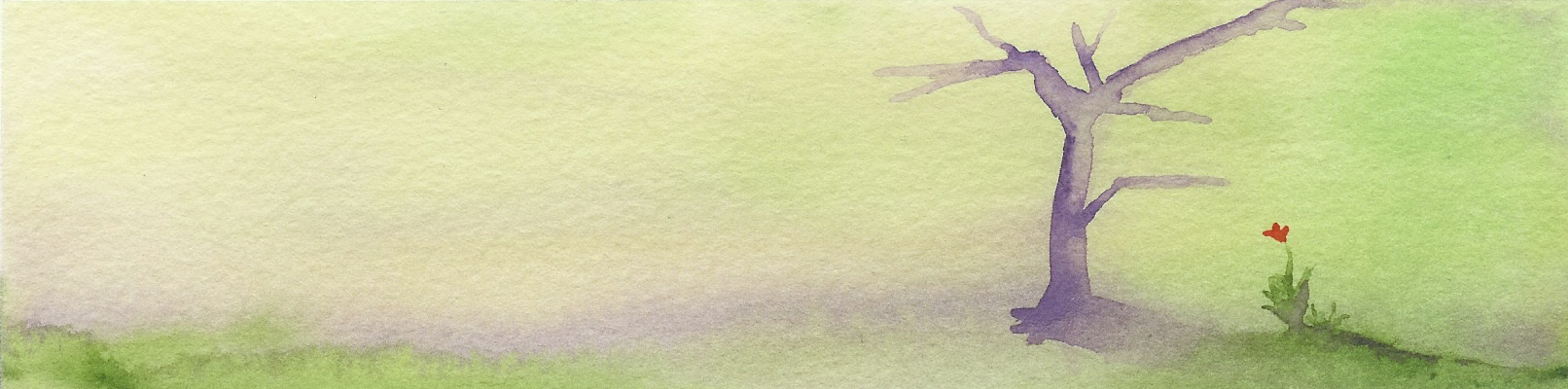
Meditation Forty-Nine, Bloom from the Shadows: A closed-eyes wash resulted in the soft shadows of green and mauve that inspired the theme for this work.
The Prompt Page
In order to focus on the real work in this method of painting, you will want to keep your work area and your mind clear of excess clutter. That includes your copy of Creating Recovery. Feel free to photocopy the Prompt Page, which was designed as a quick-reference guide to the techniques described earlier. It will take up less room on your table, and less of your valuable painting time.
Creating Recovery Prompt Page
|
Begin Painting
|
Set aside preconceived notions
Play Explore Experiment
Expect nothing, and everything
Go with the flow
Capture word impressions on sticky notes
Use these basic techniques randomly to induce exciting surprise effects or, with intention, for details in an emerging scene:
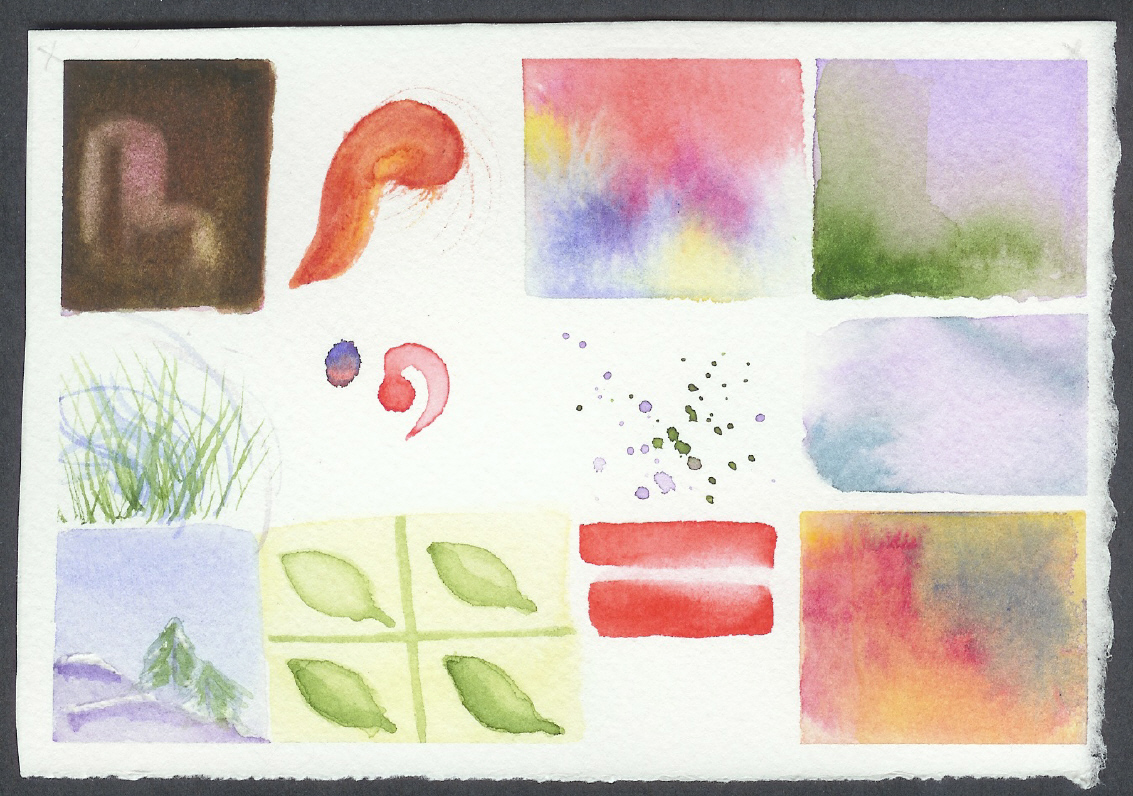
What does your inner muse want you to see?
 Creating Recovery
Leave a comment