
When doing this for the first time, I suggest making it an activity separate from your regular painting session. Once you have had a chance to become comfortable with the process, you may find that it can be an enjoyable prelude to painting.

Begin by laying one 10” x 8 ½” (25.5 x 21.5cm) sheet of paper lengthwise on the table with the ‘right’ side (the side with the “x” on it) face down. To create four 2 ½” x 8 ½” (6.5 x 21.5 cm) strips, measure and mark off the paper at 2 1/2″ intervals across both top and bottom edges.
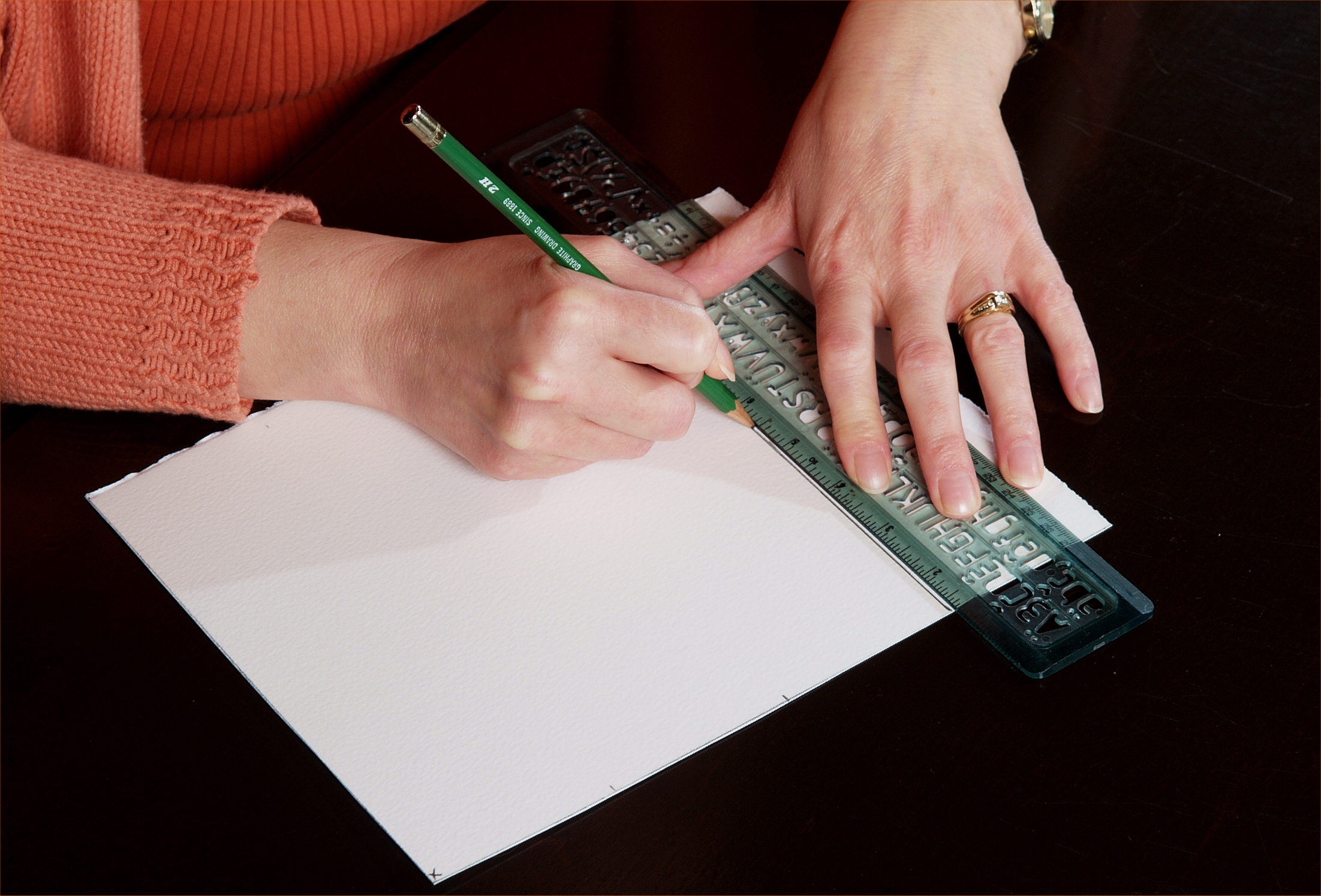
Use your ruler to line up the marks between top and bottom, then draw the vertical lines. As you cut off each strip, turn it over and pencil in a small “x” on one corner. This will later help you identify the ‘right’ side for painting. The pencil marks can be erased later.
When you have cut all four strips, turn them face up (with the “x” visible) and arrange them on the backboard. I laid mine in a single row. They were easy to tape that way and it never occurred to me to do it differently, but you can set yours out any way that suits you. Don’t resist the urge to experiment!
The next and final step in preparing the board is to tape the papers down. Doing so not only secures the paper in place, it also creates a border around your piece and gives it a clean, finished look. For these small pieces I aimed for a border of about 3/16” to ¼” (six to seven millimetres). I didn’t actually measure until the moment of preparing these directions, only to give you some idea of what to shoot for. It’s really a matter of personal preference. Just remember that you want to leave as much room as possible for paint, but a reasonable outside margin as well.
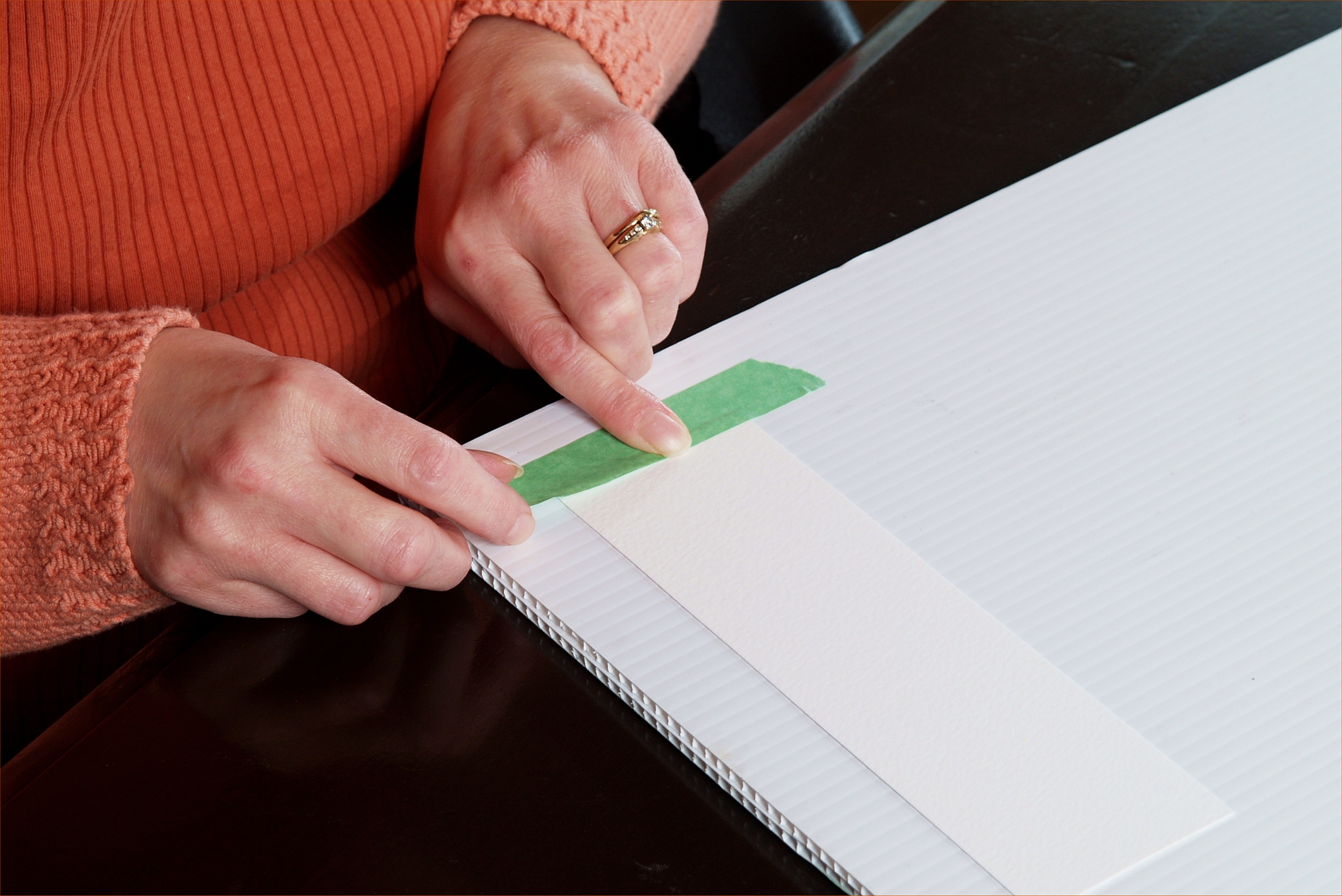
Tear off a strip of masking tape about 4” (10cm) in length. Don’t worry if your measurements are not exact. With practice this will become second nature. Secure one short side of the paper, extending the tape about ¾” (18mm) or so past both edges of the paper.
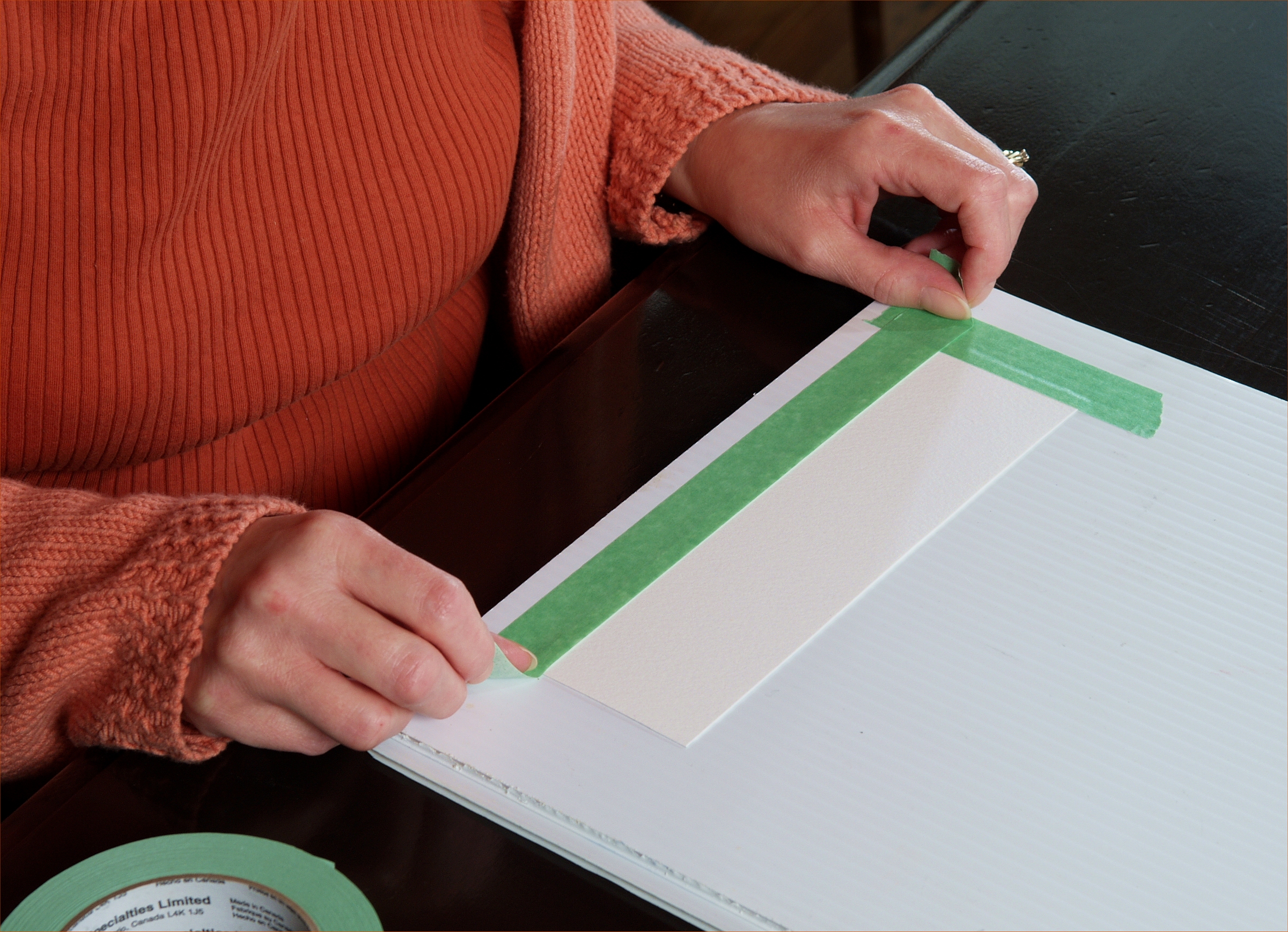
Next, tear off a 10-11” (26-29mm) strip and secure one long side of the paper. Follow up with the remaining two sides, working your way around the paper. If your paper has a deckle edge you can make either your painting space, or your border, just that much wider.
Tape each paper, one by one, in place. When all are fastened, check to ensure that they are secure. If not, water may seep under the tape onto your border.
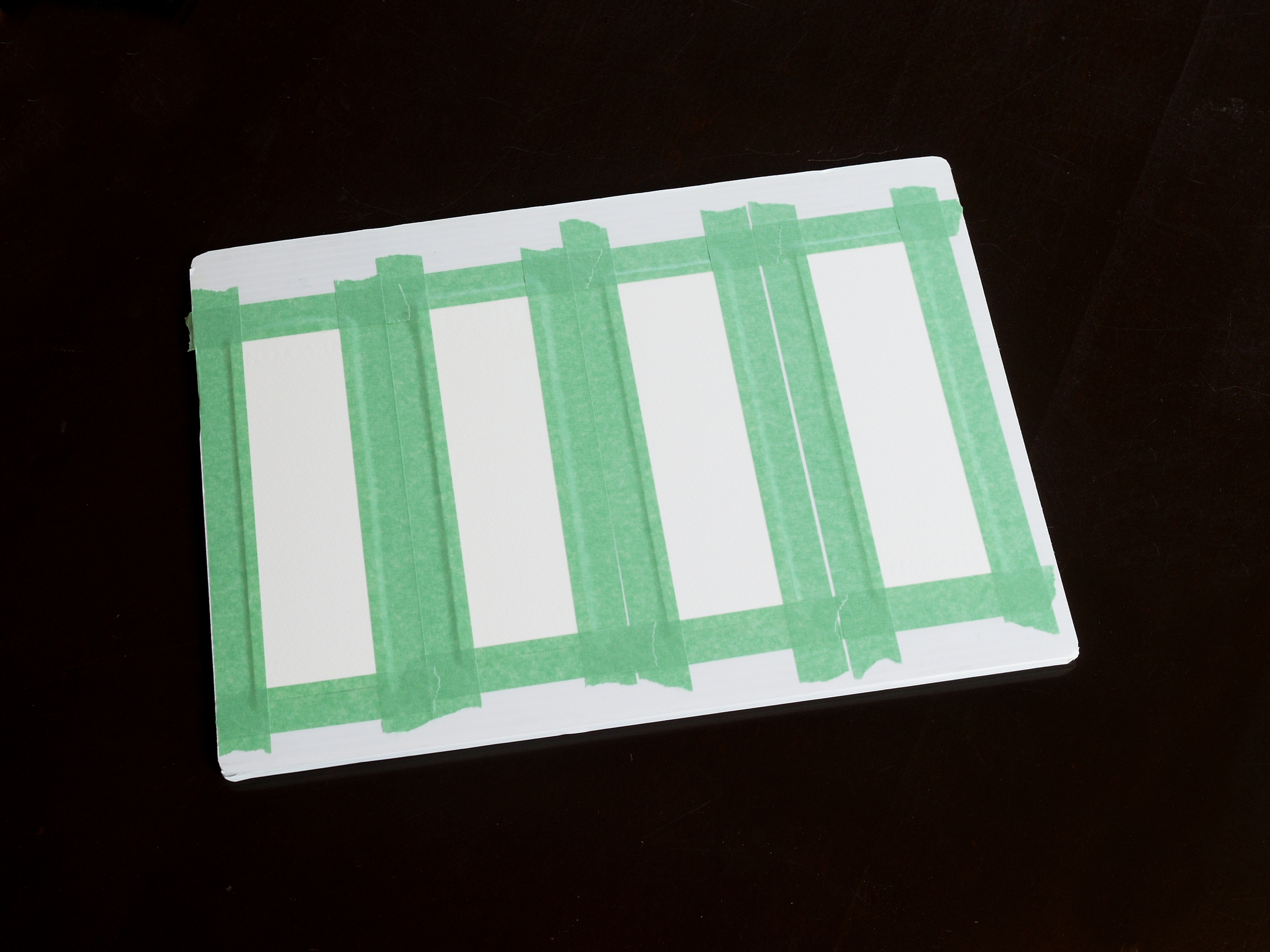
Your papers are now ready for paint! Before painting, however, please read the following segments on approach, painting process and techniques.
 Creating Recovery
Leave a comment