
APPROACH
Art is a constructive way of allowing energy to manifest without destroying one’s self or others. It is the most ancient way of getting in touch with the healer within.
~Michael Samuels with Mary Rockwood Lane
If you’ve never painted with watercolors before, or have very limited experience, the first session or two may be heavily centered on becoming familiar with the tools and basic techniques. With practice, you will begin to focus less on technical aspects, and more on what you are gaining in terms of enjoyment and insight. The goal, after all, is not to achieve mastery in painting but to gain personal satisfaction from the process.
When, and how often, to paint is a matter of choice and circumstance: I am a binge painter. I go blithely about my business for weeks without touching a brush. Then a craving sets in. Once I get going and am reminded how good it feels, I either stay at it for hours, or return for shorter, daily sessions until eventually I’ve had enough. Until the next bout of longing cycles in. Or the opportunity simply presents itself, as it occasionally will in the company of others.
My mother and I have often painted together during summer holidays. She prefers to paint in the natural light of day. When I’m alone, however, I often paint during the early hours of the morning. I like the quiet solitude and lack of distraction. The remains of my dark-time musings are free to seep, tumble, and flow. By the time morning light creeps in I’ve usually found some nugget of inspiration, and am ready for the rest of the day.
Whatever your rhythm, prepare yourself mentally before you paint: If you like to listen to music, choose a favorite collection of tunes and put them on consecutive-play or repeat. Fill your water jars, place all tools within reach, and get comfortable.
Approach each session as opportunity to play, explore and experiment—with purpose. It’s not mindless splotching on paper. Not a waste of time or materials. You are creating recovery. Expression is an integral part of that. As are inspiration, risk-taking and choice- making. All of the above and more are involved in creating these small but powerful works of art, these valuable parts of the real masterpiece: your self.
It’s highly likely that what you uncover in the process is not yet consciously known to you. Set aside preconceived notions of what your painting will look like when it is complete. Pretend that’s none of your business. Your job is to show up. And begin.
PROCESS
If you hear a voice within you saying “you are not a painter”, then by all means paint, and the voice will be silenced.
~Vincent Van Gogh
Choosing your colours: Select four to seven colours of tube paint and place a dime-size blob of each one on your palette.
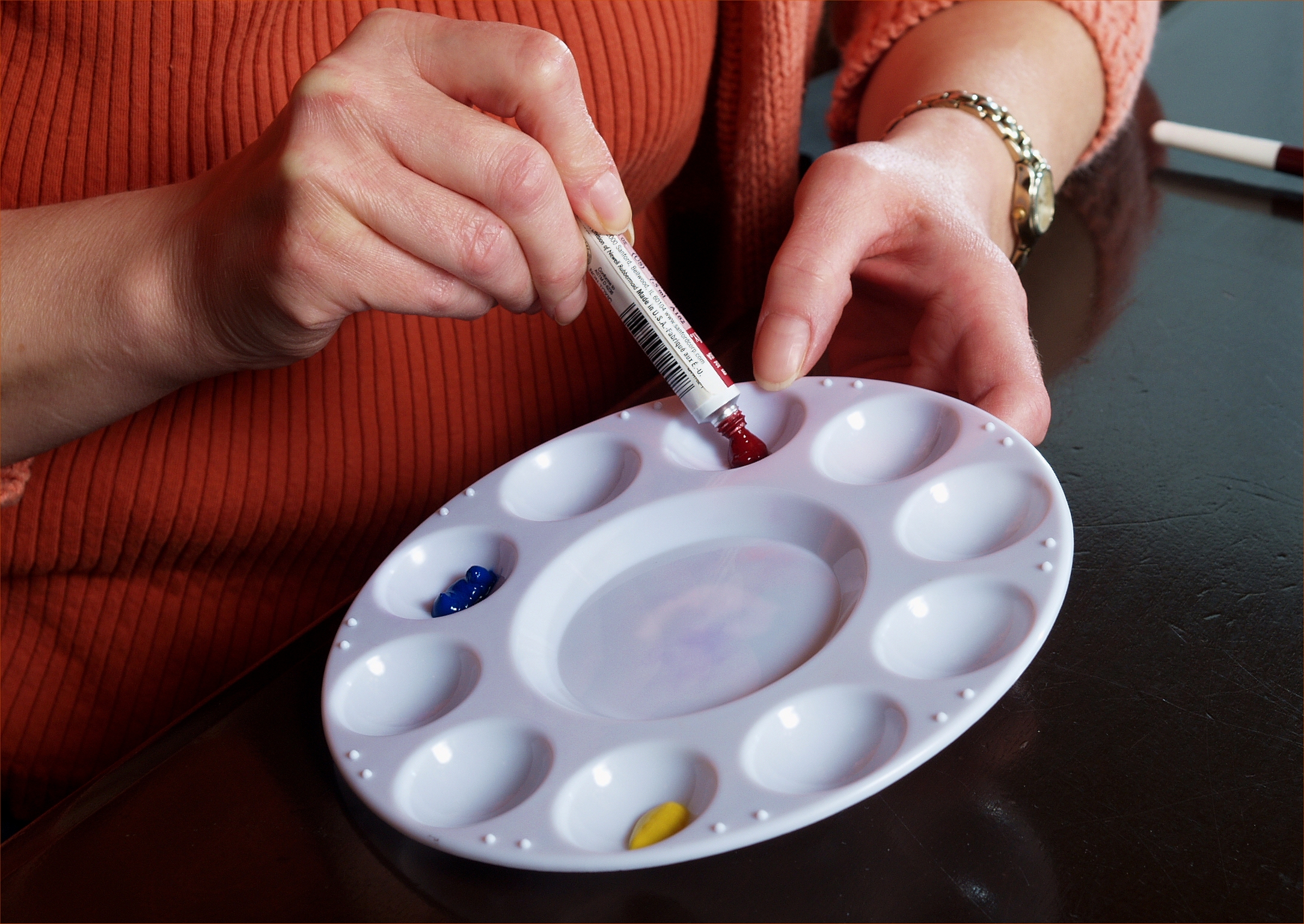
Don’t worry if a little more than you want oozes out. Even when the paint dries it will still be good for future use. And, as we’re not concerned with correct placement for mixing with this method of painting, set your colours randomly around the palette.
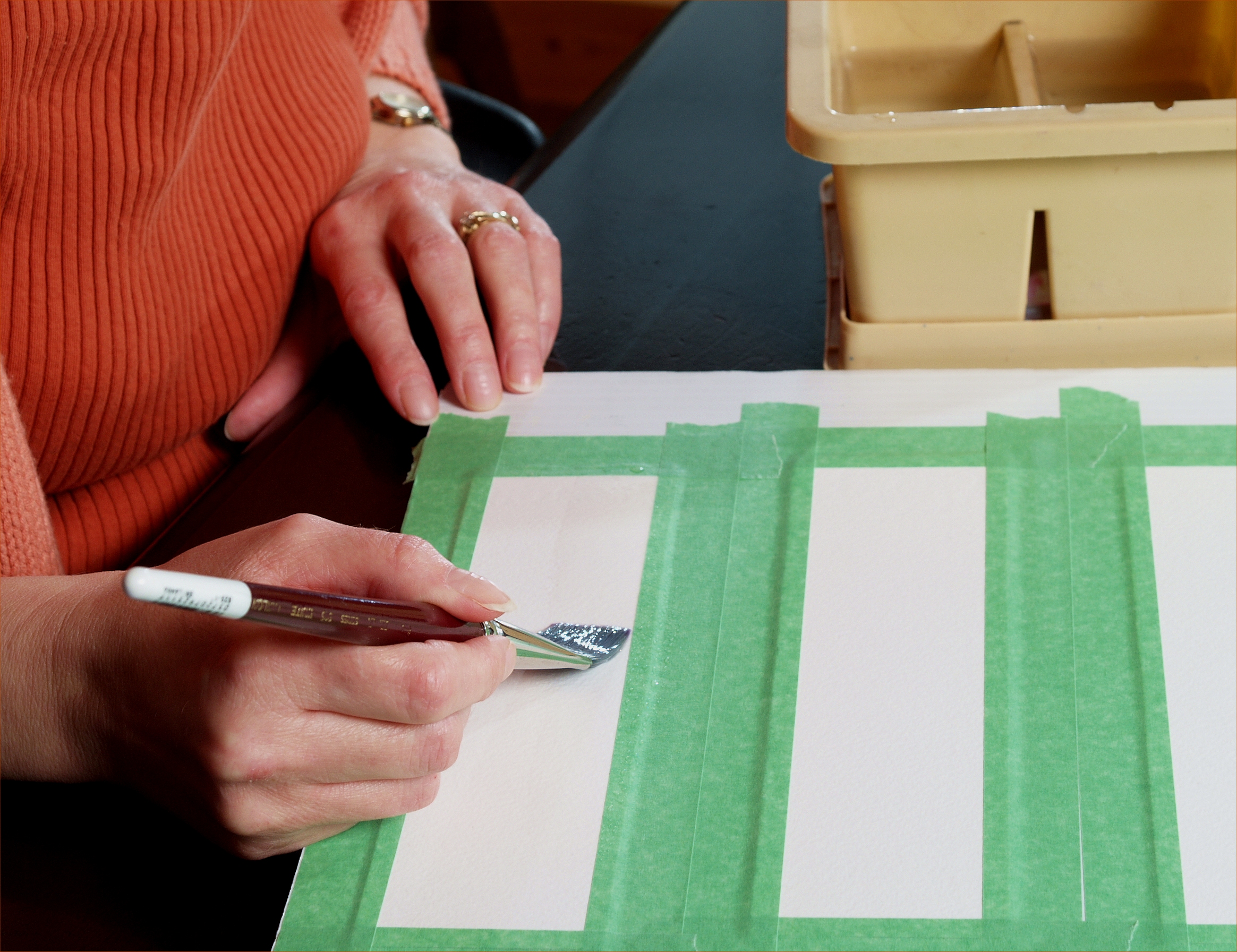
Applying paint: Begin by dipping your wash brush into the water, and then with long broad strokes, wet the entire surface of one of your papers. Don’t be alarmed if the paper swells; it will flatten again as it dries. Waste no time thinking about what you are going to paint. Simply dip your brush in water again, and load your brush with the first color that catches your eye.

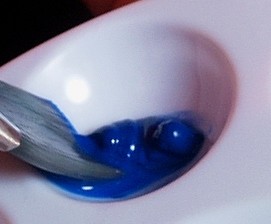
To load the brush, “drag” or “tease” the edge of it at the outside perimeter of the paint blob. Notice how the color seeps away from the blob into the droplets of water from your brush. If the paint on your brush is too thick to suit your tastes, you can use a bit more water to dilute the paint further. The more water, the less intense your color will be when it dries.
Quickly, before the water on your paper evaporates, lay in your first color choice. Cover as much or as little of the paper as you like. Use long broad strokes or short quick flares. Don’t think. Just brush in paint. Rinse your brush by swishing it vigorously in the rinse-water and then, if you like, select another color. I suggest using a maximum of three colors for the first application in this initial session, particularly if you are new to watercolor painting. You can use as many as you need or want in later paintings but it is important to become aware that the simplest of beginnings can be powerful.
Follow this procedure with each of the papers on your board, choosing colors without forethought. Trust your choices, and your sense of timing. Quit when you feel it’s time to move onto other activities.
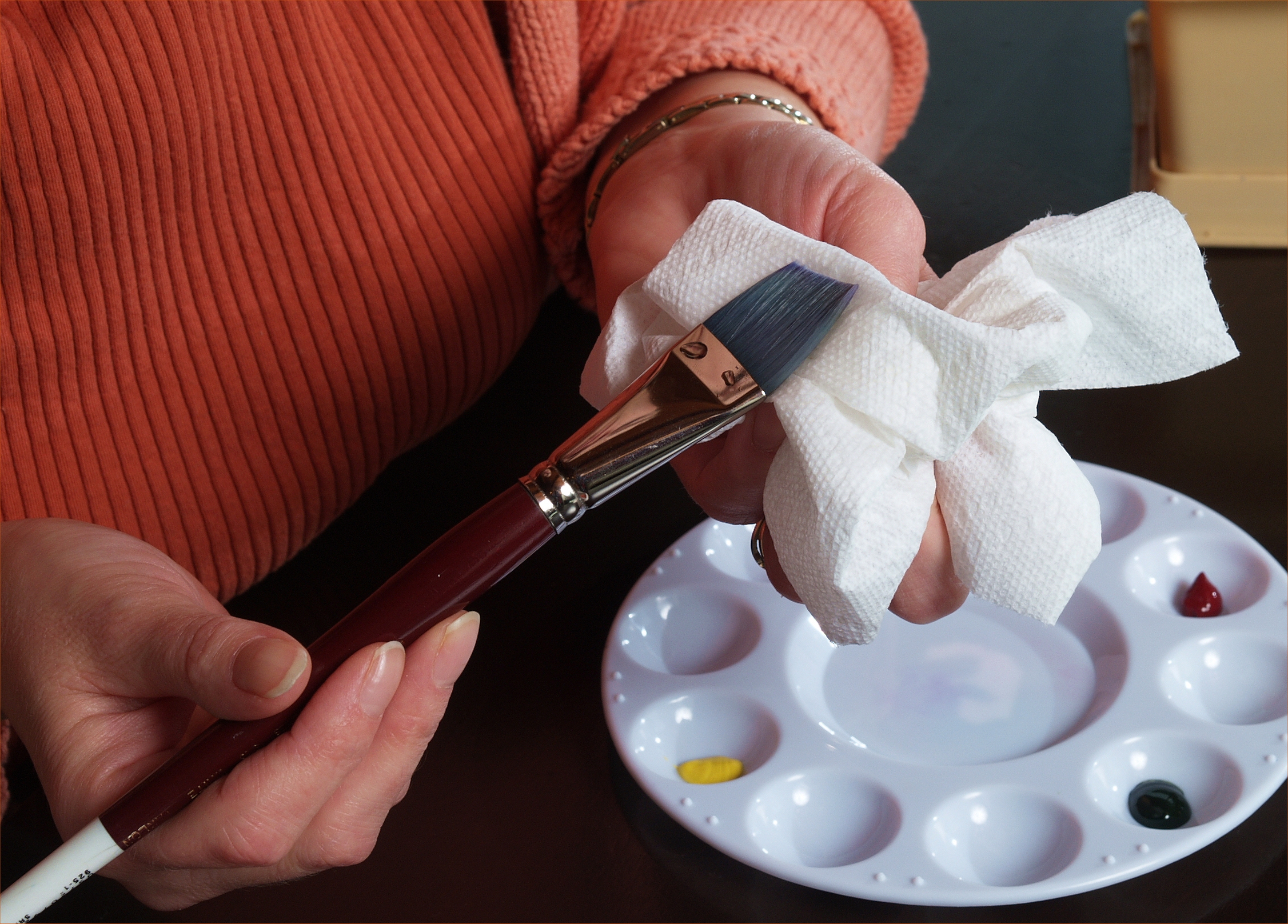
After each use, be sure to rinse your brush thoroughly, gently dab off excess water, and store it bristle-side up. Leave the paint on your palette to dry before covering, and tighten the caps on all paints securely. Lay your boards on a flat surface until the paintings are dry enough to prevent the paint from running (unless, of course, that is the effect you’re after).
If you wish to continue working on your pieces in this session: Use a hairdryer to dry each painting before proceeding with more paint and water. Hold the dryer about six inches above the board, allowing the air to blow gently over the surface of the papers. As they flatten and loose their glossy sheen, lightly touch each paper with the tips of your fingers. If it feels damp or cool, continue the drying procedure a bit longer. Should any of the tape lift, simply press it back in place.
When you are ready to move into the next phase of the process: Take a deep breath, sit comfortably and relax. Make sure you are free from distractions. I find it best not to try to paint as a “fill-in” while doing other things. (Have you ever tried to hold two conversations at one time?)
Admire your work. At first glance, do you see potential in any of the pieces? Is there an obvious setting waiting for detail? Or some entity just begging to come to life? Do you sense a particular mood?
It’s absolutely fine if you don’t find something immediately. Continue to gaze at the markings you have made. Allow your mind to wander where it will. If anything especially interesting pops into your thoughts as you peruse your paintings, jot it down on a sticky note, and then attach the note to the board beside the corresponding piece.
Take a playful, respectful approach. You are learning to trust your muse, your inner knowing. It cannot be forced.
We have five senses in which we glory and which we recognize and celebrate, senses that constitute the sensible world for us. But there are other senses –secret senses, sixth senses, if you will – equally vital, but unrecognized, and unlauded …unconscious, automatic.
~Oliver Sacks
Expect nothing. And everything. Your goal here, besides finding joy in the process, is to achieve some interplay between outer sight and inner sight, between what is in front of you and what you intuitively know about it.
If you see something right away: Go with it. Be brave. You may be surprised at what you can do. Don’t focus on what you think you can paint. Paint what is there.
If you do not see something right away: Don’t fret. It will come, with practice—and sometimes a second application of color. Repeat the process of laying in paint, only this time choose a different brush, different colors, and/or some of the various techniques described a little further on.
Hope begins in the dark, the stubborn hope that if you just show up and try to do the right thing, the dawn will come. You wait and watch and work: you don’t give up.
~Anne Lemott
In either case, treat anything and everything on the paper as if it has purpose. Entire scenes can be built around the simplest detail. Even bits of lint and stray brush-hairs make interesting marks that inspire. Allow your imagination to hook into and use what you see.
Don’t get hung up on how well you think you can paint an imagined object, or whether the images that appear seem “real”. You are creating. These are your impressions, your expressions, your works of art. Follow your instincts and dare to add colour, quickly and boldly, or bit by cautious bit.
Observe. Linger. Look away for a minute…for a day…or longer if you must.
Return with fresh eyes. Observe. Linger. Surrender the lead. And gain a new-found sense of control as your paintings come alive.
 Creating Recovery
Leave a comment