
Once you have all your supplies you can begin preparations for painting. If you are new to this process, please don’t be intimidated. We’ll walk through it together step-by-step.
The first task will be to divide your paper into 10” x 8 ½” (25.5 x 21.5cm) sheets, which will eventually be cut into 2 ½” x 8 ½” (6.5 x 21.5cm) pieces. I’ve often used this small, bookmark size for individual and group instruction because it’s economical, because it lessens the anxiety facing a large blank canvas can arouse, and because paintings can be completed in a relatively short period of time. When I began the Dark/Light paintings, I chose this size for similar reasons:
- I wanted to flit freely, at my whim, from one piece to the next without concern about waste. It was liberating to know, in advance, that if I did make a mess, the loss of material was minimal.
- I didn’t want to labor on any one painting for too long. With most paintings I achieved closure in reasonably good time.
- I prefer working on smaller surfaces. For me, repetitive movements, particularly those that are large and involve my entire upper body can, at times, be tiresome and painful.
For this last reason, and also that preparations involve more linear, logical brain functions than right-brain intuitive functions, I made prep-time a separate activity from painting. So that you may get the maximum benefit from your painting sessions, I recommend that you do the same.
NOTE: You can use any size paper and choose to cut, or not. Below, for your convenience, is a detailed outline of how I break down a 30″ x 22″ sheet.
Preparing the Paper
The following describes, step-by-step, how to divide a 30” x 22” (760 x 560cm) sheet of watercolor paper into 10” x 8 ½” (25.5 x 21.5cm) blocks. You may use either a ruler or yardstick. Whichever you use, before measuring, lay the paper lengthwise on your work surface with the embossed seal (e.g. the Winsor Newton logo) face up. This is the ‘right’ side of the paper, the one most suited for painting on.
Using a Yardstick
1. Measure the perimeter of the paper:
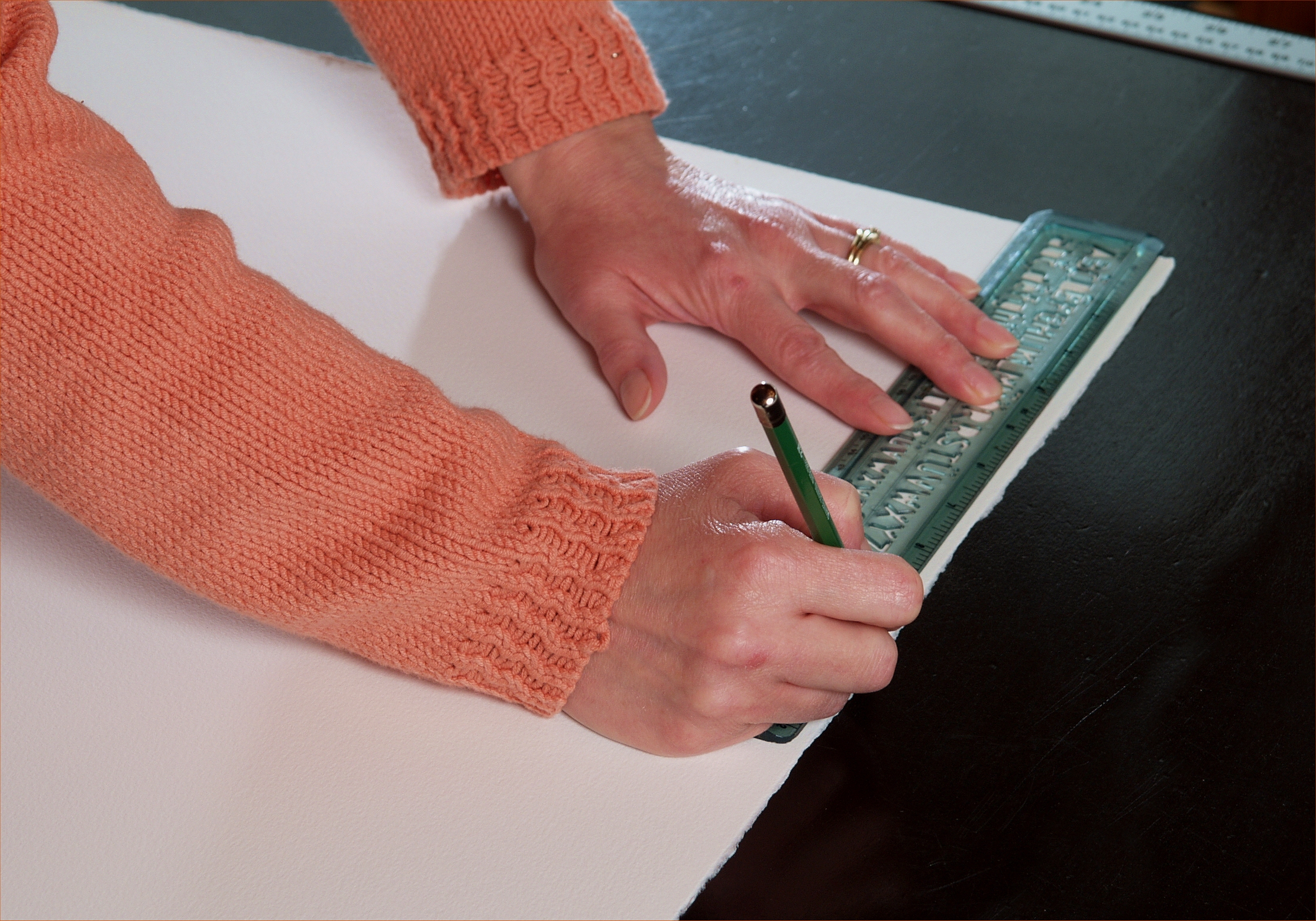
Working from left to right using a ruler or yardstick, measure and mark off the top and bottom edges of the paper in 10” (25.5cm) intervals. Don’t worry if there is a bit more than ten inches (25.5cm) at the far right, which may have a deckle (fringed) edge.
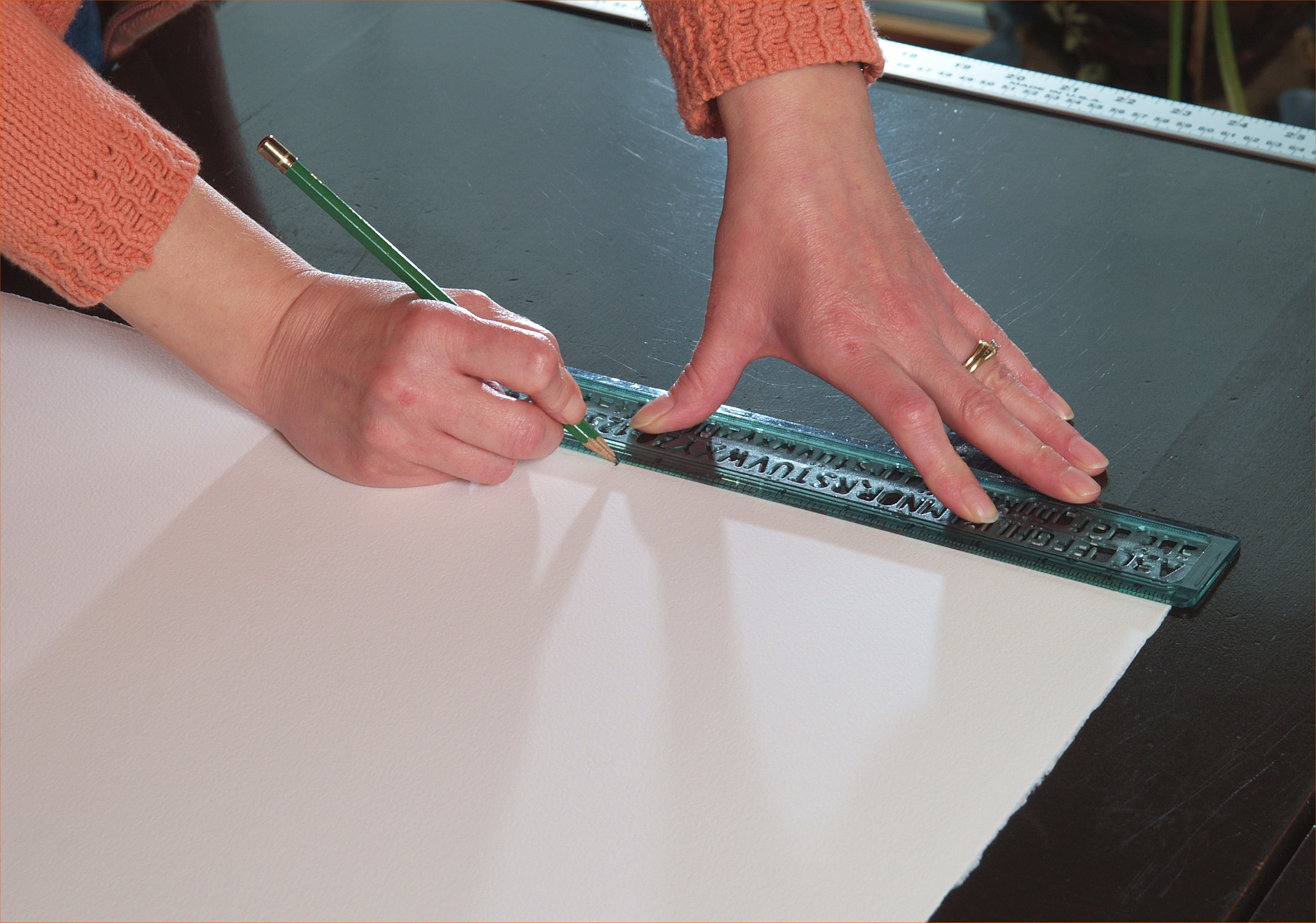
Working from top to bottom, measure and mark both side edges of the paper at 8 and 1/2” (21.5cm) intervals. There will be five inches (13cm) remaining at the bottom of the paper on each side.

The markings on your paper should resemble this diagram.
2. Drawing the lines:

Drawing the lines is merely a matter of connecting the dots. Lay your yardstick vertically on the paper, line up the first set of 10” (25.5cm) marks at top and bottom, and draw a line along the edge of the stick. Repeat with the next set of marks. You should now have three vertical columns of equal width—not including the deckle (fringed) edge of the paper, which you can simply discount in the math and leave intact to create extra-wide, extra-interesting pieces.
Next, lay the yardstick horizontally across the paper, line up your first set of 8 ½” (21.5cm) marks, and draw a line along the edge of the yardstick. Repeat this process to make the final horizontal line at the remaining marks.
When the measuring is finished: You should have six 10” x 8 ½” (25.5 x 21.5cm) blocks, plus three 10” x 5” (25.5 x 13cm) blocks, enough to make thirty 2 ½” x 8 ½” (6.5 x 21.5cm) paintings.

Before cutting the paper, pencil in a small “x” on one corner of each block. This will designate which side is to be painted on. Cut along your drawn lines, stack the papers and place them in a protective cover.
Using a Ruler
1. Create two vertical lines:
Working from left to right, measure and mark off the top and bottom edges of the paper in 10” (25.5cm) increments. Don’t worry if there is a bit more than ten inches (25.5cm) at the far right, which may have a deckle (fringed) edge. This can be used to create extra-wide, extra-interesting pieces.

Working your way down the paper, create two sets of vertical marks across the paper in 10” (25.5cm) intervals.
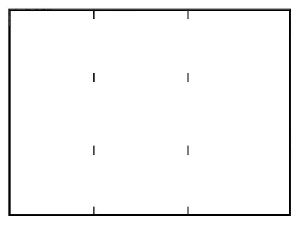
The markings on your paper should resemble those in this diagram.
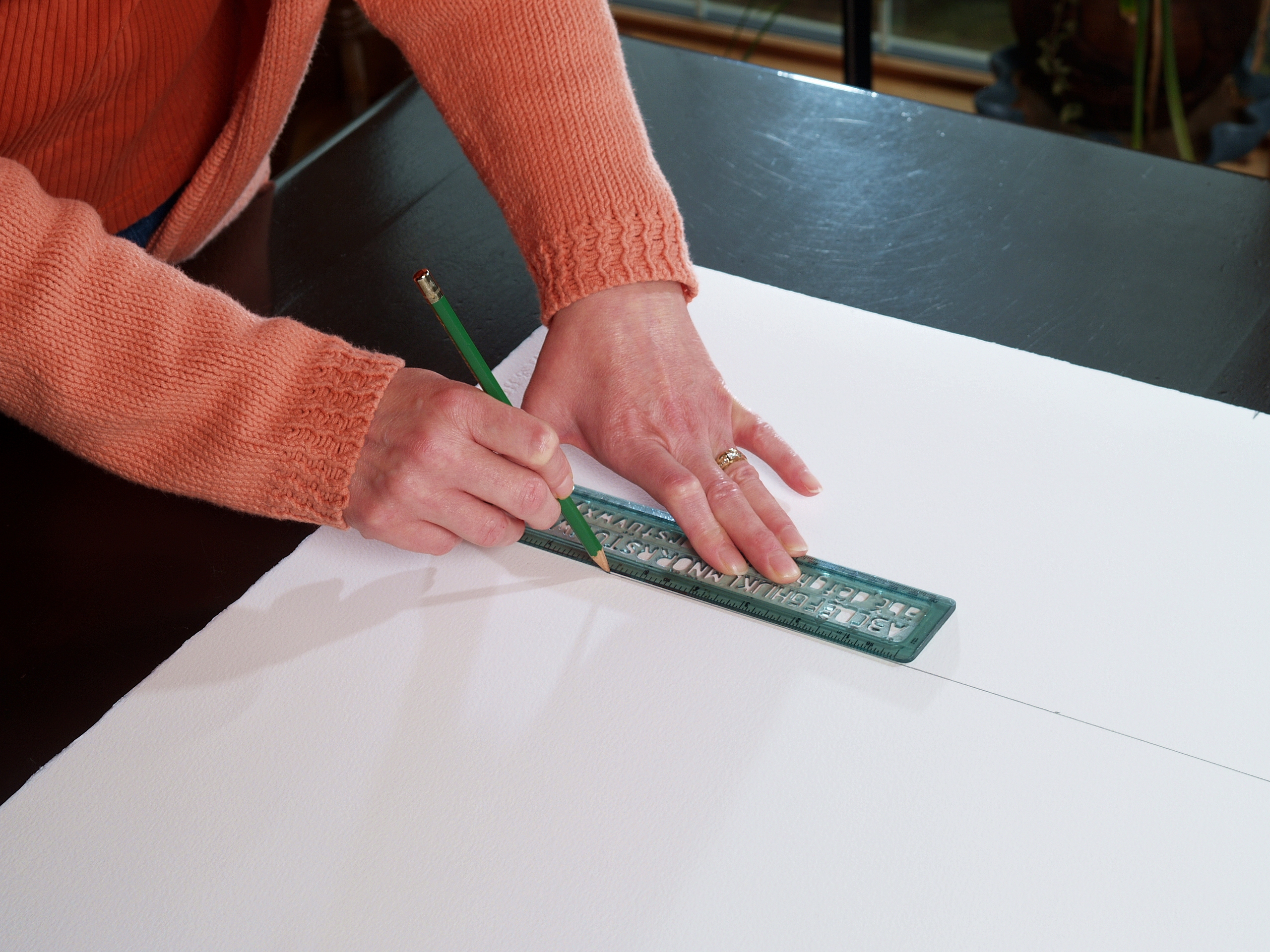
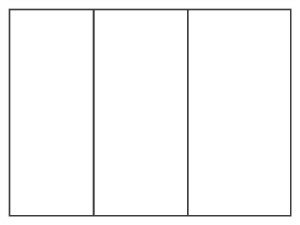
Drawing the vertical lines is now merely a matter of connecting the dots. Line up your ruler along the markings to complete two vertical lines.
2. Create two horizontal lines:
Working from top to bottom, measure and mark both side edges of the paper at 8 and 1/2″ (21/5 cm) intervals. There will be five inches (13cm) remaining at the bottopm of the paper on each side.
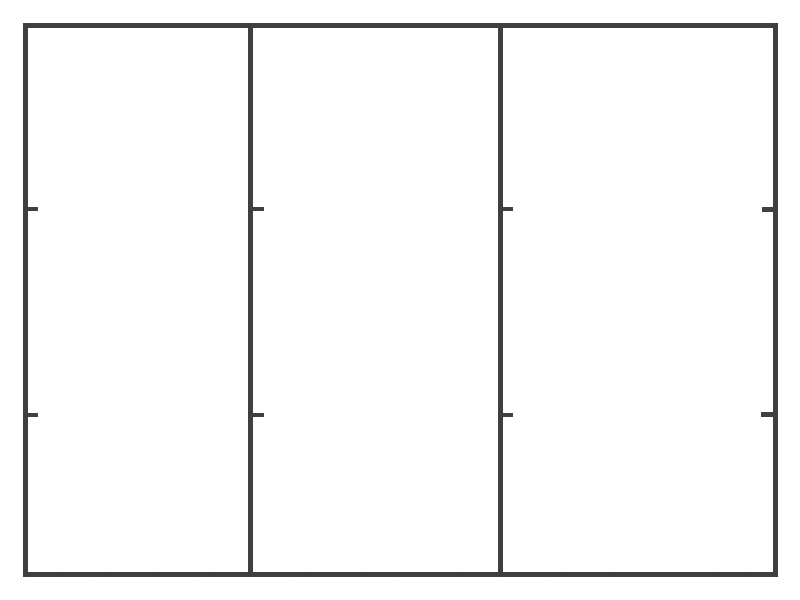
On each vertical line, working from top to bottom, measure and mark the at 8 ½” (21.5cm) intervals. The markings on your paper should resemble those in this diagram, with five inches (13cm) remaining at the bottom of the paper.
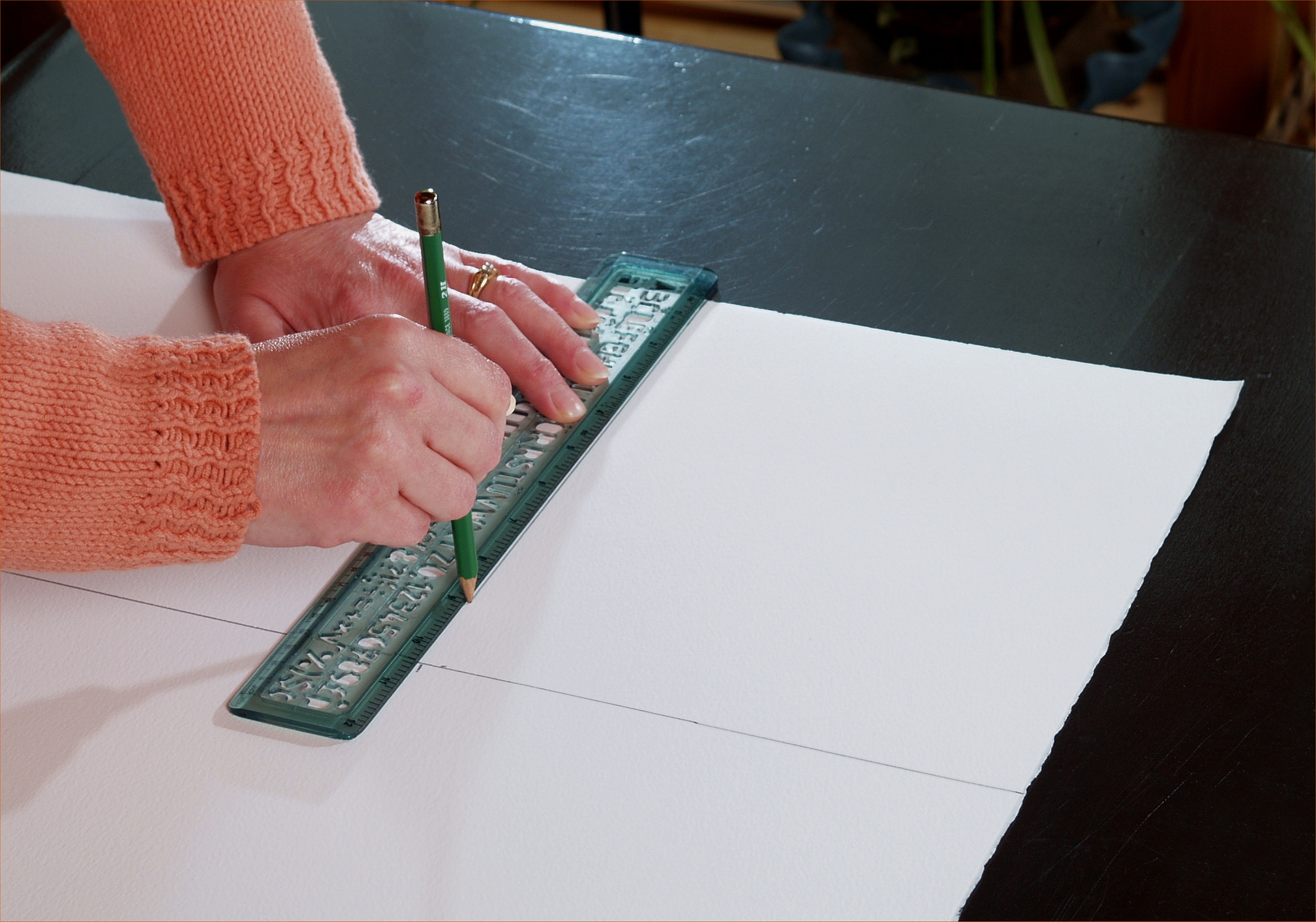
With your ruler, connect the markings to create two horizontal lines.
Before cutting the paper, pencil in a small “x” on one corner of each block. This will designate which side is to be painted on. Cut along your drawn lines, stack the papers and place them in a protective cover or box.
 Creating Recovery
Leave a comment